
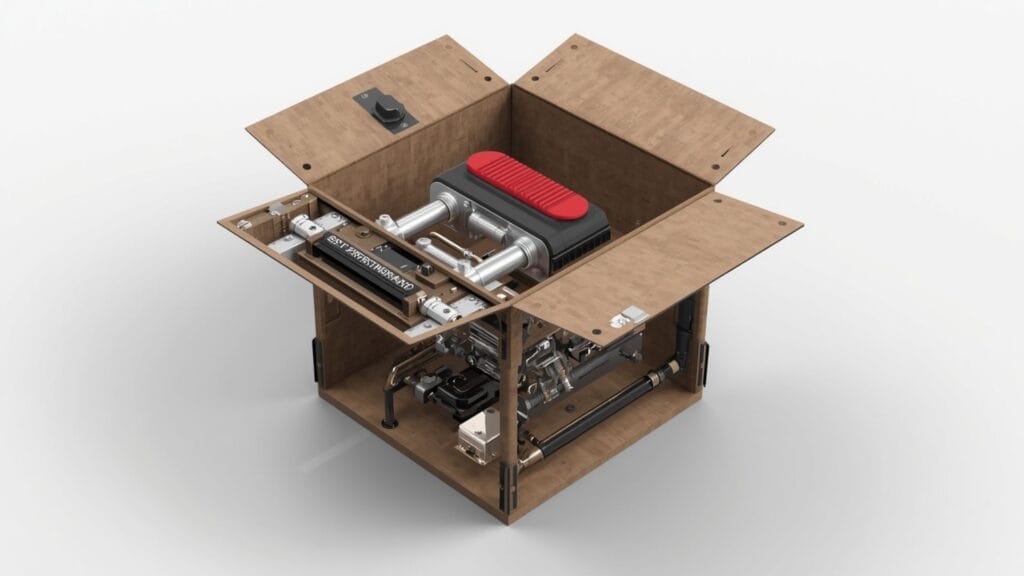
In today’s industrial and manufacturing settings packaging has evolved beyond just containment. It is a key element of product protection, handling efficiency and material integrity. For high value mechanical parts, precision tools, and sensitive equipment they see in rigid boxes a very reliable packaging solution which also complies with engineering standards.
This guide looks at rigid boxes from a mechanical and industrial stand point which includes structural strength, material properties, and practical applications in engineering settings.
What Are Rigid Boxes?
Definition and Structural Characteristics
Rigid boxes what are also known as setup boxes are made from high density paperboard or chipboard which in turn provides great structural rigidity. These boxes do not fold out like cartons instead they maintain their shape under load which makes them a great choice for when dimensional stability and protection is needed.
From an engineering perspective rigid boxes are designed to be protective units which stand up to external forces like compression, impact, and vibration during transport and storage.
Engineering Comparison with Other Packaging Types
In industry, packaging choice is based on mechanical performance:
- Folding Cartons: They are of light weight and low cost, but in structural support for heavy and sensitive mechanical elements, they are poor.
- Corrugated Boxes: Provide excellent shock absorption but may deform under sustained loads.
- Rigid Boxes: Present better in terms of compressive strength and shape retention, which is why they are best for precision components.
This is what makes rigid boxes as a result valuable in mechanical systems that have need of tight tolerances, precise alignment, as well as protection.
What’s the Importance of Rigid Boxes in Mechanical Applications?
Enhanced Protection for Precision Components
Mechanical components, which include gears, bearings, sensors, and calibrated instruments, require impact resistance and positional stability. Structured boxes when used in combination with custom inserts help the following:
- Prevent micro-movements
- Reduce vibration damage
- Maintain component alignment
Load-Bearing and Structural Integrity
Rigid boxes are made from thicker materials, which are better at withstanding stack loads in warehouses. In the field of industrial logistics, which is what this is aimed at, packaging has to put up with a great deal of vertical compression.
Rigid Box Designs for Industrial Use
- Two-Piece Rigid Boxes: Used in tool kits and mechanical assemblies, these boxes present easy access while at the same time are very durable.
- Magnetic Closure Boxes: For precision instruments and electronic mechanical devices, they have solutions that provide secure closure and repeated access.
- Drawer-Style Boxes: For use in multi-component systems, they present a solution that allows the organization of the storage of parts like fasteners, fittings, or modular components.
- Hinged and Book-Style Boxes: These are included cutting-edge technical equipment packages, which also present-day documentation, manuals, as well as components together.
Also Read:
- Unlocking the Secrets: Understanding Mechanical Properties of Materials
- Why Every Packaging Industry Needs a Bursting Strength Tester
- Automatic Capping Machine: The Complete Guide
Material Engineering Behind Rigid Boxes
Core Materials
Rigid boxes are made of high-density fiberboard, which presents the following:
- High compressive strength
- Resistance to deformation
- Long-term durability
Material choice also plays a role in how a material performs under stress.
Surface Finishes and Coatings
From a manufacturing point of view, what is put on products is more than just for looks they also provide:
- Moisture resistance
- Surface durability
- Chemical resistance (in some cases)
Internal Support Systems
Custom-made inserts of foam, molded pulp, or engineered supports, which do even distribution of force and protection of delicate components.
Functional Benefits in Industrial Environments
Improved Handling and Logistics
Rigid structures, which present a set form and strength, are thus used for the following:
- Automated handling systems
- Warehouse stacking
- Safe transportation
Product Lifecycle Protection
From production to point of use, rigid packaging maintains the mechanical integrity of products throughout the supply chain.
Sustainability in Industrial Packaging
Today’s manufacturing is to a great degree focused on sustainable material choice. Many rigid boxes now feature the following:
- Recycled fiberboard
- Eco-friendly coatings
- Reusable packaging designs
This is in line with global trends of sustainable engineering.
Selecting the Proper Rigid Box for Mechanical Products
When in the field of industrial applications, engineers and manufacturers are to choose:
- Component weight and fragility
- Required load-bearing capacity
- Environmental exposure (humidity, temperature)
- Handling and transportation conditions
Collaboration with the packaging engineers makes sure that mechanical and logistic requirements are met.
Conclusion
Rigid boxes go beyond the scope of premium packaging; they are designed as protective systems which support the safe transport and storage of mechanical products. Their strength, durability and versatility make them a valuable element in today’s industrial setting.
For manufacturers working with precision components and high value equipment, investment in rigid box solutions greatly improves product safety, operational efficiency, and total reliability.