
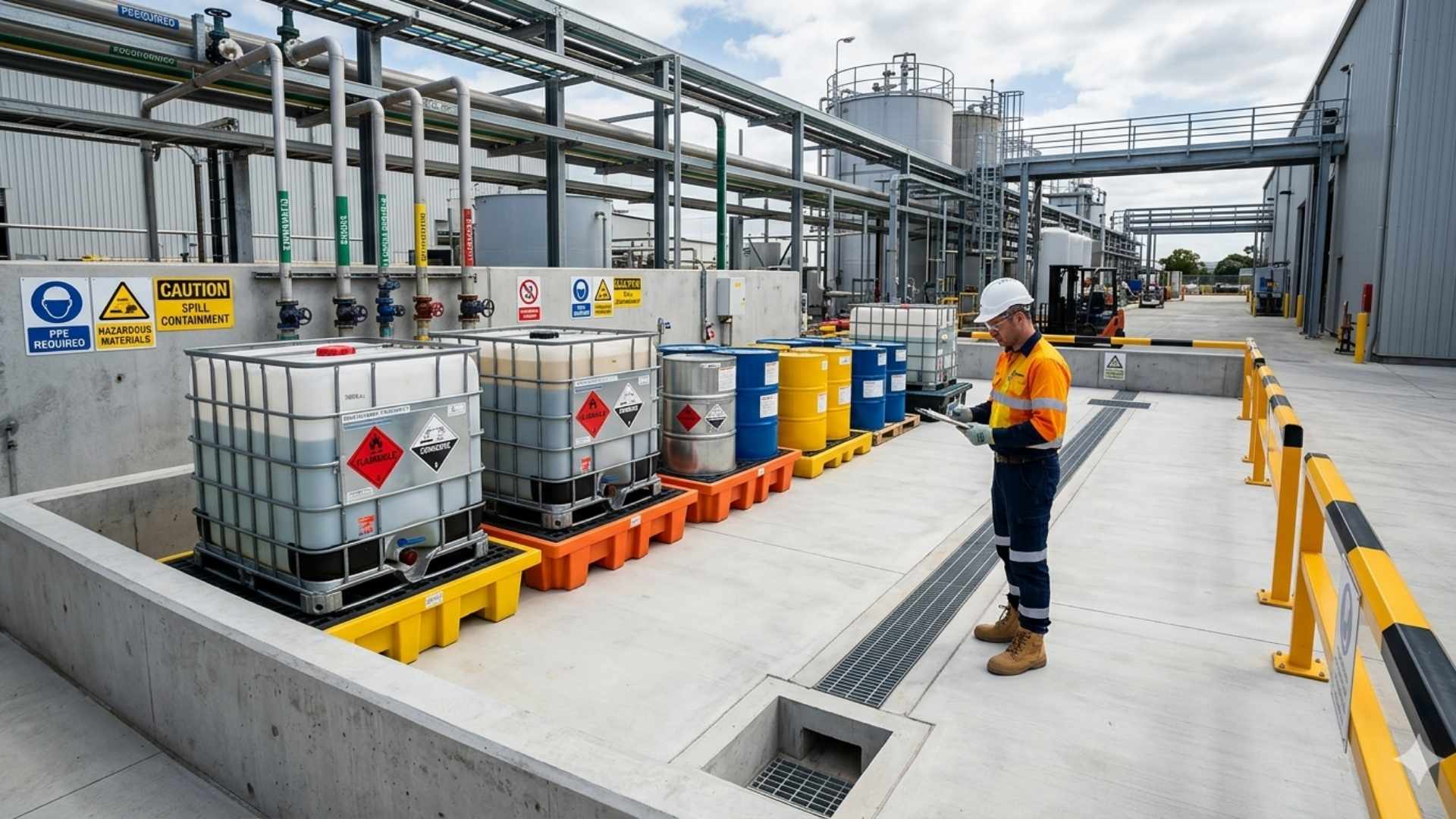
Spill containment audits are a routine part of compliance for facilities that store or handle bulk liquids, particularly across agriculture, mining, chemicals, brewing, and wine production. Because containment systems are designed to prevent environmental damage and workplace hazards, auditors typically assess whether storage areas can effectively contain leaks, overflows, or accidental releases. Facilities that understand what auditors check and maintain their systems accordingly tend to pass inspections with far less disruption.
Confirm Secondary Containment Capacity
One of the first aspects auditors evaluate is whether the secondary containment system has adequate capacity to manage a potential spill. Many regulatory frameworks require bunded containment areas to hold at least 110% of the volume of the largest container or 25% of the total stored volume, whichever is greater. These requirements ensure that a major spill remains contained within the designated area.
Facilities that use covered IBC bund systems for compliant spill containment often find it easier to demonstrate compliance because these systems are designed specifically to meet storage and containment standards. Auditors typically verify that containers remain fully within the bunded area and that the containment capacity has not been compromised by modifications or overloading.
Inspect Structural Integrity Of Bund Systems
Containment systems must remain structurally sound in order to function during a spill event. During audits, inspectors usually examine bund walls, floors, joints, and supports to confirm there are no cracks, corrosion, warping, or structural weaknesses that could allow liquids to escape.
Routine inspections help ensure that containment infrastructure remains reliable. Facilities that schedule regular checks are better positioned to identify early signs of damage and carry out repairs before compliance issues arise. Durable materials used in bund systems are often selected specifically to withstand heavy loads and long-term exposure to stored liquids.
Check Surface Compatibility With Stored Liquids
Another important factor in spill containment compliance involves ensuring that bund materials are compatible with the substances stored within them. Some chemicals can degrade certain materials over time, potentially weakening containment systems and creating risks during a spill.
Auditors may assess whether facilities have considered chemical resistance when selecting bund materials. Maintaining documentation that confirms compatibility between stored liquids and containment materials helps demonstrate that the system is suitable for its intended purpose.
Maintain Clear Drainage And Spill Control Points
Containment areas often accumulate liquids from rain, equipment cleaning, or minor operational spills. Auditors frequently check how facilities manage this accumulation, particularly whether drainage systems are controlled and maintained properly.
Drain valves should typically remain closed unless the collected liquid has been inspected and confirmed to be uncontaminated. Proper drainage management ensures that containment areas remain functional during emergencies and prevents accidental discharge of potentially hazardous substances. This approach aligns with research on bund-based runoff control, where controlled containment and drainage systems were shown to reduce surface runoff leaving a site by 31% to 43%, helping limit the movement of contaminants into surrounding waterways.
Document Inspection And Maintenance Records
Physical infrastructure alone does not guarantee compliance. Auditors commonly review records that show containment systems are inspected and maintained on a consistent schedule.
Facilities that maintain organised inspection logs, maintenance reports, and spill response documentation demonstrate strong environmental compliance management practices. These records help verify that containment systems remain operational over time and that staff follow established procedures to maintain safe storage conditions.
Preparing Containment Systems For Smooth Audits
Spill containment audits become significantly less stressful when facilities focus on routine preparation rather than last-minute fixes. Confirming containment capacity, maintaining structural integrity, ensuring chemical compatibility, managing drainage properly, and keeping clear documentation all contribute to a system that consistently meets compliance expectations. When these practices are integrated into everyday operations, audits tend to proceed more efficiently and with fewer complications.