
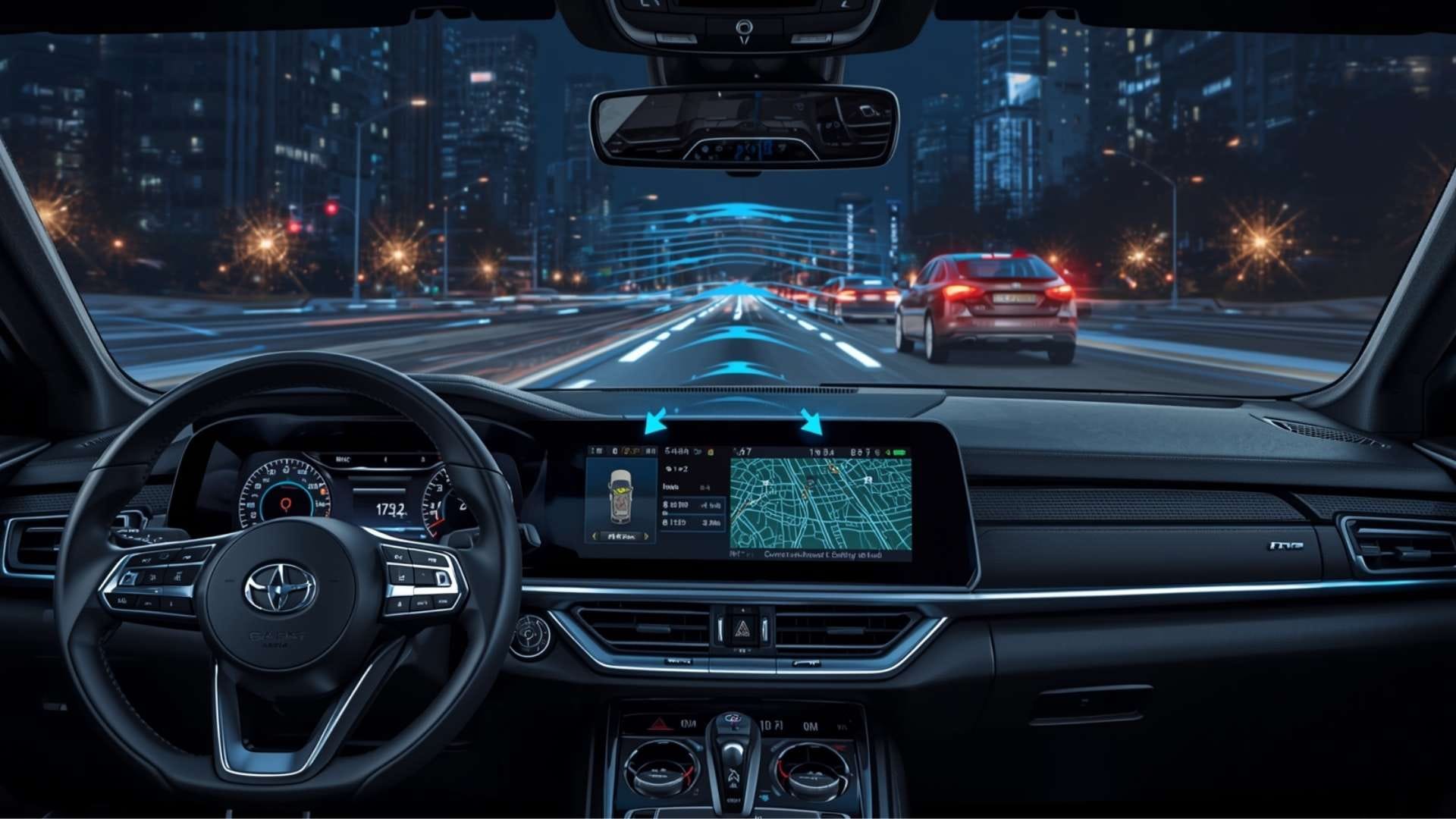
Travel today is not just about reaching a destination; it’s about getting there safely. Thanks to GPS and smart automotive sensors, driving has become much safer and easier than before.
GPS helps you find the best routes, avoid traffic, and stay on track, while sensors in modern vehicles can warn you about obstacles, sudden stops, or even driver fatigue. These technologies work together to reduce risks and give drivers more control on the road.
Whether you are on a daily commute or a long road trip, they play a big role in keeping you and others safe. In this blog, we’ll explore how these tools are changing the way we travel for the better.
The Core Building Blocks Behind Modern GPS Travel Safety
Before you can appreciate what these systems do, it helps to understand what they’re made of. Modern GPS doesn’t simply tell you where to turn. When it’s paired with live data feeds and onboard vehicle sensors, it becomes something closer to a continuous safety net, adaptive, and always running.
Essential GPS Functions That Directly Cut Risk
In‑vehicle GPS safety works by marrying satellite positioning with real-time map intelligence, enabling smarter decisions at every single moment on the road. Turn-by-turn guidance eliminates those panicked last-second lane scrambles.
Live traffic rerouting pulls you away from sudden closures, roadway accidents, and hazardous conditions well before they cause a problem. Speed limit alerts and lane-level guidance at complicated interchanges chip away at the split-second errors most crashes trace back to.
To keep hazard alerts, active navigation, and emergency contact features running, especially across borders or through signal-poor stretches, many drivers now rely on a travel esim. It eliminates the scramble for local SIM cards and shields you from dead zones, maintaining the live data flow your navigation system needs to stay accurate.
Accuracy, Redundancy, and the Fail‑Safes Built Into GPS Systems
Multi-constellation positioning, drawing on GPS, Galileo, and GLONASS signals simultaneously, holds location accuracy even inside dense cities or deep mountain valleys.
Offline maps add a crucial second layer: when a signal drops mid-tunnel, cached routes keep guidance intact. Internal wheel-speed sensors and IMUs handle what’s known as “dead reckoning,” sustaining positioning until satellite contact is restored.
GPS keeps you pointed in the right direction. But there’s another layer entirely, one that acts as your vehicle’s eyes and ears in ways satellites simply can’t.
Also Read:
- Why Automotive Connectivity Is Becoming the Core of Future Innovation
- Top 10 Features to Consider When Buying an Enclosed Car Trailer
- 10 Mechanical Engineering Inventions That Will Change the World by 2035
Key Automotive Sensor Safety Systems That Work Alongside GPS
Driving safety sensors, cameras, radar, LiDAR, ultrasonic arrays, and IMUs continuously feed data to ADAS systems. Together with GPS, they form a layered shield that’s meaningfully greater than the sum of its parts.
Forward and Surround Sensing That Prevents Collisions
Forward collision warning and automatic emergency braking use radar and cameras to detect slowing traffic ahead and react faster than any human reflex can. Adaptive cruise control blends radar distance data with GPS-based speed and terrain context to maintain a safe following gap automatically. Lane keeping assistance reads lane markings and cross-references map data, nudging the car back into position before a slight drift becomes something far worse.
Here’s a number worth thinking about: almost 9 out of 10 drivers of vehicles equipped with lane departure warning and prevention systems now keep them switched on. When a feature feels genuinely useful, people don’t disable it. That’s the clearest endorsement any safety system can get.
Side and Rear Sensors Tackling Blind Spots and Parking
Blind-spot monitoring, rear cross-traffic alerts, and parking assist pull from radar and ultrasonic sensors covering the zones your mirrors consistently miss. GPS awareness of parking structures, intersections, and tight driveways sharpens these sensors’ alert timing, cutting false alarms while catching genuine threats.
In‑Cabin Monitoring That Protects What’s Inside the Car
Interior cameras and radar detect child presence and verify seat-belt use. Driver monitoring systems track eye position, head angle, and micro-corrections in steering to catch fatigue or distraction early. When the vehicle already knows its speed, road type, and environment through GPS, those interior alerts become sharper, more contextually intelligent, and far harder to dismiss.
How These Systems Play Out in Real-World Driving Situations
Hardware makes more sense when you see it in action. Here’s where these technologies actually earn their place.
Urban Commutes and Stop-and-Go Traffic
In dense city traffic, adaptive cruise and GPS travel safety alerts cooperate to prevent rear-end collisions. Blind-spot monitoring adds genuine confidence during lane changes, while automatic rerouting steers you around incident zones before gridlock even forms.
Highway and Long‑Distance Travel
On open roads, map data pushes predictive curve and hill warnings to stability systems before you reach them. Driver fatigue alerts trigger after extended high-speed patterns, and connected hazard feeds deliver weather and road condition warnings directly to your navigation display. Connectivity isn’t a bonus here; it’s part of the safety equation.
Remote, Rural, and Off‑Grid Routes
Offline maps, GPS breadcrumb trails, and altitude data carry navigation through stretches where cell signals vanish entirely. Dashcams with built-in GPS and G-sensors document incidents when help is miles away. Satellite messengers and connected SOS buttons serve as the final fallback when nothing else reaches.
Comparison: GPS Safety Features by Driving Scenario
| Scenario | Key GPS Feature | Key Sensor Support |
| Urban commute | Live traffic rerouting | Blind-spot radar, front cameras |
| Highway driving | Predictive curve/hill alerts | Adaptive cruise radar, IMU |
| Remote/off-grid | Offline maps, breadcrumb trail | G-sensor dashcam |
| International travel | Live hazard alerts via data | Connected emergency calling |
| Teen driver monitoring | Speed alerts, geofencing | Lane keeping, rear camera |
Practical Habits That Make These Systems Actually Work for You
Technology this sophisticated still depends on the person using it. A few straightforward habits make the difference between a safety system that performs and one that’s just along for the ride.
Smart Mounting and Configuration
Position GPS devices where they won’t obscure airbags, forward cameras, or your sightline. Configure audio prompts and speed alerts to reduce screen interaction. Update maps and firmware before any significant or cross-border trip; outdated data can mislead just as badly as no data.
Sensor Maintenance and Calibration
Automotive sensor safety is a physical reality, not just a software checkbox. Sensor alignment needs rechecking after windshield replacements, collisions, or suspension work. Keep camera lenses and radar covers clean. Take dashboard warnings seriously; they frequently signal calibration issues that a quick shop visit resolves before they quietly escalate.
Staying Engaged as a Driver
These systems assist you; they don’t replace you. Use voice commands to keep your eyes forward. Minimize on-screen adjustments while moving; it matters more than most drivers realize. For teens, GPS-based speed alerts, geofencing, and driver reports build safer habits over time through transparency, not just restriction.
Final Thoughts: Use What You Already Have
Travel safety technology, GPS, radar, cameras, AI, and connectivity have fundamentally shifted what’s achievable on any trip. Driving safety sensors catch what reflexes miss. GPS ties everything together with map-level intelligence that older systems simply couldn’t offer. Most new vehicles already carry this capability. Audit your setup, confirm your sensors are calibrated, refresh your maps, and make sure every safety feature your car came with is actually switched on. The technology is ready. It just needs a driver committed to using it well.
FAQs
GPS delivers real-time location data, smarter routing, and operational visibility for drivers and fleet operators alike. It reduces missed turns, accelerates incident response, and supports driver behavior monitoring, making trips safer and more efficient across personal and commercial vehicles.
Automatic emergency braking, rear-view cameras, and lane departure warning systems have produced the largest measurable gains. Blind-spot detection and crash detection round out the core list. Integrated with GPS, these technologies address the most common collision types drivers face every day.
Yes, though performance varies by sensor type. Radar handles rain and fog more reliably than cameras. Ultrasonic sensors perform well at low speeds regardless of visibility. Layering multiple sensor types, rather than depending on any single one, is precisely what keeps automotive sensor safety effective when conditions get difficult.