
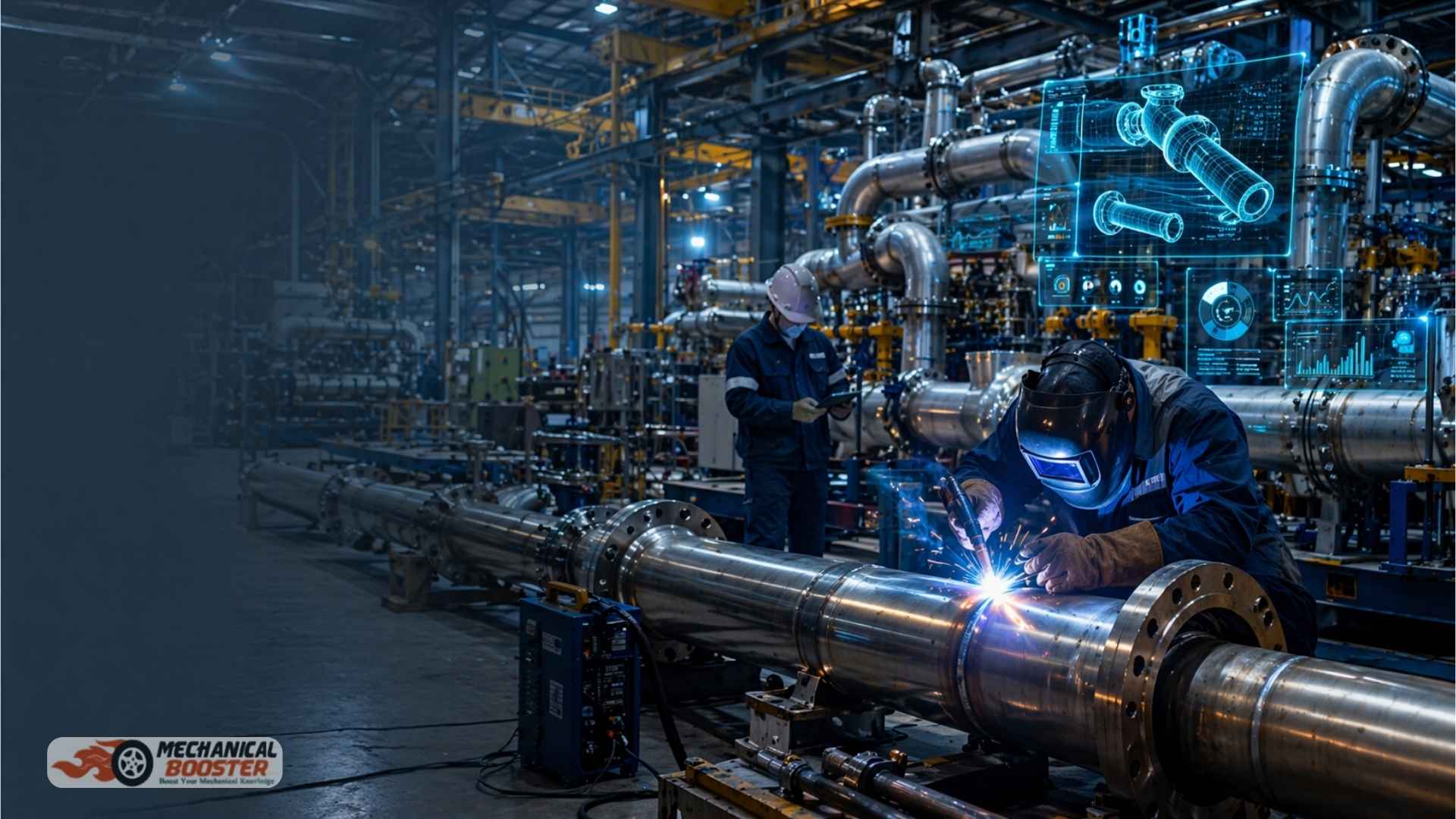
Manufacturing plants, refineries and power generation facilities all depend on their piping systems to keep operations running. When a pipe fails, everything downstream stops, and safety becomes a real concern. This is why access to expert pipe fitting contractors is a deciding factor in whether a company runs smoothly or faces costly shutdowns later on. Getting fabrication right from the beginning is what keeps these systems performing safely for decades.
The Core of Industrial Pipe Systems
Industrial pipe fabrication comes down to cutting, bending and assembling individual sections into complete systems that move liquids, gases and other materials through a facility. Every project calls for a different configuration, depending on what the system carries, where it operates and how much mechanical stress it will face over time.
Choosing the right material matters more than most people realize. Carbon steel is still the workhorse for many applications because it is strong and affordable. Stainless steel delivers when corrosion is a concern, especially in chemical processing or food-grade environments.
When extreme heat or highly corrosive fluids are part of the process, specialty metals such as Inconel or Hastelloy become necessary. Both are nickel-based alloys that retain their strength at temperatures and chemical exposures where standard steels would corrode or fail.
The wrong material choice can speed up corrosion or cause joints to fail well before their expected lifespan. Good fabrication prevents leaks, withstands high pressure and keeps flow rates where they should be. The global pipe fabrication market was valued at $57.43 billion in 2024, with steady growth expected as energy infrastructure expands worldwide. That kind of market size indicates how much the industry depends on getting piping right.
Top Services Offered by Expert Pipe Fitting Contractors
A full-service fabrication contractor does not just weld pipe together. The work covers design, shop assembly, field installation and testing. Here is what each of those stages actually involves and why each one matters when choosing a contractor.
1. Custom Pipe Design and Engineering
Engineers create detailed blueprints and 3D models that map out the full system, including main headers and individual branch connections. Computer-aided design and building information modeling software let teams build the entire piping layout digitally before anyone picks up a torch.
The real value of this virtual model goes beyond having a nice visual. It catches conflicts with structural elements, electrical conduits and HVAC runs early on, saving a lot of money compared to finding those problems in the field. Good design also factors in thermal expansion and seismic loads, so the finished system performs under actual operating conditions.
2. Shop and Field Fabrication
Fabrication happens in two places. Shop fabrication takes place in a controlled facility where pipe fitting specialists cut, weld and assemble spools based on engineering drawings. A shop gives crews better lighting, properly positioned equipment and tighter quality oversight than workers would get working outside or inside an active plant.
Field fabrication happens at the jobsite. It covers final connections, modifications to existing lines and situations where shipping large prefabricated pieces just is not practical. Experienced contractors lean heavily on shop fabrication because it is more accurate and produces fewer safety issues. Building pipe assemblies in a controlled setting can significantly reduce on-site labor hours and reduce the rework that eats into project budgets.
3. Certified Welding and Joining
One bad weld can cause a leak or a pressure rupture, and in an industrial setting, the consequences can be severe. The stakes are high enough that the industry requires welders to earn certifications under codes issued by organizations such as the American Society of Mechanical Engineers and the American Petroleum Institute. These spell out exactly how welds should be performed, what filler materials to use and how each joint gets tested.
Tungsten inert gas (TIG) welding is the standard for precision work on stainless steel and alloys. Metal inert gas (MIG) welding works well for carbon steel, where faster deposition rates are more practical. Pipe welding contractors choose the method that fits the material and service conditions of each specific joint.
Stud welding is a specialized process also worth knowing about. It attaches metal fasteners directly to pipe supports, hangers and structural members without drilling into the base material. This process preserves wall integrity and reduces stress concentrations that can lead to cracking over time. Power plants, boiler systems and heavy industrial facilities use stud welding because secure fastening in those environments is not optional.
Why Pipe Fitting Specialists Are Necessary
Knowing what services a pipe fabrication contractor offers only goes so far, but what really determines project outcomes is the quality of the people doing the work. A contractor with real experience in industrial piping catches problems long before they turn into schedule delays or cost overruns.
McNeil Company is one firm that shows what this looks like in practice. Its certified pipefitters and welders handle design, fabrication, installation and maintenance under one roof. Instead of farming out individual phases to different subcontractors, McNeil operates as a single-source provider, which cuts down on miscommunication and keeps one team accountable for the whole project.
McNeil also stands out for how quickly its team responds. Industrial projects deal with constant schedule shifts, material delays and scope changes. Its employees put client needs first and move fast when timelines change. When a day of downtime costs thousands, this kind of attention to customer service makes a huge difference.
McNeil’s welders and pipefitters are certified across steel, aluminum, copper and iron. The company also performs stud welding and overlay welding using both TIG and MIG processes. For organizations seeking expert pipe fitting contractors who can own a piping project from start to finish, McNeil’s single-source model takes the coordination burden off the client’s plate.
Quality Control and Safety in Pipe Fabrication
Quality control in pipe fabrication is about protecting people and keeping facilities operational, so every weld and assembled section must meet strict criteria before the system goes live. It is the duty of pipe fitting specialists to run multiple rounds of verification to catch defects before they turn into safety incidents.
Hydrostatic testing is one of the most common methods. Technicians fill the system with water, pressurize it above the normal operating level and watch for leaks. A well-designed hydrostatic test validates piping integrity under controlled load conditions, exposing weaknesses before the system goes into full operation.
Nondestructive testing adds another level of confidence. Radiographic examination, which is like X-raying the weld, reveals defects invisible to the eye. Ultrasonic testing uses sound waves to measure wall thickness and find flaws buried in the material. ASME and API codes require these inspections for pressure piping systems.
The U.S. Department of Transportation’s Pipeline and Hazardous Materials Safety Administration tracks incident data across the country’s pipeline network, which reinforces why testing protocols exist. Cutting corners on quality control puts workers at risk and opens facility operators up to regulatory penalties, environmental liability and spontaneous shutdowns.
The Lasting Impact of Quality Pipe Fabrication
Industrial infrastructure is only as reliable as its weakest joint. Choosing skilled pipe welding contractors means investing in safety, operational uptime and long-term asset protection. Every properly fabricated and tested piping system delivers years of dependable service, but true reliability starts with the people behind the weld.
FAQs
Plumbing covers low-pressure water supply and drainage in residential and commercial buildings. Pipefitting deals with high-pressure, high-temperature systems in refineries, power plants and manufacturing operations. Pipefitters work with specialized materials, follow industrial codes like ASME B31.1 and B31.3, and typically perform certified welding that plumbing jobs do not require.
Shop prefabrication enables crews to build pipe assemblies while site preparation is ongoing. The shop eliminates weather-related delays and gives fabricators access to precision equipment, so they produce assemblies faster and with fewer mistakes. Once those pieces arrive on-site, they only need the final fit-up and connection, which compresses the overall work schedule.
Spatial constraints are a major obstacle, especially on projects where new piping has to fit within existing structures. Coordinating between electrical, structural and mechanical trades is critical to avoid clashes. Material lead times and changing project scopes can also create ongoing headaches that experienced contractors account for early in the planning phase.
Certification proves a welder can produce joints that meet the mechanical and metallurgical requirements of a specific code. In industries where piping carries flammable or toxic substances under high pressure, a failed weld can cause explosions, chemical releases or extended facility shutdowns. ASME Section IX and API 1104 certifications provide project owners with documented proof that each welder has passed rigorous performance tests.
Oil and gas, petrochemical processing, power generation, pharmaceutical manufacturing and water treatment all have substantial demand. These industries operate piping under extreme pressure, with corrosive chemicals or with strict purity requirements. All of them need fabrication teams with specialized certifications and hands-on field experience.