
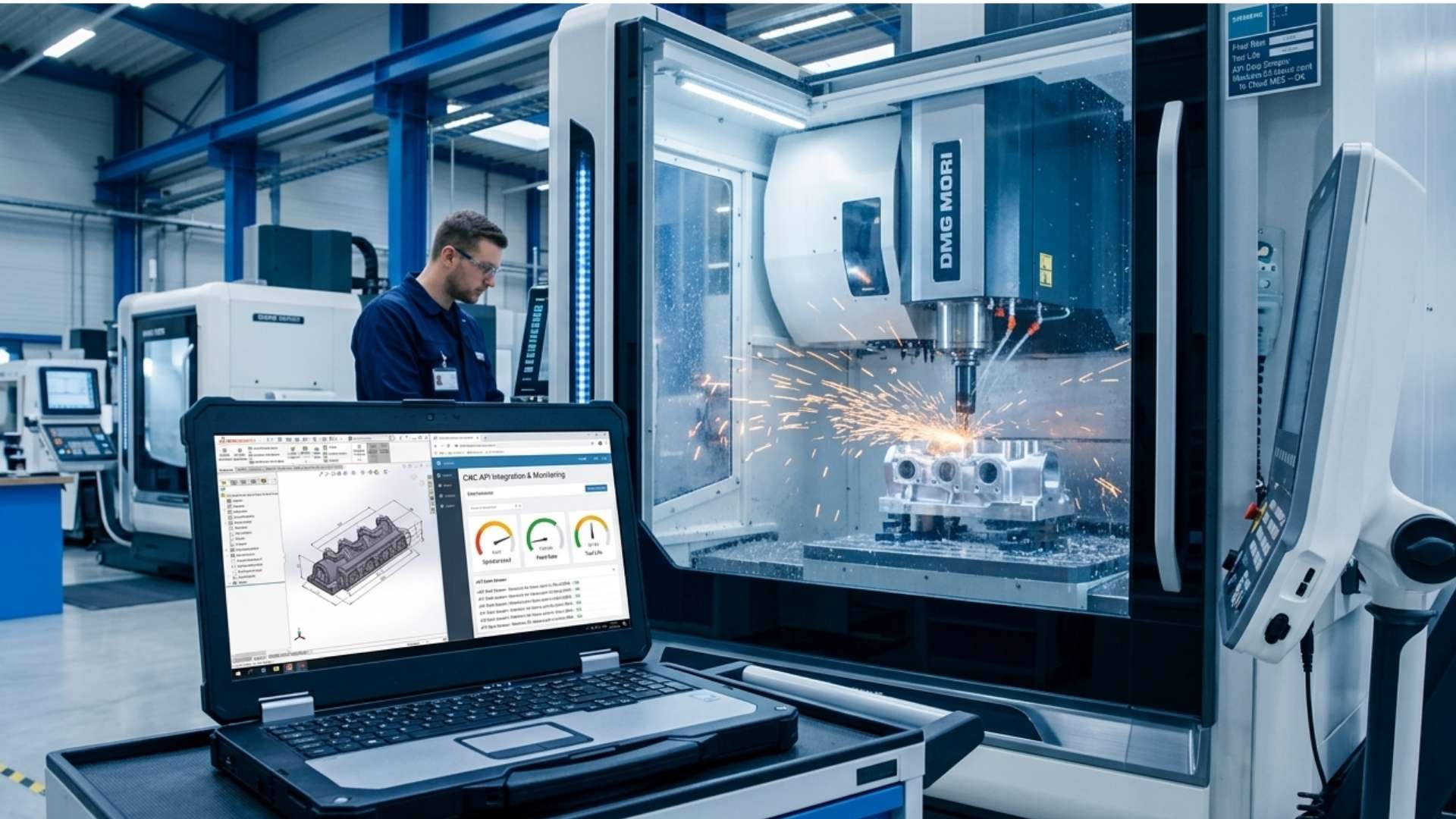
Modern software teams are used to pushing code to production a dozen times per day. Yet the moment a project includes a physical enclosure, bracket, or heat sink, everything screeches to a halt—days lost to quote emails, toolpath revisions, and courier delays.
Good news: a new crop of cloud-connected CNC suppliers is closing that gap. They expose REST or GraphQL endpoints, return manufacturability feedback in minutes, and ship milled parts almost as fast as we deploy containers.
Below are the ten best CNC milling services that stand out for developer usability.
Why This List Matters to Software-First Teams
Continuous delivery isn’t just for code anymore. As IoT, robotics, and custom server hardware become routine sprint work, engineers need suppliers that slot into the same automated pipelines as their CI jobs. Instant quoting APIs + rapid CNC milling let you:
- Run overnight enclosure iterations alongside your firmware build.
- Gate pull requests on a tolerance check or cost delta.
- Move from 3D-printed proof to production-grade aluminum without context-switching vendors.
That agility is arriving just in time: the global CNC machine tools market is forecast to reach USD 128.41 billion by 2030, up from USD 83.99 billion in 2022.
How We Ranked the Services
We scored dozens of providers on five pillars:
- API & automation support
- Turnaround speed (prototype volumes)
- Material & finish breadth
- Pricing transparency
- Quality & security certifications
Data came from public developer docs, customer case studies, test uploads, and verified reviews.
#1. Quickparts
A veteran of rapid prototyping (35+ years), Quickparts tops the list because it blends enterprise-grade quality with a genuinely developer-friendly interface.
- QuickQuote® returns price, DfM warnings, and lead-time estimates in <60 seconds.
- Promotes quick-turn CNC production, and customer case studies show parts delivered in under a week for standard aluminum jobs.
- Supports a wide selection of metals and plastics and lists machining tolerances down to a few thousandths of an inch, depending on geometry
- Maintains ISO 9001 certification and ITAR registration.
- Offers a hybrid manufacturing model, with a single portal covering SLA, SLS, DMP, and injection molding—useful when a sprint shifts from additive to subtractive processes.
Quickparts relaunched its instant-quote portal in November 2025, slashing quote times from hours to a minute.
If you want one endpoint that scales from single prototypes to low-volume production, start here.
#2. Xometry
Xometry popularised the “upload-to-order” flow and keeps adding dev hooks.
- Plug-ins for Fusion 360 and SolidWorks generate quotes without leaving CAD; REST API for custom apps.
- Parts ship in as fast as 1 day for aluminum 6061
- 70+ materials, plus anodising, powder coating, chem-film, bead blasting.
The network model sometimes yields variable cosmetic finishes, but the speed and plug-in ecosystem are unmatched for hack-n-ship schedules.
#3. Hubs (formerly 3D Hubs)
Now owned by Protolabs, Hubs focuses on instant feedback.
- Quoting engine flags un-millable fillets in under two minutes
- Transparent tiered pricing lets PMs model BOM cost vs. volume.
- 100+ plastics & metals; automatic CMM inspection on request.
If you iterate designs hourly and need early DFM validation, Hubs earns its spot.
#4. RapidDirect
Shenzhen-based RapidDirect marries Asia pricing with surprisingly tight SLAs.
- Production & sandbox APIs with webhook status updates.
- Global express shipping delivers aluminum parts in 3–7 days to the US/EU.
- In-house anodizing and powder coat reduce vendor hops.
For cost-sensitive runs of 50-500 units, RapidDirect can drop your per-part spend without extending the schedule.
#5. MakerVerse
A newer European marketplace backed by Siemens Energy, MakerVerse leans on AI to kill administrative lag.
- Predictive quoting suggests alternative alloys when supply chains tighten.
- Standard lead time: 5 business days across the EU.
- Optional aerospace traceability packages.
Teams building energy or aviation hardware in the EU will appreciate the local supplier network and certification add-ons.
#6. Jiga
Jiga positions itself as “the procurement OS” for hardware startups.
- Slack & Teams bot surfaces quotes for approval inside chat.
- Holds ±0.003 in (0.08 mm) on CNC milling; tighter on request.
- Competitive pricing for batches under 100.
If your org already routes PR reviews through Slack, adding Jiga to the same flow feels natural.
#7. Instawerk
Operating from Germany, Instawerk emphasises EU compliance and automation.
- Offers both REST and GraphQL endpoints for bulk BOM uploads.
- All partner mills comply with CE machinery directives.
Instawerk is ideal for teams that need GDPR-safe data handling and want servers and spindles to live on the same continent.
#8. Fictiv
Fictiv brands itself a “digital MES” rather than a job-shop marketplace.
- Rapid DFM reports delivered within two hours by human engineers.
- Hybrid US and Asia network balances cost vs. IP protection zones.
- Optional carbon-offset shipping for sustainability targets.
The human-in-the-loop review can catch nuances automated portals miss, albeit at the expense of true instant quotes.
#9. Proto-Labs
Proto-Labs is the grandfather of automated machining but still earns a mention.
- E-commerce-style checkout with live pricing.
- Gateway to injection molding when volumes spike.
- Select geometries ship same-day if you upload before noon (US Central).
Pricing can jump on complex parts, yet the reliability keeps legacy engineering teams loyal.
#10. Local Job Shops via Paperless Parts
Sometimes you need that specialist down the street. Paperless Parts doesn’t machine; it links 1,000+ US-based shops.
- Unified API funnels RFQs to regional vendors experienced in exotic alloys.
- Great for face-to-face design reviews or ITAR projects that must stay domestic.
- Lead times vary, but you’re supporting local manufacturing ecosystems.
If community impact or doorstep supplier audits matter more than absolute speed, Paperless Parts is your aggregator.
How to Choose the Right Partner for Your Sprint
Still torn? Weight the pillars against your roadmap:
- API maturity – Will you trigger quotes from GitHub Actions or click buttons manually?
- Lead time – Match ship dates to demo days; don’t pay for 24-hour machining if the sprint review is next month.
- Material depth – Aluminum 6061 is universal, but does your enclosure need 7075, copper, or PEEK?
- Quality stack – ISO 9001 is baseline; aerospace projects may need AS9100 & full FAIRs.
- Data/IP security – Check ITAR, GDPR, and NDA workflows.
Plot providers on a 5×5 grid and the winner will pop out.
Automating the Handoff From CAD to Quote — What “Good” Looks Like
Here’s what to look for when you’re evaluating a service’s “automation friendliness”:
1. Single-upload experience
A modern portal should accept native CAD (STEP, IGES, or even SolidWorks files) and immediately return price, lead time, and basic DFM feedback—no e-mail ping-pong required.
2. Reusable project spaces
Instead of attaching fresh files to every new RFQ, you should be able to version-control models inside the platform, clone prior orders, and compare cost deltas across revisions. Think “git history,” but for parts.
3. Notification hooks
Whether it’s Slack, Teams, or plain-vanilla e-mail, the quoting engine should alert your team the moment a quote is ready—or when a manufacturability issue appears. That beats refreshing a browser tab all afternoon.
4. Exportable data
CSV or JSON downloads of line-item pricing let you fold manufacturing costs into the same dashboards that track sprint burndown or cloud spend. No more guessing where hardware is eating the budget.
5. Guardrails, Not Gatekeepers
The goal isn’t to remove humans; it’s to involve them only when the numbers look wrong. A well-designed system escalates exceptions—tight tolerances, exotic materials, sudden price spikes—while letting routine parts sail through untouched.
When a supplier nails these points, quoting becomes just another signal in your product-development telemetry. Designers stay focused on geometry, developers keep shipping firmware, and purchasing only steps in for final approval.
The result: Hardware iteration that finally moves at software speed.
Caveats & Counterpoints
- In-house machining shines for ultra-fast one-offs, assuming your shop has spare capacity and an operator.
- Regional customs can wipe out the lead-time edge of low-cost overseas vendors.
- Finish variance still happens: automated portals can’t photograph a surface before shipping. Always budget one extra spin for cosmetic fixes.
Healthy skepticism plus a small test order will surface most surprises before you stake a product launch.
Conclusion
APIs, cloud dashboards, and overnight couriers have finally dragged CNC milling into the developer toolchain. Whether you prioritise blazing-fast quotes, aerospace documentation, or Slack-native approvals, at least one of the ten services above will fit your workflow. Pick a partner, automate the boring bits, and get back to shipping—both code and metal.