
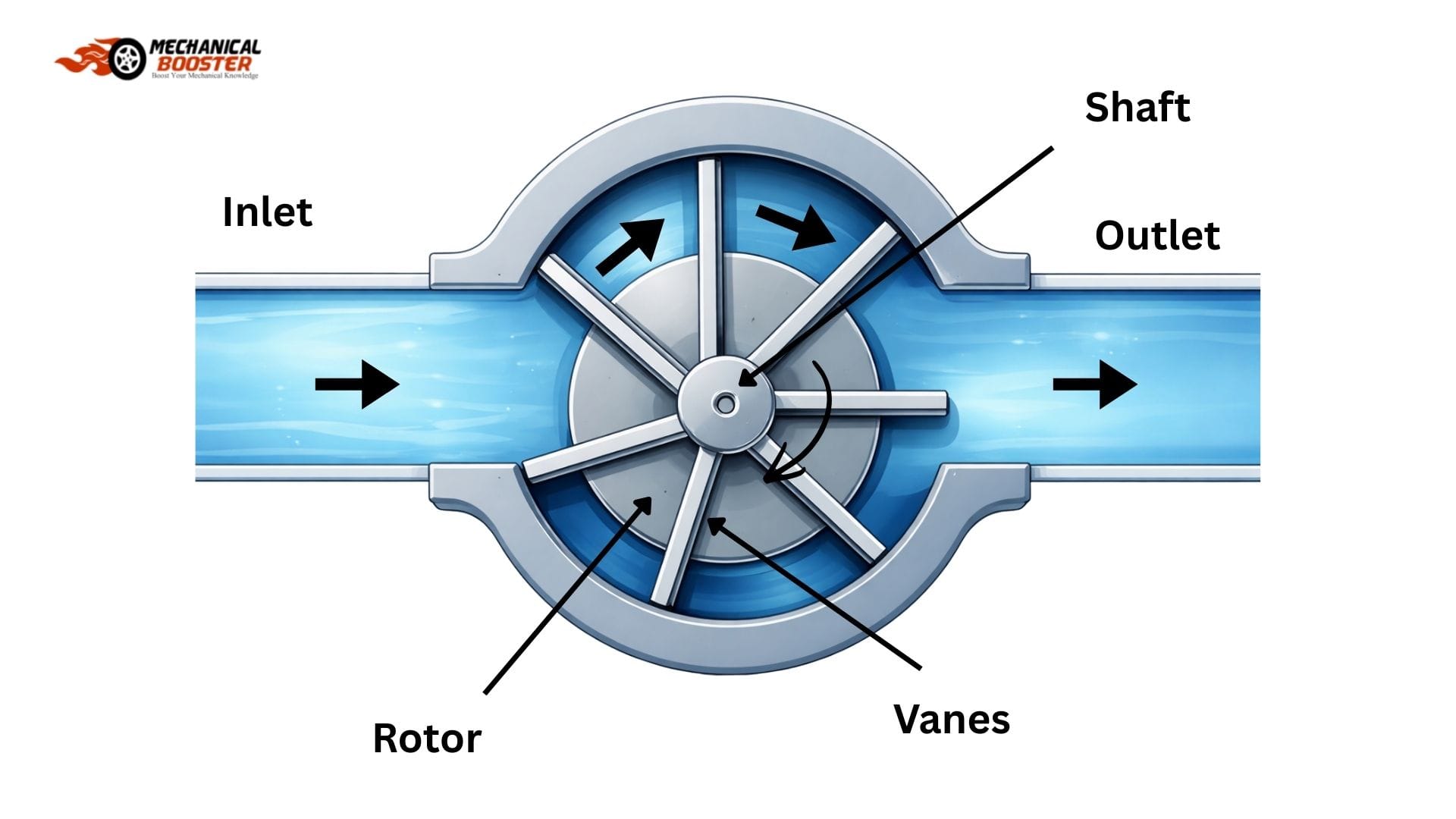
A rotary positive displacement pump is a pump in which fluid is moved using rotating components that trap and transfer a fixed volume of liquid from the suction side to the discharge side. Unlike reciprocating pumps, these pumps provide a smooth, continuous, and pulse-free flow, making them ideal for handling viscous fluids like oils, chemicals, and syrups.
They are widely used in industries such as lubrication systems, fuel transfer, food processing, and hydraulics. Their compact design, high efficiency, and ability to operate at moderate pressures make them one of the most commonly used positive displacement pumps.
Learn more about the Positive Displacement Pump
What is a Rotary Positive Displacement Pump?
A rotary PDP uses rotating elements (gears, screws, vanes, lobes, etc.) to:
- Trap fluid in small pockets
- Carry it along the pump casing
- Discharge it at the outlet
Unlike centrifugal pumps, it does not rely on velocity or kinetic energy, but on mechanical displacement.
Working Principle of Rotary Pump
The working can be understood in three steps:
1. Fluid Entry (Suction)
- Rotation of the rotor creates a vacuum
- Fluid enters the pump casing
2. Fluid Trapping
- Fluid gets trapped between rotating elements and casing
- Sealed pockets of fluid are formed
3. Fluid Discharge
- As rotation continues, trapped fluid is carried to outlet
- Pressure builds up and fluid is discharged
Internal Working Mechanism
- The rotor rotates inside a closely fitted casing
- Clearances are very small to prevent backflow
- Fluid moves in a continuous path
- No valves are required (unlike reciprocating pumps)
Types of Rotary Positive Displacement Pumps
1. Gear Pump
Working
- Two gears rotate in opposite directions
- Fluid is trapped between gear teeth and casing
- Fluid is carried around and discharged
Features
- Simple construction
- High reliability
- Suitable for lubricating oils
2. Screw Pump
Working
- One or more screws rotate inside a casing
- Fluid moves axially along screw threads
- Provides smooth, non-pulsating flow
Features
- Quiet operation
- Handles viscous fluids
- High efficiency
3. Rotary Vane Pump
Working
- Rotor with sliding vanes rotates inside casing
- Vanes expand and contract due to centrifugal force
- Fluid is trapped and pushed to outlet
Features
- Good suction capability
- Used in fuel systems and compressors
4. Lobe Pump
Working
- Two lobes rotate without touching
- Fluid is carried between lobes and casing
Features
- Handles solids
- Hygienic design
- Used in food & pharmaceutical industries
5. Progressive Cavity Pump
Working
- Helical rotor rotates inside stator
- Creates progressing cavities
- Fluid moves smoothly forward
Features
- Excellent for slurry and viscous fluids
- Low shear pumping
Advantages of Rotary Positive Displacement Pumps
- Continuous and smooth flow
- High efficiency
- Compact and simple design
- Self-priming
- Handles viscous fluids effectively
- Low vibration and noise
Disadvantages
- Cannot run dry for long (may damage components)
- Sensitive to solid particles (except lobe type)
- Limited to moderate pressure range
- Requires tight clearances
Applications
Rotary pumps are widely used in:
- Oil and lubrication systems
- Fuel transfer and injection
- Chemical processing
- Food and beverage industries
- Hydraulic systems
- Marine and automotive industries
Rotary Pump vs Reciprocating Pump
| Feature | Rotary Pump | Reciprocating Pump |
| Flow Type | Continuous | Pulsating |
| Speed | High | Low |
| Maintenance | Low | High |
| Pressure | Moderate | High |
| Complexity | Simple | Complex |
Conclusion
Rotary type positive displacement pumps are essential for applications requiring smooth, reliable, and continuous fluid flow. Their ability to handle viscous fluids, operate efficiently, and maintain consistent performance makes them a preferred choice across many industries.
From gear pumps in lubrication systems to screw pumps in heavy oil transport, each type offers unique advantages. Understanding their working and types helps engineers select the right pump for improved efficiency and long-term reliability.