
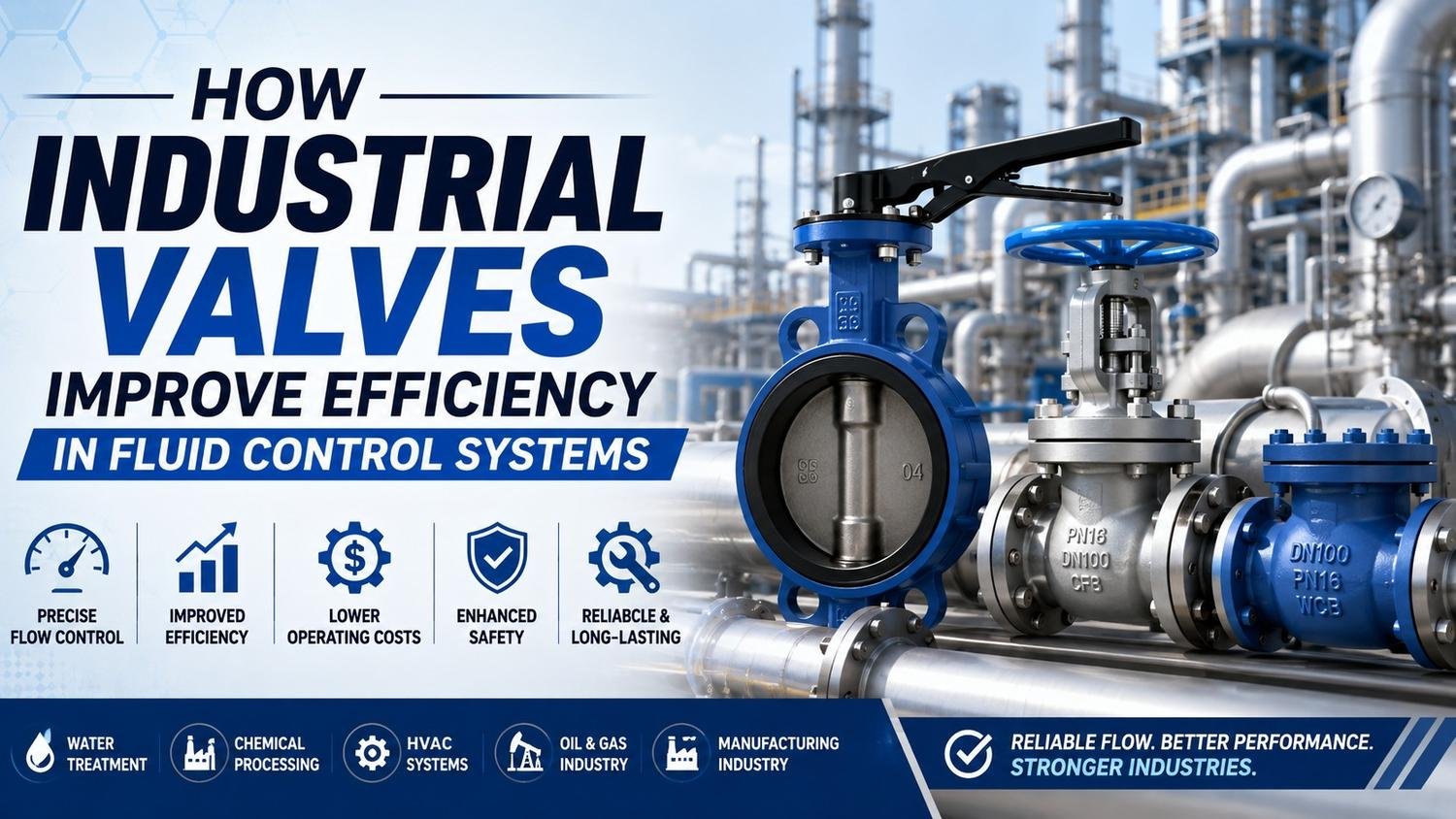
In modern industrial operations, efficient fluid management plays a critical role in maintaining productivity, safety, and system reliability. From water treatment plants and chemical facilities to HVAC systems and manufacturing processes, controlling the movement of liquids and gases requires precise and dependable equipment.
Among the many components used in fluid control systems, industrial valves are essential for regulating, directing, and stopping the flow of different media. A properly selected valve can improve operational efficiency, reduce energy consumption, minimize maintenance requirements, and extend the service life of an entire pipeline system.
As industries continue to pursue higher efficiency and smarter infrastructure, advanced valve solutions have become increasingly important.
The Importance of Industrial Valves in Fluid Control
Fluid control systems depend on accurate flow management to ensure stable operation. Without reliable valves, pipelines may experience issues such as excessive pressure, leakage, inefficient flow rates, or unexpected downtime.
Industrial valves provide essential functions, including:
- Controlling fluid flow rates
- Isolating sections of pipelines
- Preventing backflow
- Managing system pressure
- Improving operational safety
Different applications require different valve designs. For example, water supply systems may require durable valves for long-term operation, while chemical processing facilities need solutions that can handle challenging environments and corrosive media.
Manufacturers such as ZFA Valve provide industrial valve solutions designed for various fluid control applications, including butterfly valves, gate valves, and check valves used across multiple industries.
Improving System Efficiency Through Better Flow Control
One of the primary ways industrial valves improve efficiency is by providing precise control over fluid movement.
In manufacturing facilities, improper flow regulation can lead to wasted energy, unstable production conditions, and increased operating costs. High-quality valves help maintain consistent flow rates, allowing equipment to operate under optimal conditions.
For example, in HVAC systems, valves help regulate water circulation and maintain temperature control. In water treatment facilities, valves manage distribution processes and ensure reliable operation throughout the system.
By improving flow accuracy, industrial valves help companies reduce resource waste while maintaining stable performance.
Reducing Energy Consumption and Operating Costs
Efficient fluid control directly impacts energy usage. When pipelines experience unnecessary pressure losses or poor flow management, pumps and other equipment must work harder, resulting in higher energy consumption.
Well-designed valves can minimize pressure drops and improve overall system performance. This is especially important in large-scale industrial facilities where even small efficiency improvements can lead to significant cost savings over time.
Selecting the correct valve type, size, and material according to operating conditions allows companies to achieve better performance while reducing long-term expenses.
Enhancing Safety and System Reliability
Industrial environments often involve high-pressure fluids, extreme temperatures, or potentially hazardous materials. Reliable valves are essential for maintaining safe operations.
Valves help protect equipment and personnel by:
- Preventing uncontrolled fluid release
- Allowing emergency shut-off
- Maintaining pressure balance
- Supporting safe maintenance procedures
In industries such as oil and gas, chemical processing, and power generation, valve reliability is directly connected to operational safety.
Regular maintenance and choosing suitable valve designs can significantly reduce the risk of system failures and unexpected production interruptions.
Choosing the Right Valve for Different Applications
Different industrial systems require different valve solutions. Factors such as fluid type, pressure rating, temperature, pipeline size, and operating environment should all be considered during valve selection.
Common industrial valve types include:
Butterfly Valves
Butterfly valves are widely used because of their compact design, lightweight structure, and efficient flow control capabilities. They are commonly applied in water supply, HVAC, and industrial pipeline systems.
Gate Valves
Gate valves are typically used for applications requiring full flow opening or complete shut-off. They are suitable for systems where minimal pressure loss is important.
Check Valves
Check valves prevent reverse flow and help protect pumps and other equipment from potential damage.
Choosing the correct valve type ensures better system performance and reduces unnecessary maintenance requirements.
The Role of Quality Manufacturing in Valve Performance
The performance of industrial valves depends not only on design but also on manufacturing quality. Precision machining, proper material selection, and strict quality control are essential for producing reliable valve products.
Professional valve manufacturers follow international standards and testing procedures to ensure products can withstand demanding industrial environments. Quality assurance helps prevent issues such as leakage, corrosion, and premature failure.
As industries become more focused on efficiency and sustainability, reliable valve technology will continue to play an important role in modern fluid control systems.
Conclusion
Industrial valves are critical components that influence the efficiency, safety, and reliability of fluid control systems. By providing accurate flow regulation, reducing energy consumption, and improving operational stability, high-quality valves help industries achieve better performance.
Whether used in water infrastructure, manufacturing plants, HVAC systems, or industrial processing facilities, selecting the right valve solution is essential for long-term success.
With continued advancements in engineering and manufacturing, industrial valves will remain a key element in building more efficient and reliable fluid management systems.