
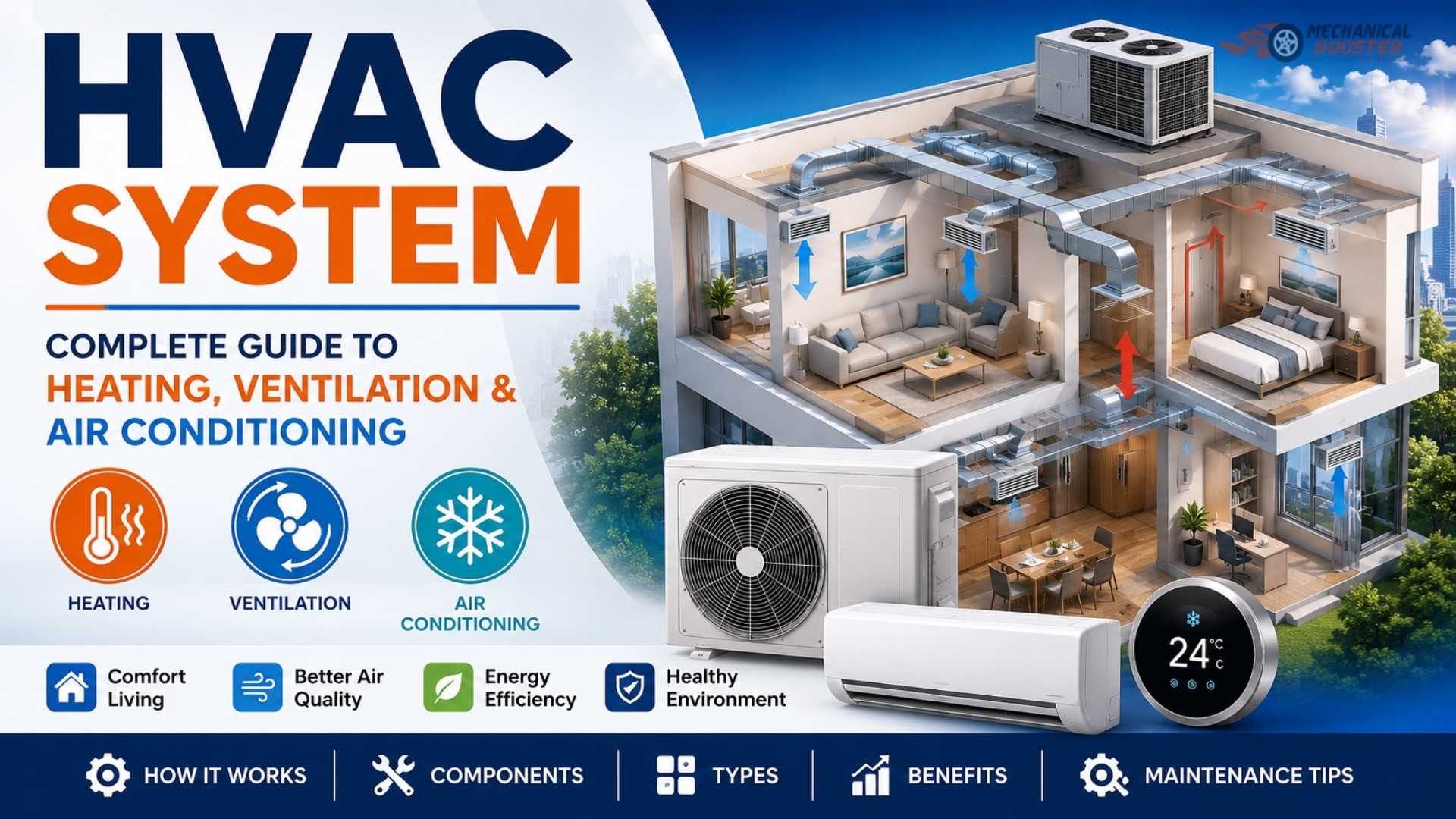
An HVAC system is one of the most important systems used in homes, offices, malls, hospitals, industries, and commercial buildings. If you have ever used an air conditioner, room heater, or ventilation system, then you have already experienced how HVAC works.
So, what is HVAC system exactly?
HVAC stands for Heating, Ventilation, and Air Conditioning. It is a complete system designed to maintain indoor temperature, improve air quality, and provide comfortable living conditions.
In simple words, an HVAC system controls:
- Indoor temperature
- Humidity level
- Air circulation
- Air cleanliness
- Ventilation
Modern HVAC systems are energy-efficient and help create a comfortable indoor environment throughout the year.
What HVAC Stands For
Many people ask, HVAC stands for what?
The full form of HVAC is:
- H – Heating
- V – Ventilation
- AC – Air Conditioning
This means the system can:
- Heat the building during winter
- Cool the building during summer
- Circulate and clean indoor air
So, if someone asks what does HVAC mean, it simply refers to a system that controls indoor environmental comfort.
What is a HVAC System?
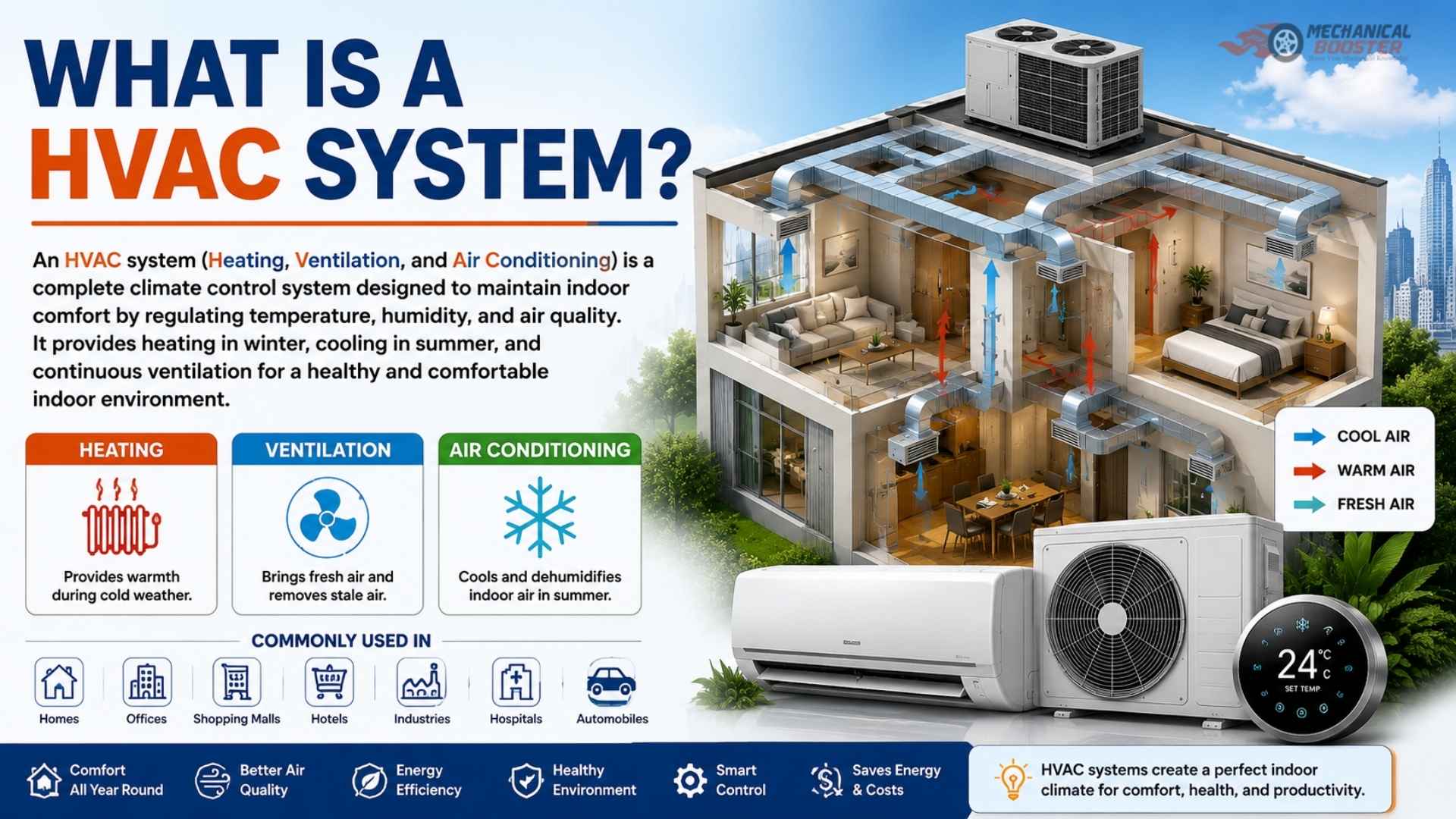
A HVAC air conditioning system is a combination of mechanical and electrical components used to regulate indoor climate.
The system may include:
- Air conditioner
- Furnace
- Heat pump
- Ventilation ducts
- Thermostat
- Blower fan
- Air filters
- Compressor
- Condenser
- Evaporator coil
The main purpose of an HVAC system is to provide:
- Comfortable temperature
- Fresh airflow
- Clean indoor air
- Controlled humidity
Today, HVAC systems are widely used in:
- Homes
- Offices
- Schools
- Hotels
- Factories
- Shopping malls
- Hospitals
- Data centers
Define HVAC
To define HVAC, it can be explained as:
“HVAC is a technology used for heating, ventilation, air conditioning, and maintaining indoor air quality in residential, commercial, and industrial buildings.”
It is an essential part of modern buildings because it improves comfort, health, and energy efficiency.
How Does a HVAC System Work?
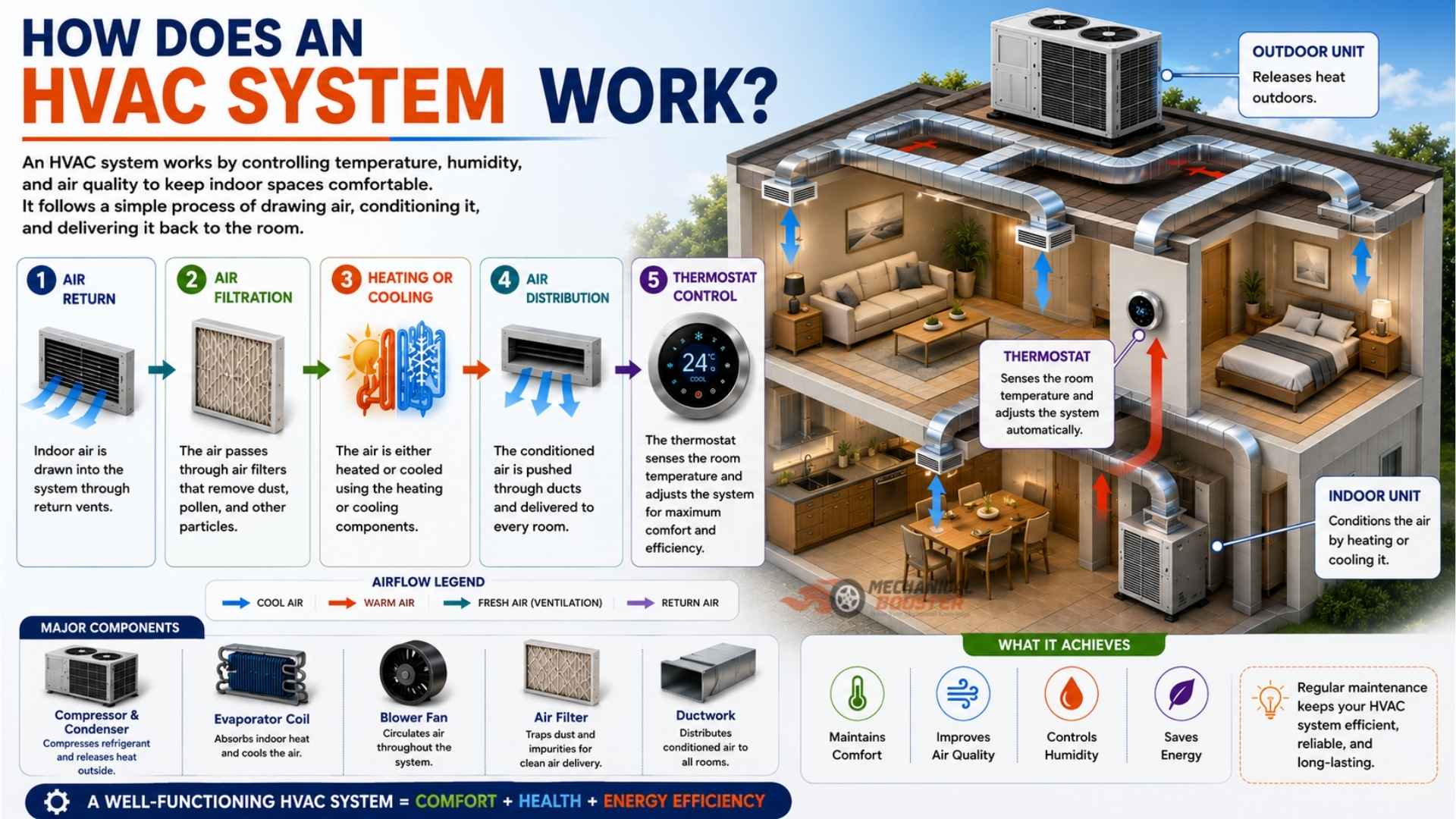
One of the most common questions is how does a HVAC system work?
The working principle of an HVAC system depends on three major operations:
- Heating
- Cooling
- Ventilation
Let us understand each one.
1. Heating Process
During cold weather, the heating unit warms indoor air.
The heating system may use:
- Furnace
- Boiler
- Heat pump
- Electric heater
Working of Heating System
- Fuel or electricity generates heat
- Heat exchanger transfers heat to air
- Blower fan circulates warm air through ducts
- Warm air enters rooms through vents
This maintains a comfortable indoor temperature during winter.
2. Cooling Process
The cooling process is usually performed by the air conditioner.
Working of Air Conditioning System
The HVAC air conditioning system works on the refrigeration cycle.
Main components include:
- Compressor
- Condenser
- Expansion valve
- Evaporator coil
Cooling Cycle Steps
Step 1: Compression: The compressor compresses refrigerant gas and increases its pressure and temperature.
Step 2: Condensation: The hot refrigerant releases heat in the condenser and becomes liquid.
Step 3: Expansion: The expansion valve reduces refrigerant pressure.
Step 4: Evaporation: The refrigerant absorbs indoor heat in the evaporator coil. A blower fan then circulates cool air into the room.
3. Ventilation Process
Ventilation supplies fresh air and removes stale air.
It helps in:
- Removing dust
- Eliminating odors
- Reducing humidity
- Improving oxygen level
- Maintaining indoor air quality
Ventilation can be:
- Natural ventilation
- Mechanical ventilation
Main Components of HVAC System
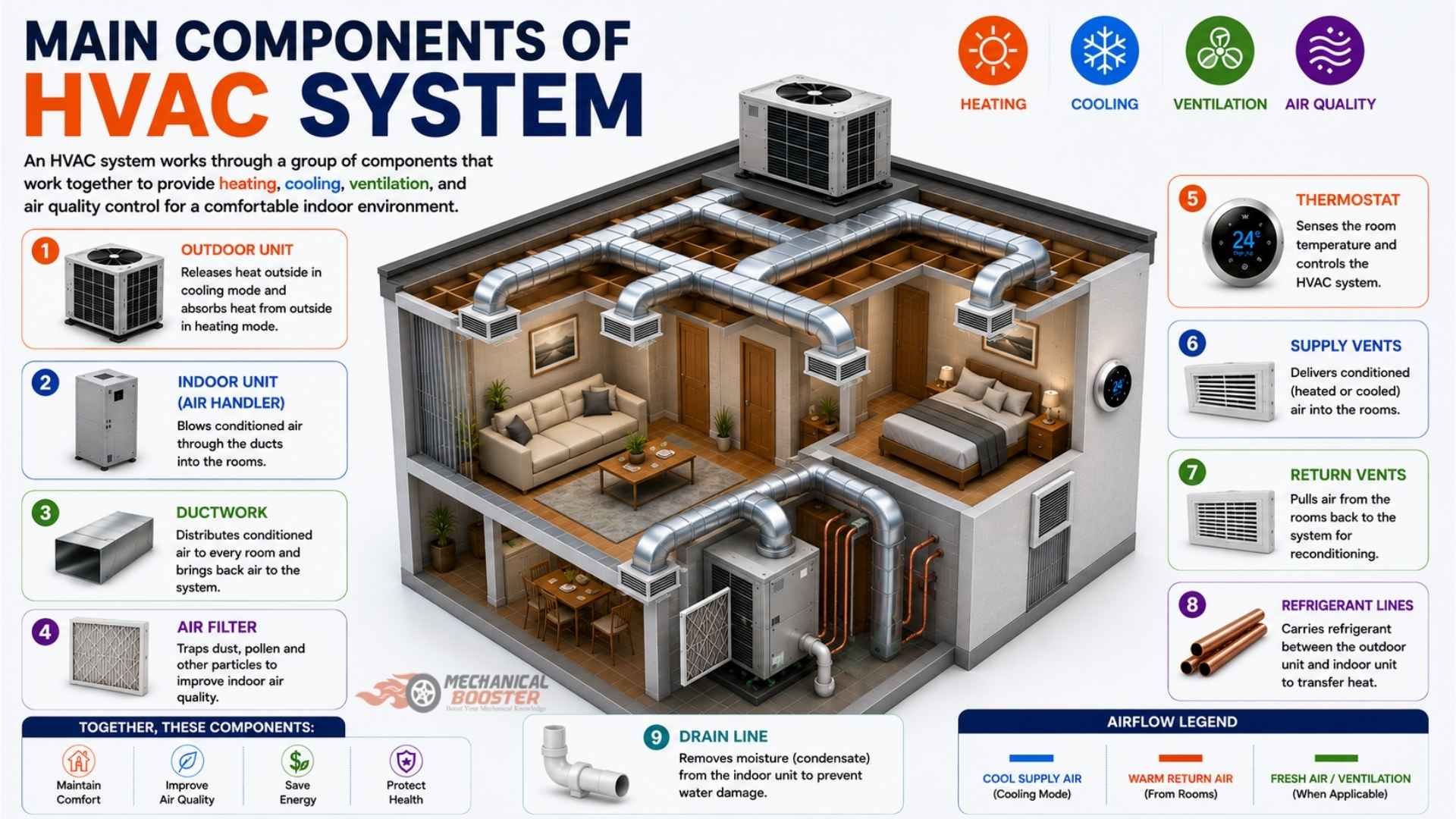
The following are the major components of an HVAC system.
- Thermostat: The thermostat controls the temperature of the HVAC system. It senses room temperature and automatically turns the system ON or OFF.
- Furnace: The furnace generates heat for indoor heating. Common fuel types: Natural gas, Electricity, Oil
- Heat Pump: A heat pump can provide both heating and cooling. It transfers heat instead of generating it.
- Air Conditioner: The air conditioner cools indoor air and controls humidity.
- Ductwork: Ducts distribute conditioned air throughout the building.
- Ventilation System: The ventilation system maintains fresh airflow.
- Air Filters: Air filters remove: Dust, Pollen, Smoke, Allergens. This improves indoor air quality.
- Blower Fan: The blower fan circulates air through ducts and rooms.
Types of HVAC Systems
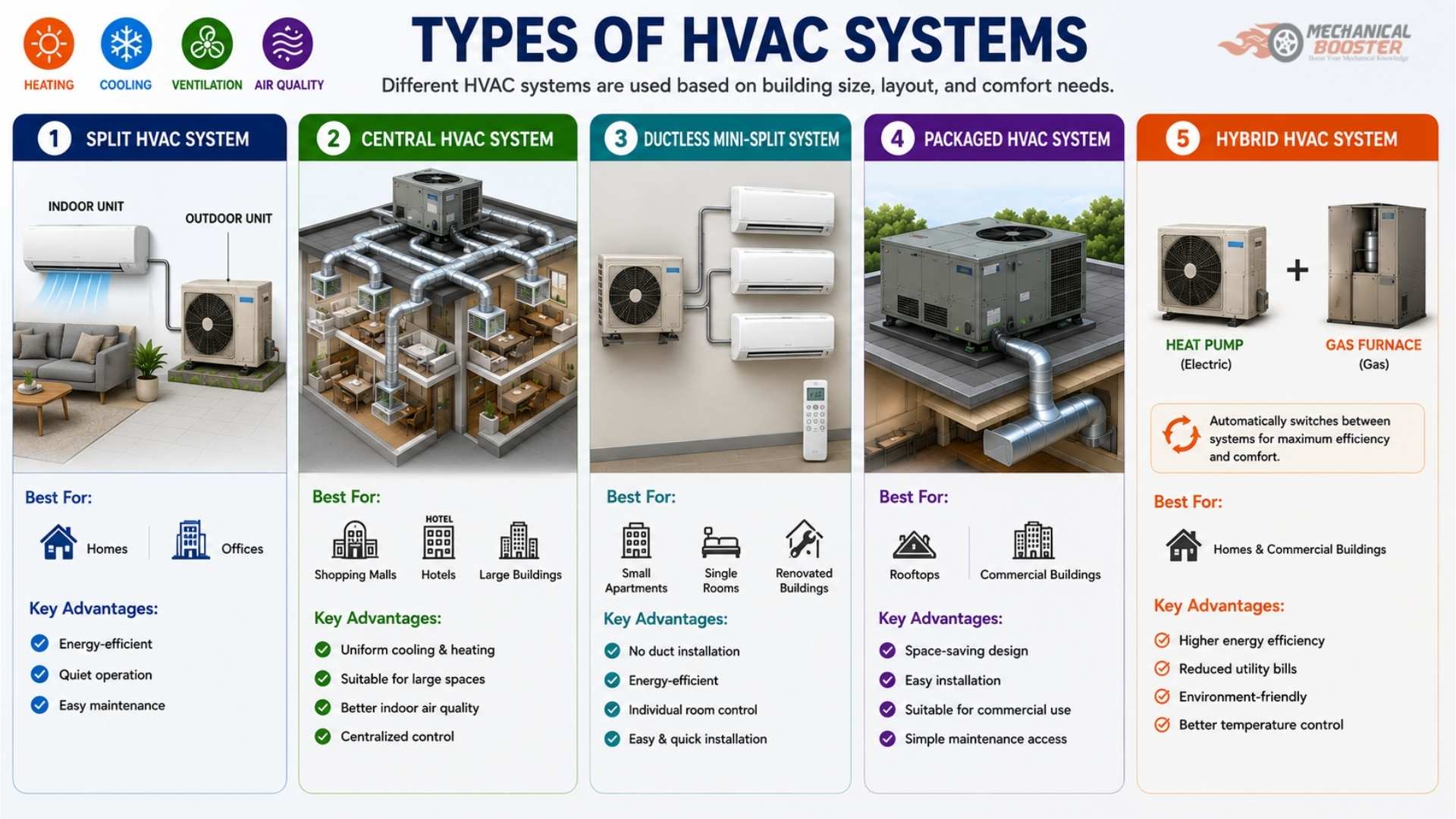
There are several types of HVAC systems used for different applications.
1. Split HVAC System
A Split HVAC System is the most commonly used heating and cooling system in homes and small commercial buildings. It is called a “split system” because its main components are divided into indoor and outdoor units.
It has:
- Indoor unit
- Outdoor unit
The indoor unit contains the evaporator coil and air handler, while the outdoor unit contains the compressor and condenser. These units work together to cool or heat indoor air efficiently.
Used in:
- Homes
- Offices
Advantages:
- Energy-efficient
- Quiet operation
- Easy maintenance
Split HVAC systems are popular because they provide reliable temperature control, consume less energy, and operate with lower noise compared to many traditional systems.
2. Central HVAC System
A Central HVAC System is designed to heat or cool an entire building from one central location. It distributes conditioned air through a network of ducts and vents to maintain a uniform indoor temperature throughout the building.
Used in:
- Shopping malls
- Hotels
- Large buildings
In this system, a centralized unit handles air conditioning, heating, and ventilation for multiple rooms or floors at the same time. It is widely used in commercial and large residential buildings because it provides efficient temperature control and better air circulation.
Advantages:
- Uniform cooling and heating
- Suitable for large spaces
- Better indoor air quality
- Centralized control system
Central HVAC systems are preferred in large buildings because they can efficiently manage comfort levels for many occupants while maintaining consistent airflow and temperature.
3. Ductless Mini-Split System
A Ductless Mini-Split System is an HVAC system that provides heating and cooling without using ductwork. It consists of an outdoor compressor unit connected to one or more indoor air-handling units.
Ideal for:
- Small apartments
- Single rooms
- Renovated buildings
These systems are commonly used in places where installing ducts is difficult or expensive. Each indoor unit can be controlled separately, allowing users to set different temperatures for different rooms.
Advantages:
- No duct installation required
- Energy-efficient operation
- Individual room temperature control
- Easy and quick installation
Ductless mini-split systems are popular because they save energy, reduce installation costs, and provide flexible cooling and heating solutions for specific areas.
4. Packaged HVAC System
A Packaged HVAC System contains all major heating and cooling components in a single compact unit. Unlike split systems, all parts such as the compressor, condenser, evaporator, and blower are housed together.
Usually placed:
- On rooftops
- Outside buildings
These systems are commonly used in commercial buildings and places where indoor installation space is limited. Conditioned air is distributed through ducts connected to the packaged unit.
Advantages:
- Space-saving design
- Easy installation
- Suitable for commercial buildings
- Simple maintenance access
Packaged HVAC systems are widely preferred for medium to large buildings because they combine all components into one unit, making them compact, efficient, and convenient to maintain.
5. Hybrid HVAC System
A Hybrid HVAC System uses more than one energy source to provide heating and cooling more efficiently. It automatically switches between systems depending on temperature and energy demand to reduce power consumption and operating costs.
Example:
- Gas furnace + electric heat pump
During mild weather, the heat pump works to save energy, while the gas furnace operates in extremely cold conditions when additional heating is needed.
Advantages:
- Higher energy efficiency
- Reduced utility bills
- Environment-friendly operation
- Better temperature control
Hybrid HVAC systems are becoming increasingly popular because they combine comfort, energy savings, and flexible performance in different weather conditions.
Advantages of HVAC System
The following are the major benefits of HVAC systems.
- Comfortable Indoor Temperature: HVAC systems maintain ideal temperature throughout the year.
- Better Air Quality: Air filters remove dust and pollutants.
- Humidity Control: The system controls excess moisture.
- Energy Efficiency: Modern HVAC systems consume less energy.
- Improved Ventilation: Fresh air circulation improves comfort and health.
- Automated Operation: Thermostats automate temperature control.
Disadvantages of HVAC System
Despite many benefits, HVAC systems also have some disadvantages.
- High Installation Cost: Initial setup cost can be expensive.
- Maintenance Requirement: Regular maintenance is necessary.
- Energy Consumption: Old HVAC systems may consume high electricity.
- Duct Leakage Problems: Poor duct design can reduce efficiency.
Applications of HVAC System
HVAC systems are used in many industries and buildings.
- Residential Buildings: Homes, Apartments, Villas
- Commercial Buildings: Offices, Hotels, Restaurants, Shopping Malls
- Industrial Applications: Factories, Manufacturing Plants, Warehouses
- Healthcare Sector: Hospitals, Laboratories, Diagnostic Centers
- IT and Data Centers: Server Rooms, Data Centers, Networking Facilities
- Educational Institutions: Schools, Colleges, Universities
- Transportation Sector: Airports, Railway Stations, Metro Stations
- Hospitality Industry: Resorts, Banquet Halls, Convention Centers
What is HVAC Technician?
Many people also ask, what is HVAC technician or what is an HVAC technician.
An HVAC technician is a skilled professional who installs, repairs, and maintains HVAC systems.
Responsibilities of HVAC Technician
- Installing HVAC systems
- Repairing air conditioners
- Maintaining heating systems
- Cleaning ducts
- Replacing filters
- Diagnosing system problems
Skills Required
- Mechanical knowledge
- Electrical troubleshooting
- Refrigeration understanding
- Safety practices
HVAC technicians are highly demanded worldwide.
Difference Between HVAC and AC
Many people confuse HVAC with air conditioning.
| HVAC | AC |
| Includes heating, ventilation, and cooling | Only cooling |
| Complete indoor climate system | Only air conditioning system |
| Used year-round | Mostly used in summer |
So, HVAC is broader than just an air conditioner.
Tips for Maintaining HVAC System
Proper maintenance increases efficiency and lifespan.
Maintenance Tips
- Clean air filters regularly
- Inspect ducts for leakage
- Service the system annually
- Keep outdoor unit clean
- Check thermostat settings
- Monitor refrigerant level
Future of HVAC Systems
Modern HVAC technology is becoming smarter and more energy-efficient.
Future trends include:
- Smart thermostats
- AI-based climate control
- Solar-powered HVAC systems
- Eco-friendly refrigerants
- IoT-enabled monitoring
These innovations help reduce energy consumption and environmental impact.
Conclusion
Now you understand what is HVAC system and how it works.
An HVAC system is a complete solution for:
- Heating
- Ventilation
- Air conditioning
- Indoor comfort
- Air quality control
It is widely used in residential, commercial, and industrial buildings.
Whether it is cooling in summer or heating in winter, HVAC systems play a major role in modern life.
Understanding HVAC basics can help you choose the right system, maintain it properly, and improve energy efficiency.