
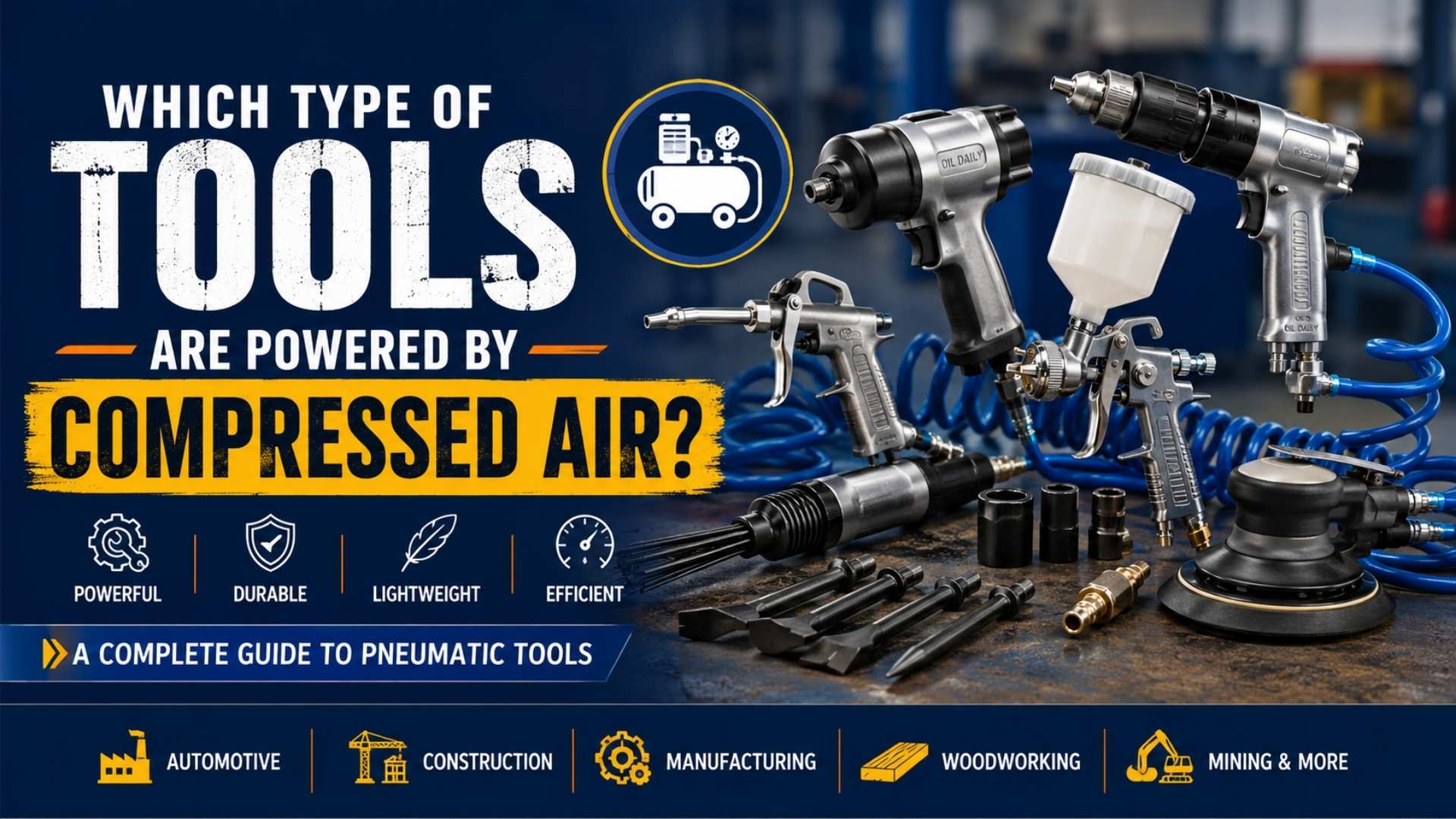
Have you ever wondered which type of tools are powered by compressed air? The answer is pneumatic tools, also called air tools. These tools use compressed air supplied by an air compressor to perform mechanical work efficiently. From automotive workshops and construction sites to manufacturing plants and woodworking shops, pneumatic tools play an important role in modern industries.
Unlike electric tools, compressed air tools are often lighter, more durable, and capable of delivering high power for demanding applications. Whether it is loosening stubborn bolts, drilling holes, painting surfaces, or breaking concrete, air-powered tools make work faster and easier.
In this article, you will learn what pneumatic tools are, how they work, their types, advantages, disadvantages, real-world applications, and why industries still prefer compressed air tools in many operations.
What Type of Tools Are Powered by Compressed Air?
The tools powered by compressed air are called pneumatic tools. The word pneumatic comes from the Greek word pneuma, meaning air or wind.
These tools use compressed air pressure generated by an air compressor to create motion or force. Instead of relying on electricity or fuel-powered engines, pneumatic tools convert compressed air energy into mechanical energy.
Some common examples of pneumatic tools include:
- Air drills
- Pneumatic impact wrenches
- Air hammers
- Spray guns
- Pneumatic grinders
- Nail guns
- Sanders
- Riveters
Because of their high efficiency and reliability, compressed-air-powered tools are widely used in industries where continuous operation and durability are important.
What Are Pneumatic Tools?
Pneumatic tools are mechanical devices powered by compressed air pressure. These tools are connected to an air compressor through hoses, which deliver high-pressure air to the tool.
When compressed air enters the tool, it activates internal components such as pistons, turbines, or rotors that create movement.
In simple words:
Compressed air → Mechanical motion → Work output
For example:
- An air impact wrench uses compressed air to rotate and loosen tight bolts.
- A spray gun atomizes paint using air pressure.
- A jackhammer breaks concrete using repeated pneumatic force.
This makes pneumatic tools extremely useful for heavy-duty industrial work.
How Do Compressed Air Tools Work?
Understanding how pneumatic tools work helps explain why they are so powerful.
Step 1: Air Compression
An air compressor pulls atmospheric air and compresses it to high pressure.
Step 2: Air Storage
The compressed air is stored in a pressure tank until needed.
Step 3: Air Delivery
Air travels through pipes or flexible hoses to the pneumatic tool.
Step 4: Energy Conversion
Inside the tool, compressed air drives pistons or rotating mechanisms to create movement.
Step 5: Exhaust
After doing the work, used air exits through an exhaust port.
This simple mechanism allows pneumatic tools to operate continuously without overheating as much as electric tools.
Types of Tools Powered by Compressed Air
There are many types of pneumatic tools used for different purposes.
1. Pneumatic Drill
A pneumatic drill uses compressed air for drilling holes into wood, metal, plastic, and construction materials.
Uses
- Industrial manufacturing
- Automobile workshops
- Metal fabrication
Advantages
- High-speed drilling
- Lightweight
- Suitable for continuous operation
2. Air Impact Wrench
An impact wrench is one of the most popular pneumatic tools.
It provides high torque output for tightening or loosening nuts and bolts.
Common Uses
- Tire changing
- Vehicle repair
- Heavy machinery maintenance
Mechanics often prefer pneumatic impact wrenches because they deliver greater torque than electric models.
3. Pneumatic Hammer (Jackhammer)
A pneumatic hammer uses repeated impacts powered by compressed air to break hard materials.
Applications
- Road construction
- Concrete demolition
- Mining work
Jackhammers are commonly used to remove pavements and break concrete slabs.
4. Pneumatic Grinder
Air grinders are used for grinding, cutting, polishing, and finishing surfaces.
Industries Using Air Grinders
- Metalworking
- Automotive repair
- Manufacturing
These tools provide smooth operation and high precision.
5. Spray Gun
A pneumatic spray gun uses compressed air to atomize paint into fine particles.
Applications
- Automobile painting
- Furniture finishing
- Industrial coating
Spray guns help achieve a smooth and professional finish.
6. Pneumatic Nail Gun
Nail guns are commonly used in woodworking and construction.
Instead of manual hammering, compressed air drives nails quickly into surfaces.
Benefits
- Faster work
- Reduced labor effort
- Greater accuracy
7. Air Ratchet
An air ratchet helps mechanics tighten or loosen fasteners in tight spaces.
Common Uses
- Engine repair
- Vehicle maintenance
- Mechanical assembly
8. Pneumatic Sanders
Air sanders are used to smooth surfaces before painting or finishing.
Used In
- Furniture industry
- Car body repair
- Woodworking
These tools ensure even surface preparation.
9. Pneumatic Riveter
A riveter joins metal parts together using rivets.
Applications
- Aircraft manufacturing
- Sheet metal work
- Industrial assembly
10. Pneumatic Chisel
This tool is used for cutting or shaping metals and removing rust or old paint.
Uses
- Metal workshops
- Industrial repair
Advantages of Pneumatic Tools
Many industries prefer compressed-air-powered tools because of their benefits.
- Lightweight Design: Pneumatic tools are generally lighter because they do not contain heavy electric motors.
- High Power-to-Weight Ratio: They deliver strong performance while remaining compact.
- Durable and Reliable: Compressed air tools usually have fewer moving electrical parts, reducing maintenance issues.
- Safe in Hazardous Areas: Since they do not produce sparks, pneumatic tools are ideal in flammable environments.
- Continuous Operation: These tools can operate for long periods without overheating.
- Faster Work Speed: Air-powered tools often complete tasks more quickly than manual tools.
Disadvantages of Pneumatic Tools
Despite their benefits, pneumatic tools also have some limitations.
- Requires an Air Compressor: They cannot work without compressed air equipment.
- Noise Levels: Many pneumatic tools are noisy during operation.
- Hose Restrictions: Air hoses may limit movement.
- Maintenance of Air System: Compressors and air filters need regular maintenance.
Pneumatic Tools vs Electric Tools
| Feature | Pneumatic Tools | Electric Tools |
| Power Source | Compressed air | Electricity |
| Weight | Lightweight | Heavier |
| Maintenance | Lower tool maintenance | Moderate |
| Continuous Use | Better | Can overheat |
| Mobility | Requires hoses | Portable |
For heavy-duty industrial applications, pneumatic tools are often preferred.
Industries That Use Compressed Air Tools
Pneumatic tools are widely used in many industries.
- Automotive Industry: Mechanics use Impact wrenches, air ratchets, paint spray guns
- Construction Industry: Workers use jackhammers, nail guns, and air drills
- Manufacturing Industry: Factories use pneumatic grinders, riveters, and assembly tools
- Woodworking Industry: Carpenters use nail guns, sanders, and spray guns
- Mining Industry: Heavy-duty pneumatic hammers help break rocks and hard surfaces.
Why Are Pneumatic Tools So Popular?
The popularity of compressed-air-powered tools comes from their:
- High efficiency
- Long service life
- Low overheating risk
- Better performance in industrial environments
- Ability to handle heavy-duty work
In industries requiring nonstop productivity, pneumatic tools remain a practical choice.
Safety Tips When Using Pneumatic Tools
Working with compressed air tools requires proper precautions.
- Always Wear Safety Gear: Use gloves, goggles, and ear protection
- Check Air Pressure: Avoid exceeding recommended pressure limits.
- Inspect Hoses Regularly: Damaged hoses may leak or burst.
- Disconnect Before Maintenance: Always shut off air supply before repairs.
- Keep Work Area Clean: A clutter-free environment reduces accidents.
Conclusion
So, which type of tools are powered by compressed air? The answer is pneumatic tools. These tools rely on compressed air generated by an air compressor to perform different tasks efficiently and reliably. From impact wrenches and drills to spray guns and jackhammers, pneumatic tools are essential in industries such as automotive, construction, manufacturing, and woodworking.
Their lightweight design, durability, and ability to operate continuously make them highly valuable for heavy-duty work. Although they require an air compressor and proper maintenance, pneumatic tools continue to be one of the most effective solutions for industrial applications. Understanding how these tools work can help you choose the right equipment for different tasks.