
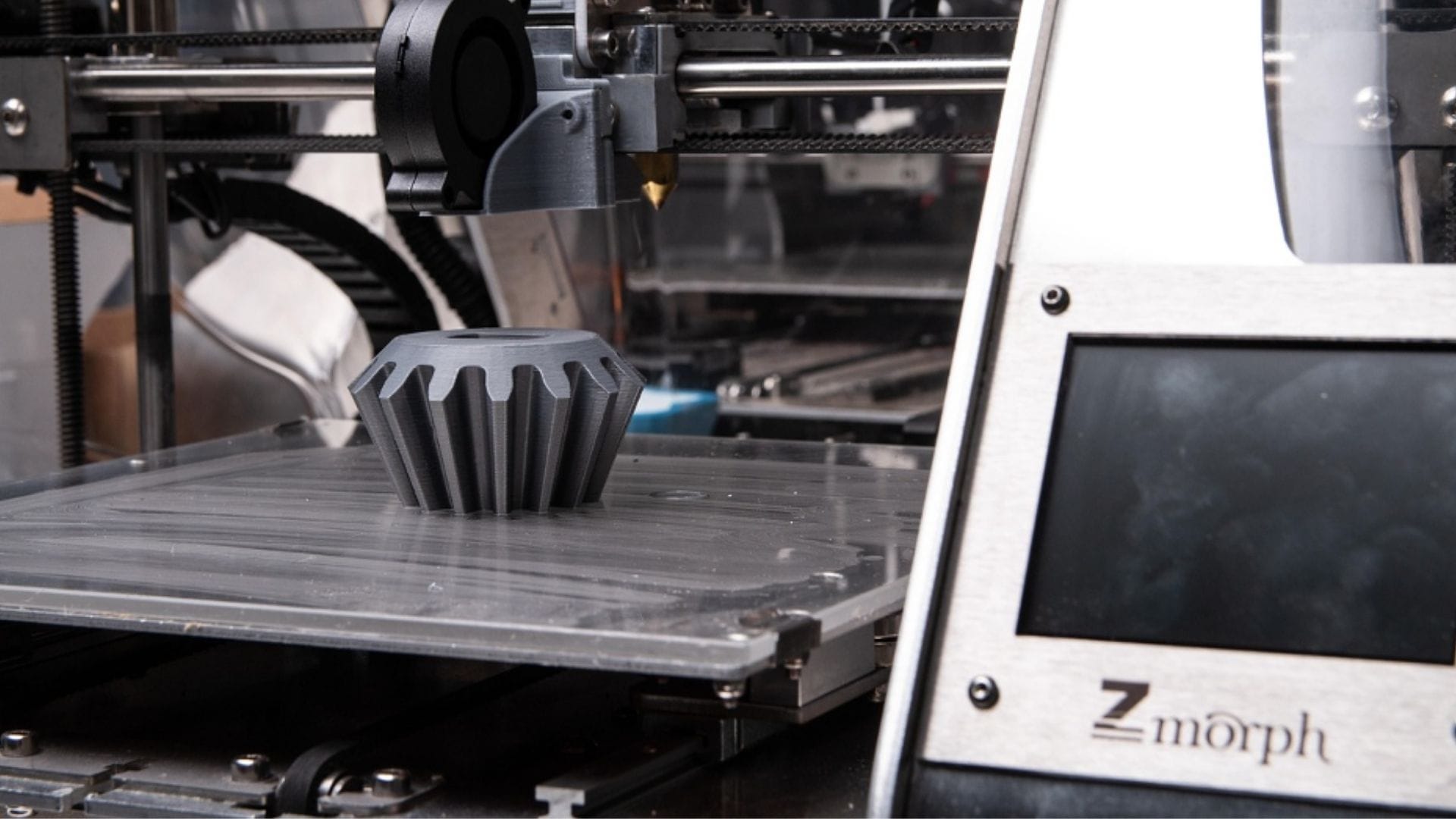
Turn your ideas into real products with 3D manufacturing that can help the business move faster. Do some quick tests with a small batch first and proceed with bulk orders once you know that you have customer demand.
Another benefit is with customization options, where one can create parts that are exactly going to meet their needs. There’s no need to limit oneself to traditional manufacturing rules, but with rapid prototyping, the owners can reduce costs and make essential improvements in materials over time.
Fortunately, there are modern printers that can now handle a wide range of materials, including resins. They’re able to create parts that have real-world applications, and they’re also lightweight. What’s more, it’s now easy to order them, and you just have to upload the file to the right business that offers additive printing, and you’re good to go. They can support you with fast production by building objects layer-by-layer for better durability.
Why Settle with 3D Printing?
Many organizations can benefit from this, where they can speedily reproduce the parts that they’ve carefully engineered and get them delivered to them in the shortest time possible. Prototypes that might have originally taken weeks to produce are now capable of being completed in days, and the teams are able to refine their designs before they move into full production.
Tailored solutions are also created without increasing the costs. They might be designing an automotive component for consumers or a medical device part, and they can now achieve the small details that they wanted to see in the results.
Businesses can also take advantage of the cost-efficiency of these parts because the expenses related to transportation can be significantly reduced. Companies don’t have to store large inventories for months, but instead, they can request the production of the parts on demand to reduce their overhead expenses.
Also Read:
- What Is Additive Manufacturing? Definition, Types & Applications
- What is Computer Aided Manufacturing – CAM?
- What is Industry 4.0? (Fourth Industrial Revolution Explained)
Which Industries Can This Be Applied To?
Multiple companies can now take advantage of 3D printing and everything that it offers. Understand more of 3D printing when you visit this site here. For one, a custom surgical tool can now be made to improve the lives of many patients, while there can be a significant reduction in the production time. In the car sector, many rely on these machines to test some lightweight mechanical hardware to reduce emissions.
This is also applicable to construction, where the designers can create a model that can help visualize projects before the actual construction begins. This kind of clarity can improve the communication between teams, and this can also reduce costly errors.
Consumer goods companies are now getting this technological advancement, where they can experiment with household items that can make people’s lives easier. They might also be applied to fashion accessories that can strengthen their engagement with their customers.
These 3D Tools Enhance the Development of the Prototypes
Moving from a concept to an actual part quickly can enable the engineers to make improvements without too much waiting. It helps them reduce risks, and there’s better collaboration as a result. Many teams are also able to identify some design flaws without wasting excess parts, and they can make premium-quality products that can be mass-produced.
Everyone involved in the project can now share digital files even though they’re in different locations. The teams can work together more effectively, where ideas can be shared, and the manufacturers bring them to life.
With proper experimentation, the designers won’t also lose a significant amount of investment while they’re still in their testing phase. This is going to help encourage creativity that can help them gain a more competitive advantage in an evolving market. Specifically, small businesses are the ones that can benefit from this approach as they can now innovate and refine their products before selling them to the market.
Different Technologies Are Used
Many companies utilize powder bed fusion, which is known for its precision. It’s using selective laser sintering that produces functional parts while maintaining their excellent mechanical properties. It’s great for end-use applications, while multi-jet fusion offers high-speed production that has fine details for small batch production.
Material extrusion is known for its cost-effectiveness in creating durable parts but know that the resolution is lower. The right company might also offer vat photopolymerization (https://pmc.ncbi.nlm.nih.gov/articles/PMC11733939/) that uses resin that’s cured by a light source. It can be utilized for making smooth surfaces in parts, and it has fast printing times.
The Role of Digital Manufacturing
Nowadays, advanced software tools are available, and many designers are able to create models that simulate the performance of the parts before printing. This can also improve accuracy, and businesses are now able to integrate printers that can reduce manual intervention while maintaining consistency.
Call the right providers today for high-quality finishes that the teams can make adjustments to. The experts are going to advise the business owners on which technology is suited for the type of project that they have and give them advice that is tailored to their needs and growth.