
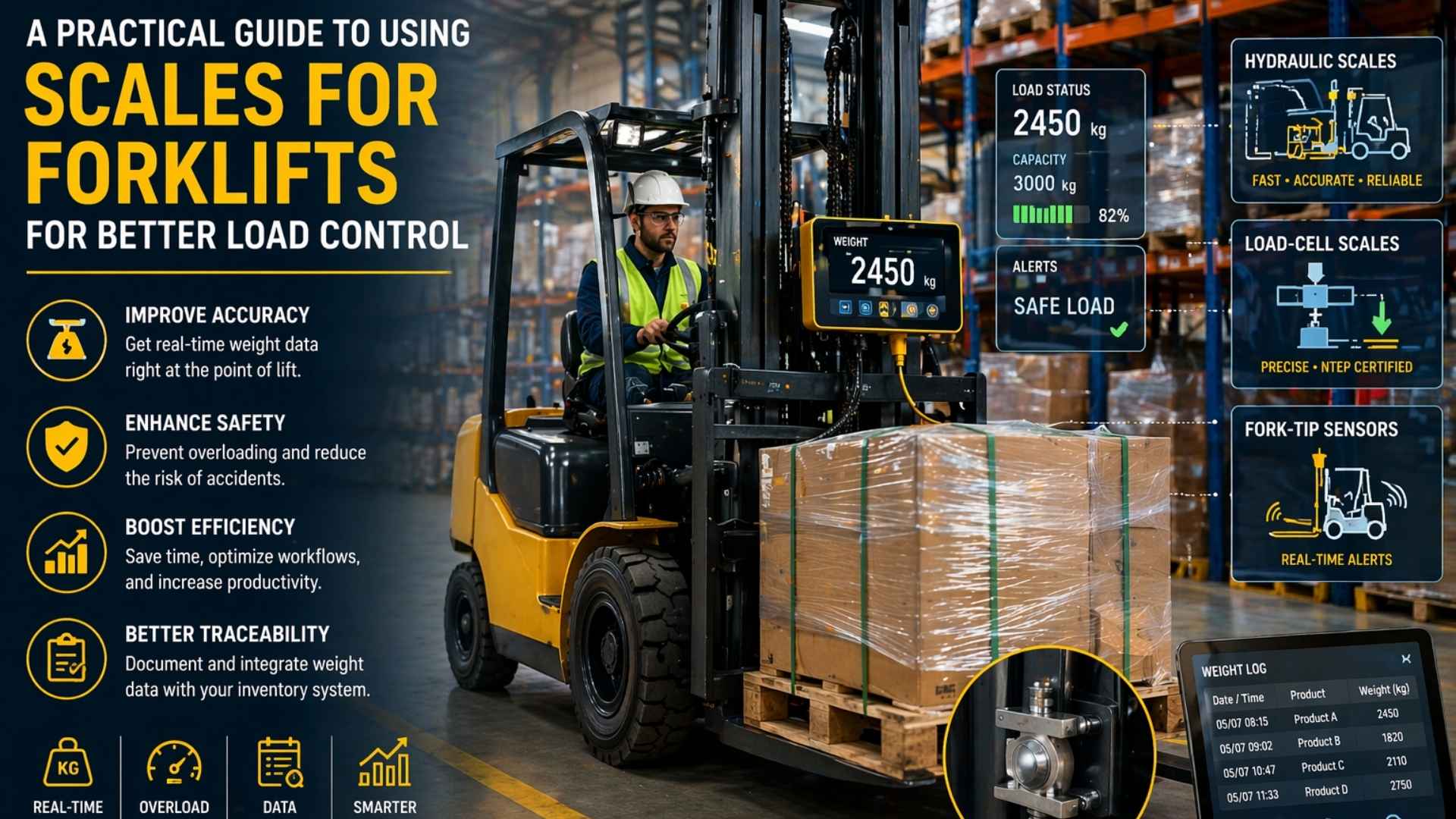
Achieving precise load control is critical for safe and efficient forklift operations. Without accurate weight data, operators risk overloading, unstable handling, product damage, and compliance issues. This practical guide explains how integrating weighing technology directly into your equipment can transform day-to-day handling tasks. From selecting the right system to calibrating and maintaining it, you’ll learn how to capture real-time weight information and make smarter decisions on the floor.
We also cover best practices for operator training and workflow optimization, so your team can maximize productivity while minimizing risk. Whether you’re managing a warehouse, distribution center, or manufacturing site, adopting on-board weighing can deliver measurable gains in accuracy, safety, and efficiency.
By understanding load limits, documenting transactions, and integrating data with inventory systems, you’ll improve traceability and reduce costly errors. With the right setup, forklifts become intelligent tools that support better planning and continuous improvement across your operation every single day.
How Scales For Forklifts Improve Load Control And Accuracy
Using scales for forklifts provides real-time weight data at the point of lift, eliminating guesswork and reducing unnecessary movement. This improves workflow efficiency and helps operators handle loads more confidently.
Built-in weighing systems enhance safety by preventing overloading, which reduces the risk of accidents, product damage, and equipment strain. They also improve accuracy in inventory management and shipping by ensuring precise weight measurements.
With proper calibration and operator training, forklift scales can streamline operations, reduce errors, and support safer, more efficient material handling.
Forklift Scale Technologies Worth Knowing
Not every forklift weighing system is built for the same job. There are real differences between the available options, and understanding those differences puts you in a much better position to choose what actually fits your operation.
Hydraulic Pressure Scales: Fast, Flexible, and Forklift-Friendly
These systems tap directly into a forklift’s existing lift circuit to deliver in-motion forklift scale performance with 98–99% accuracy. No capacity derating required. Installation is fast. They work with most standard forklifts. For high-volume operations where every minute counts, this is often the first choice teams reach for, and it rarely disappoints.
Load-Cell Carriage Scales: When Precision Is Non-Negotiable
Load-cell systems bring tighter accuracy to the table, sometimes as precise as ±1 lb , with NTEP-certified configurations available for legal-for-trade applications. There’s a small trade-off: added carriage weight slightly reduces effective lifting capacity. For any operation invoicing customers based on pallet weight, that level of precision more than justifies the compromise.
Chain-Link and Fork-Tip Sensors: Tough Environments, Real-Time Alerts
Tension-link load cells, designed to replace a standard chain link on the forklift, hold up well in rough, dirty conditions. Fork-tip sensor systems take things a step further by delivering real-time overload alerts, warning operators before a dangerous moment has a chance to develop.
Technology options make more sense once you see the full picture of what’s actually at stake. Here’s why the business case is stronger than most people give it credit for.
Also Read:
- Commonly Used Lifting Equipment in Machinery Processing Plants
- Top 6 Pieces Of Emergency Equipment Every Construction Fleet Vehicle Should Carry
- How Robots Are Transforming Industrial Manufacturing?
The Real Reasons to Prioritize a Forklift Scales Strategy
A solid forklift scales guide gives your operation a consistent framework for making decisions that are faster, safer, and more defensible. The case for acting sooner rather than later holds up across every angle you examine it from.
Productivity and Space, Two Wins at Once
Operators can save five minutes per pallet by using forklift scales rather than routing loads through a dedicated floor scale. Multiply that across hundreds of daily lifts, and you’re looking at meaningful productivity recovery week after week. You also free up floor space that was previously committed to stationary scale infrastructure, space that can serve a better purpose.
Safety That Works in Real Time
Live forklift weight control keeps operators in the loop before a situation turns dangerous. When a display shows a load approaching the forklift’s capacity limits, the operator can respond immediately, not after the fact. That’s the kind of proactive safety that prevents tip-overs and equipment damage before they even begin.
Freight Accuracy and Fewer Billing Headaches
Forklift load weighing keeps inventory counts honest and makes LTL freight billing far less of a guessing game. Variable-weight shipments become documented, traceable, and auditable. Billing disputes drop significantly when every pallet’s weight is captured right at the point of movement.
Picking the Right Scale for Your Facility
| Factor | Hydraulic Scale | Load-Cell Scale |
| Accuracy | 98–99% | ±1 lb |
| Legal-for-Trade | No | Yes (NTEP Class II) |
| Capacity Impact | None | Slight reduction |
| Best For | High-volume ops | Billing-critical ops |
| Installation Speed | Fast | Moderate |
Start With Your Accuracy Needs
Internal warehouse operations often run smoothly with hydraulic-level accuracy. But the moment you’re invoicing clients based on pallet weights, a certified load-cell configuration stops being optional. Defining your use case upfront cuts through a lot of unnecessary comparison shopping.
Compatibility Matters More Than People Expect
Carriage class, forklift make, and model all influence which system will actually work for you. Load-cell setups do add weight to the carriage, which marginally reduces your effective lift capacity, something worth accounting for when you’re regularly handling heavier loads.
Data Integration Is the New Standard
Modern systems connect wirelessly to WMS and ERP platforms with increasing ease. In fact, over 60% of new forklift scale inquiries now specifically require certified compatibility with major WMS platforms. That statistic tells you something important about where the industry is heading, and where your operation should probably be heading too.
Daily Habits That Make Scale Data Actually Reliable
Installing the right hardware gets you halfway there. The other half comes down to how your operators actually use it.
Train for Consistency, Not Just Compliance
Lifting steadily and centering loads before taking a reading prevents motion-related errors. Think of it the same way you’d think about stepping on a bathroom scale while shifting your weight; the number won’t mean much. Slow, deliberate lifts give sensors the stability needed to register an accurate reading every time.
Keep Calibration and Cleanliness on the Schedule
Scales need regular inspections and gentle cleaning, nothing abrasive. How often you calibrate depends on how hard the equipment is working, but quarterly checks are a reasonable baseline for most facilities. Dirt buildup and physical damage are consistently the two biggest causes of accuracy drift over time.
Smarter Load Control Starts With the Right Decision Today
There’s never been a better time to get serious about load weight accuracy. Whether your priority is speed, precision, or seamless software integration, there’s a forklift scale configuration that fits. Hydraulic systems handle volume. Load-cell options handle compliance.
Wireless connectivity handles the data gap. Put the right technology in place, build consistent operator habits around it, and stay current on calibration. Load control isn’t just a safety obligation; in the long run, it’s a genuine operational edge that compounds across every shift, every pallet, and every invoice your team touches.
FAQs
Hydraulic models deliver 98–99% accuracy during movement, while load-cell versions reach ±1 lb precision. These scales attach directly to the forklift and capture weight during normal lift activity, making them both practical and reliable for daily use.
The key categories include spring scales, floor scales, bench scales, and platform scales, each built for different weight ranges and applications. Floor scales handle loads up to 10,000 kg; platform scales offer high accuracy for weights up to 5,000 kg.
Yes. Most modern systems offer wireless connectivity compatible with WMS and ERP platforms, allowing weight data to automatically update inventory records, support billing workflows, and trigger automated processes, with no manual entry required.