
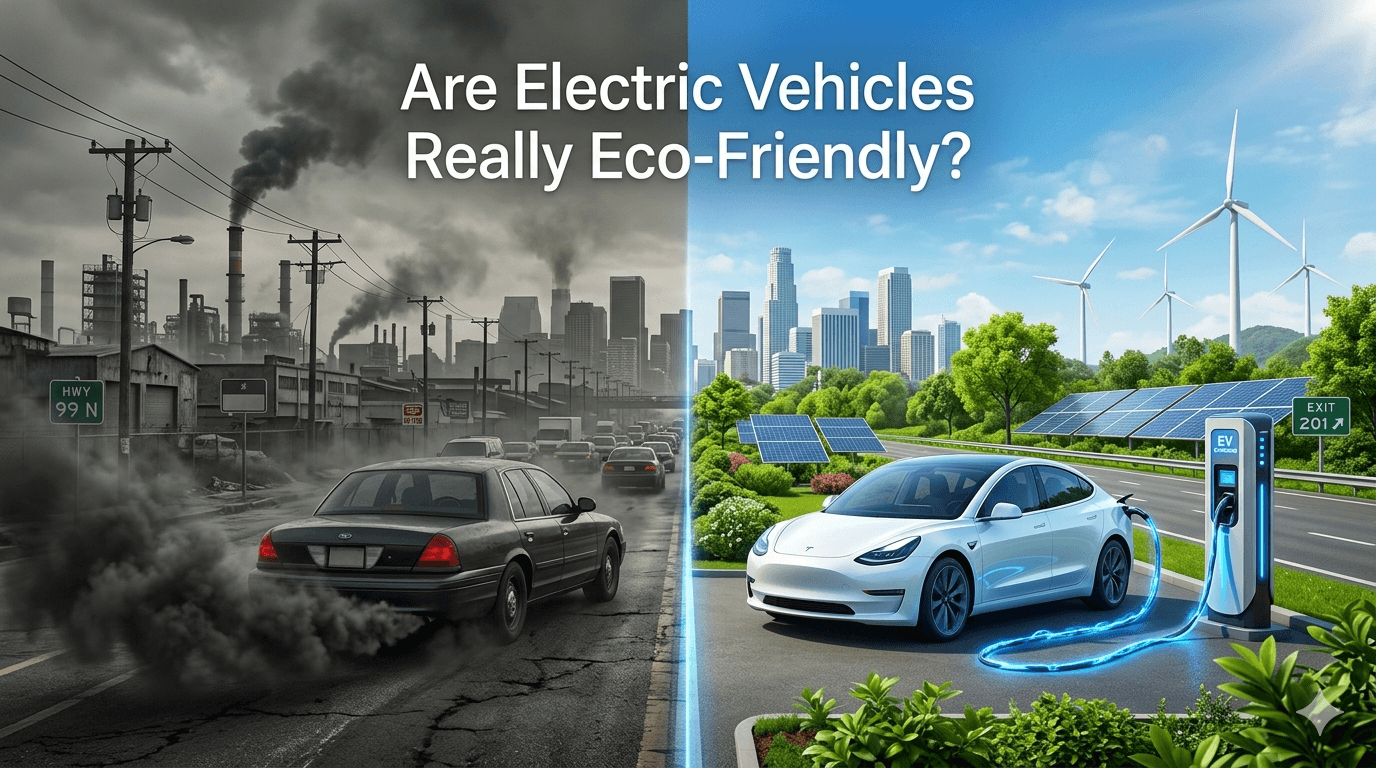
Electric vehicles (EVs) are rapidly gaining popularity across the United States, driven by federal incentives, rising fuel costs, and climate concerns. Automakers like Tesla, Inc., Ford Motor Company, and General Motors are investing billions into electrification.
But one critical question remains:
Are electric vehicles really eco-friendly in the U.S., or is their impact overstated?
From a mechanical engineering and lifecycle analysis perspective, the answer depends on how and where the vehicle is manufactured, charged, and used.
What “Eco-Friendly” Means
In the U.S., evaluating EV sustainability involves:
- Carbon emissions (CO₂ per mile)
- Energy sources (renewables vs fossil fuels)
- Manufacturing footprint
- End-of-life recycling systems
Engineers use Lifecycle Assessment (LCA) to measure this accurately.
Lifecycle Analysis of EVs in the United States
1. Manufacturing Phase (Carbon-Intensive Start)
Battery Production Impact
Most EVs in the U.S. use lithium-ion batteries manufactured in facilities like:
- Tesla Gigafactories
- GM Ultium battery plants
Engineering Data:
- Battery production emits 4–7 tons of CO₂ per vehicle
- Larger SUVs and trucks → even higher emissions
U.S.-Specific Concerns:
- Lithium mining in Nevada
- Imported cobalt (supply chain issues)
- Energy-intensive manufacturing processes
Result: EVs start with a higher carbon footprint than gasoline cars
2. Operation Phase (Where EVs Dominate)
Efficiency Advantage
| Vehicle Type | Efficiency |
| Electric Vehicle | 85–90% |
| Gasoline Vehicle | 20–30% |
EVs are significantly more efficient in converting energy into motion.
Driving Emissions
EVs:
- Zero tailpipe emissions
- Reduced urban air pollution
Gasoline vehicles:
- Continuous CO₂ and NOx emissions
Electricity Mix in the U.S. (Critical Factor)
Unlike many countries, the U.S. has a diverse energy mix.
Current Grid Composition (Approx):
- Natural Gas: ~40%
- Renewables: ~20–25%
- Coal: ~15–20%
- Nuclear: ~20%
This makes EVs in the U.S. Cleaner than gasoline cars in almost every state
Regional Differences
- California & Washington: Very clean grids → EVs highly eco-friendly
- Midwest (coal-heavy): Moderate benefits
- Texas/Florida: Mixed results
Regenerative Braking
EVs recover energy during braking, improving:
- Efficiency
- Range
- Component life
Also Read:
- Advantages and Disadvantages of Electric Vehicles in the USA
- What Is the Difference Between an Electric Car and a Hybrid Car?
- Hydrogen vs Electric Cars: Which Is the Future of Sustainable Transportation?
3. Carbon Payback Period (U.S. Data)
Typical Range:
- 1–2 years in clean-energy states
- 2–3 years in fossil-fuel-heavy regions
After this:
EVs become significantly cleaner than gasoline vehicles
4. End-of-Life & Recycling
Recycling Infrastructure
Companies like:
- Redwood Materials
- Li-Cycle
are building large-scale recycling systems.
Recovery Efficiency:
- Up to 90–95% of battery materials
Second-Life Applications:
- Home energy storage
- Grid stabilization
- Solar backup systems
EV vs Gasoline Cars in the U.S.
| Factor | Electric Vehicle | Gasoline Vehicle |
| Manufacturing Emissions | Higher | Lower |
| Driving Emissions | Much Lower | High |
| Fuel Cost | Lower | Higher |
| Maintenance | Lower | Higher |
| Lifetime Emissions | Lower | Much Higher |
Common Myths (Debunked)
Myth 1: “EVs are worse because of fossil-fuel electricity”
Reality: Even in coal-heavy states, EVs emit less CO₂ per mile
Myth 2: “Charging an EV is the same as burning gasoline”
Reality: Power plants are more efficient than car engines
Myth 3: “EV batteries can’t be recycled”
Reality: U.S. recycling systems are rapidly expanding
Advantages of EVs
Environmental:
- Reduced greenhouse gas emissions
- Cleaner urban air
- Lower noise pollution
Economic:
- Federal tax credits (up to $7,500)
- Lower fuel costs
- Reduced maintenance
Engineering:
- High efficiency
- Fewer moving parts
- Advanced energy recovery systems
Limitations of EV
- Charging infrastructure gaps in rural areas
- High upfront cost
- Grid dependency
- Battery material sourcing challenges
Future of EV Sustainability in the U.S.
Key Trends:
- Expansion of renewable energy
- Nationwide charging networks
- Solid-state battery development
- Domestic battery manufacturing
Final Verdict
Yes, Electric Vehicles are eco-friendly, especially over their full lifecycle.
They are:
- Cleaner than gasoline cars
- More energy-efficient
- Essential for reducing emissions
But:
They are not completely green due to:
- Manufacturing emissions
- Material extraction
Conclusion
Electric vehicles represent a major step toward sustainable transportation in the U.S., but their effectiveness depends on:
- Clean electricity generation
- Battery innovation
- Recycling systems