
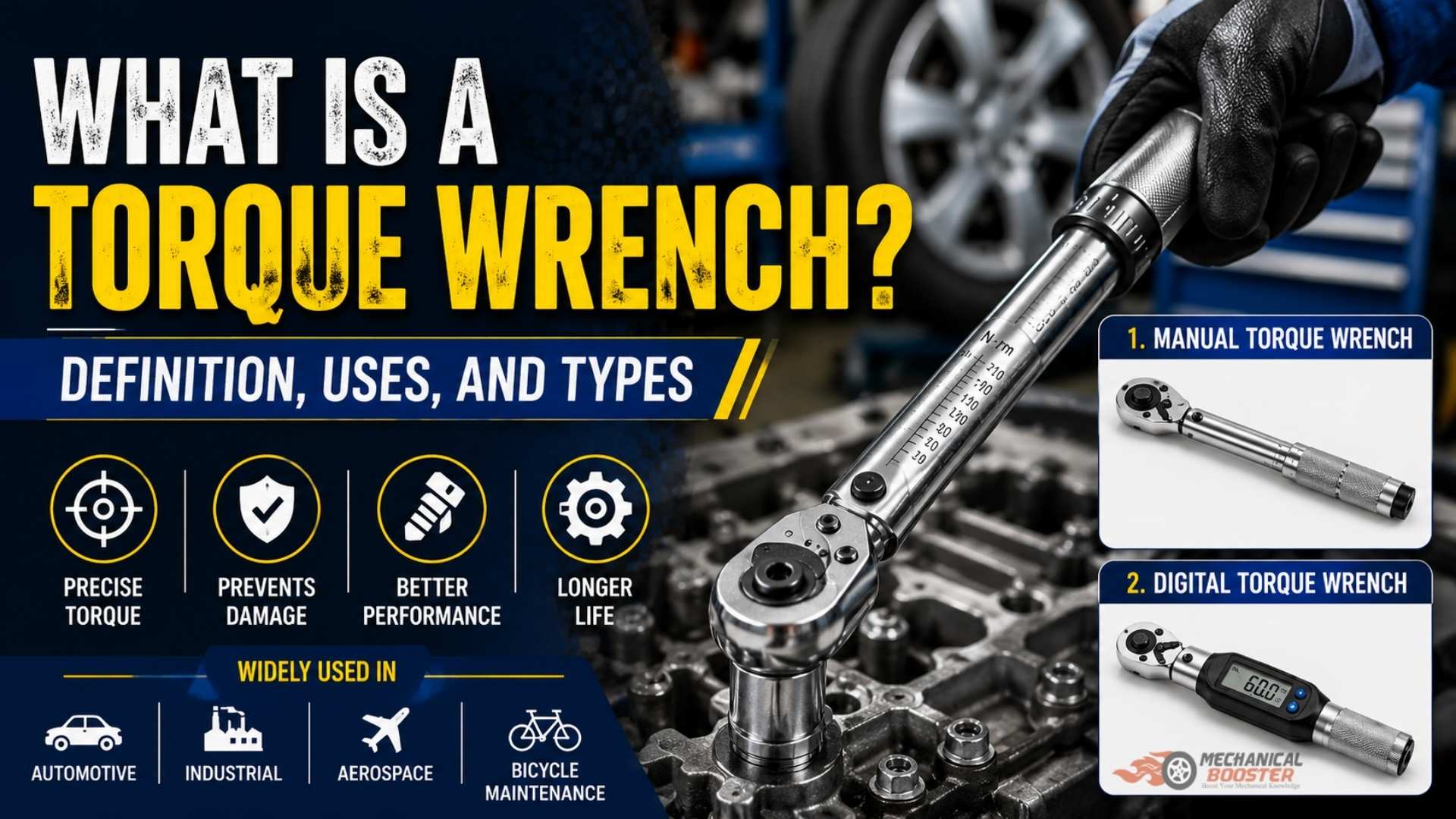
A torque wrench is a specialized hand tool used to tighten nuts and bolts with a precise amount of force, known as torque. Unlike ordinary wrenches, a torque wrench ensures that fasteners are neither too loose nor excessively tight. Proper tightening is important because over-tightening can damage threads, deform components, or even cause mechanical failure, while under-tightening may lead to loose parts and safety risks.
Torque wrenches are widely used in automotive workshops, manufacturing industries, mechanical maintenance, bicycle assembly, aerospace, and heavy machinery. For example, when tightening wheel lug nuts in vehicles or engine components, using the correct torque value ensures safe and reliable performance.
In this article, we will discuss what a torque wrench is, its definition, working principle, uses, different types, advantages, limitations, and how to use it correctly.
What is a Torque Wrench?
A torque wrench is a mechanical tool designed to apply a specified amount of torque to a nut or bolt. Torque is the rotational force used to tighten fasteners.
The primary purpose of a torque wrench is to achieve accurate tightening according to manufacturer recommendations. This prevents problems such as loose connections, stripped threads, broken bolts, and uneven clamping force.
Unlike a normal spanner or wrench, a torque wrench allows the user to control how much tightening force is applied.
Torque Wrench Definition
A torque wrench is defined as:
“A hand tool used to tighten nuts and bolts to a specified torque value to ensure proper fastening and prevent damage caused by over-tightening or under-tightening.”
When bolts are tightened according to the recommended torque specification, the chances of mechanical failure become very low.
Why is a Torque Wrench Important?
Many mechanical systems rely on correctly tightened fasteners for safe operation. If bolts are not tightened properly, machines can become unsafe or inefficient.
Here are some reasons why torque wrenches are important:
- Prevents over-tightening of nuts and bolts
- Reduces chances of bolt failure
- Maintains proper clamping force
- Improves safety and reliability
- Prevents thread damage and component cracking
- Ensures uniform tightening in assemblies
For example, wheel lug nuts in automobiles require a specific torque setting. If tightened too much, the wheel studs may get damaged. If tightened too loosely, the wheel may become unsafe during driving.
Working Principle of a Torque Wrench
A torque wrench works by measuring and controlling the rotational force applied to a fastener.
The user sets a desired torque value based on manufacturer specifications. Once the required torque is reached, the wrench gives an indication such as:
- A clicking sound (in click-type wrenches)
- A needle reading (in beam-type wrenches)
- A digital display alert (in digital torque wrenches)
This indication tells the user to stop tightening.
Uses of Torque Wrench
Torque wrenches are used whenever a precise torque value is required during tightening.
Some common applications include:
1. Automotive Industry
Torque wrenches are widely used in vehicle repair and maintenance for tightening wheel lug nuts, engine parts, cylinder heads, spark plugs, suspension components, and brake assemblies.
2. Bicycle Maintenance
Bicycle components made of aluminum or carbon fiber require accurate tightening to avoid damage.
3. Industrial Machinery
Factories and mechanical workshops use torque wrenches for assembling machines and maintaining heavy equipment.
4. Aerospace Industry
Aircraft components require highly accurate torque settings to ensure maximum safety.
5. Construction Equipment
Torque-controlled fastening is essential for structural joints and machinery.
Types of Torque Wrench
Based on the reading and mechanism used, torque wrenches are mainly classified into the following types:
1. Manual Torque Wrench

A manual torque wrench works mechanically and does not require batteries or electronics.
It is simple to use, affordable, and commonly used in workshops.
Types of Manual Torque Wrenches
a) Beam Torque Wrench
This type uses a pointer and scale to show the applied torque value.
Advantages:
- Simple design
- Low cost
- High durability
Disadvantages:
- Harder to read accurately
- Requires visual attention
b) Click Torque Wrench
This is one of the most commonly used torque wrenches.
When the preset torque is reached, the wrench produces a clicking sound to indicate proper tightening.
Advantages:
- Easy to use
- Accurate tightening
- Popular in automotive applications
Disadvantages:
- Requires periodic calibration
c) Dial Torque Wrench
This type displays torque using a dial gauge.
It is highly accurate and commonly used for precision work.
2. Digital Torque Wrench
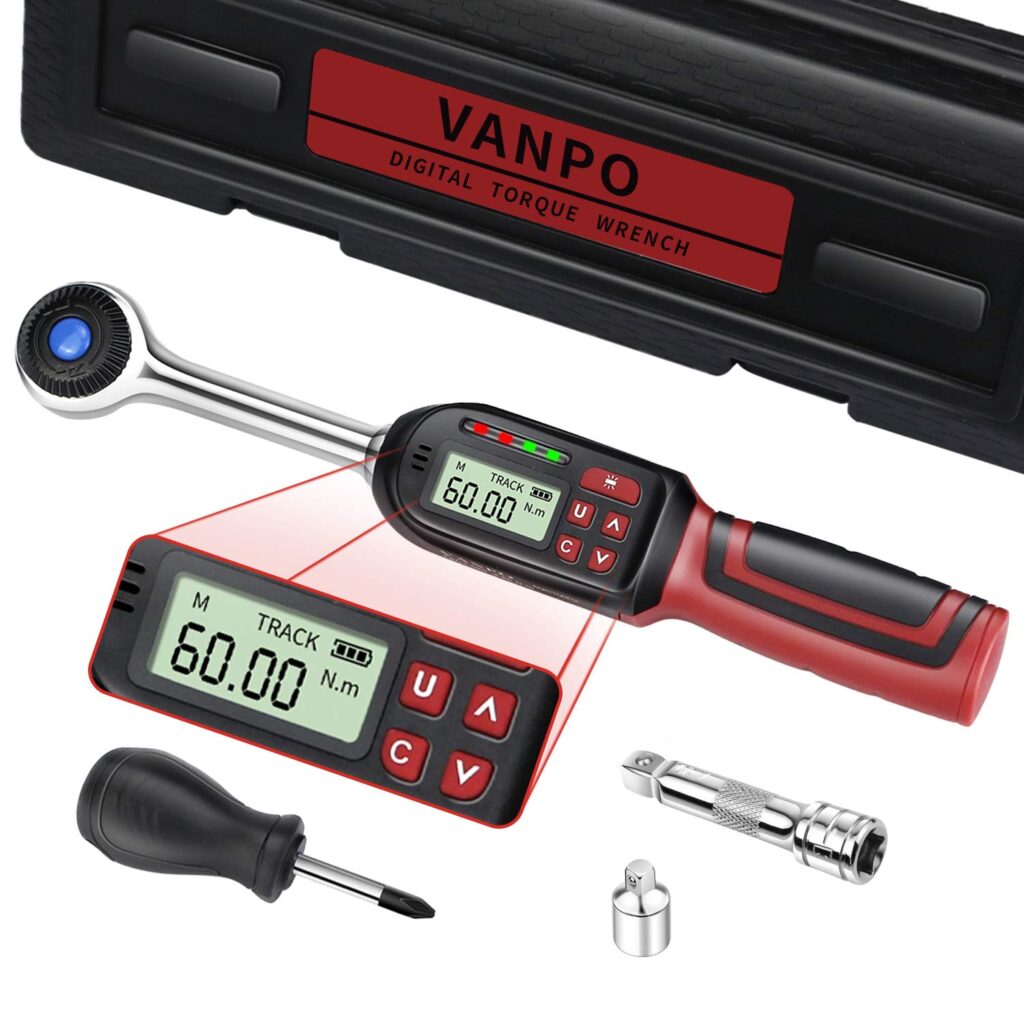
A digital torque wrench uses electronic sensors to measure torque.
It displays readings on a digital screen and often gives an alarm, beep, or vibration when the desired torque is reached.
Advantages:
- Very accurate
- Easy-to-read display
- Can store torque values
Disadvantages:
- More expensive
- Requires batteries
Difference Between Manual and Digital Torque Wrench
| Feature | Manual Torque Wrench | Digital Torque Wrench |
| Working | Mechanical | Electronic |
| Accuracy | Moderate to High | Very High |
| Cost | Affordable | Expensive |
| Display | Mechanical scale | Digital screen |
| Power Source | Not required | Battery required |
Advantages of Torque Wrench
Some important advantages of using a torque wrench are:
- Prevents overtightening and undertightening
- Increases component life
- Improves mechanical safety
- Provides consistent tightening force
- Reduces maintenance problems
- Easy to operate
Limitations of Torque Wrench
Despite its advantages, torque wrenches also have some limitations:
- Higher cost than normal wrenches
- Requires calibration for accuracy
- Improper use can produce inaccurate readings
- Digital versions depend on batteries
How to Use a Torque Wrench?
Using a torque wrench correctly is important to get accurate results.
Follow these steps:
- Check the manufacturer’s recommended torque specification.
- Set the desired torque value on the wrench.
- Attach the correct socket.
- Place the wrench on the bolt or nut.
- Apply smooth and steady force.
- Stop immediately when the click sound, beep, or indicator appears.
Avoid applying extra force after the indication, as it may lead to over-tightening.
To understand the process better, watch this tutorial video:
Conclusion
A torque wrench is an essential tool used to tighten nuts and bolts with precise torque force. It helps prevent mechanical failures, damaged threads, and loose connections by ensuring accurate fastening. From automotive workshops to aerospace industries, torque wrenches play a major role in safety and reliability. Understanding the types, working principle, and proper usage of a torque wrench helps you choose the right tool and use it effectively. Whether you are a mechanic, engineer, or DIY enthusiast, using a torque wrench correctly can significantly improve equipment performance and lifespan.