
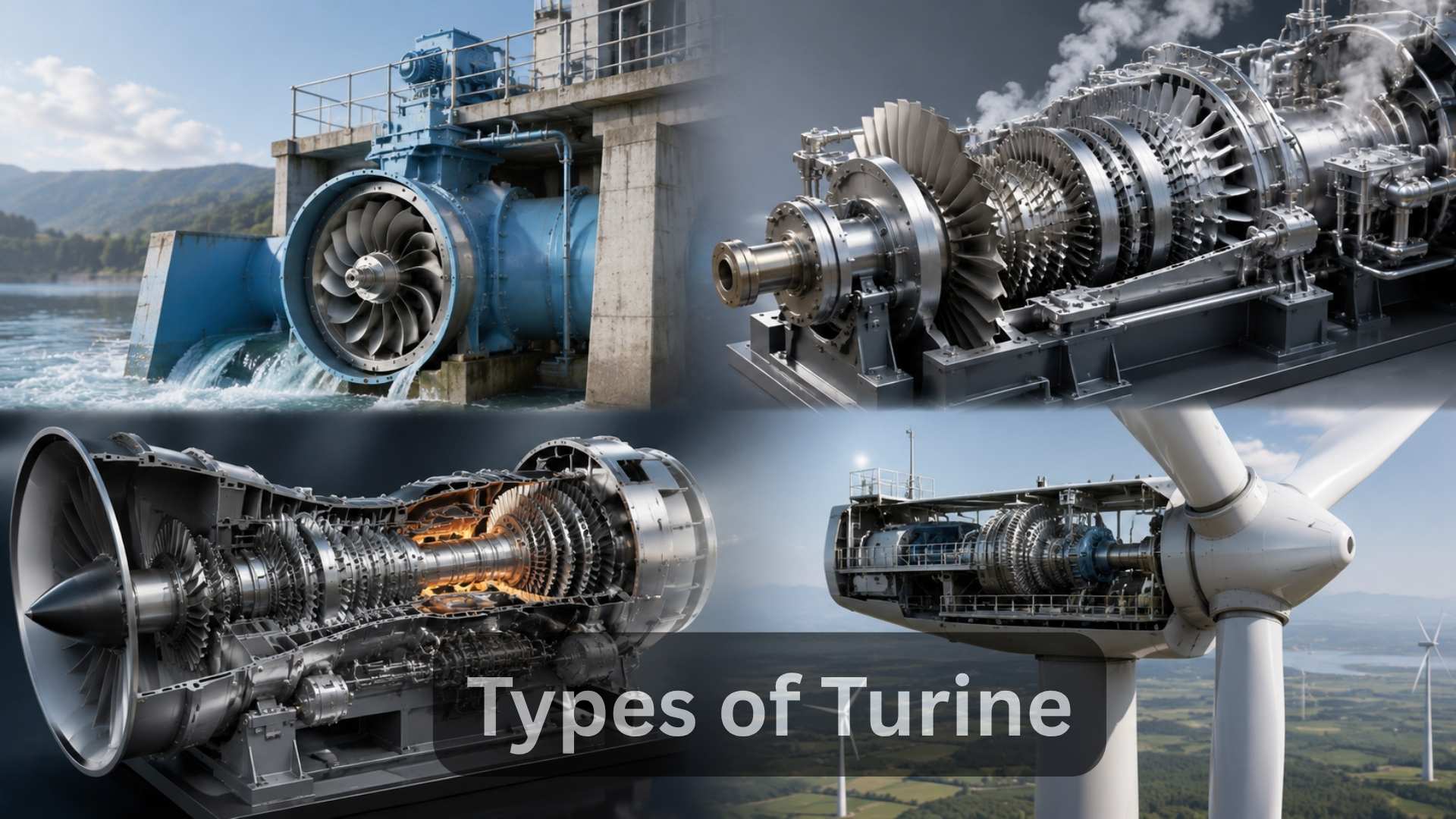
There are four main types of turbine based on the working fluid: steam turbines, gas turbines, water (hydraulic) turbines, and wind turbines. Each of these is further classified by how it extracts energy, either as an impulse turbine, which uses high-velocity fluid jets striking blades, or a reaction turbine, which uses pressure change across the blades. Common examples include the Pelton wheel and Francis turbine (water), the Curtis and Parsons turbine (steam), the turbojet and turbofan (gas/aircraft), and the horizontal-axis wind turbine (HAWT).
What Is a Turbine and How Does It Work
A turbine is a rotary machine that converts the energy in a moving fluid, whether that’s steam, combustion gas, water, or wind, into rotational mechanical energy. That spinning shaft then drives a generator to produce electricity, or in the case of jet engines, drives a compressor and produces thrust.
Every turbine works on the same basic idea from fluid dynamics: a moving fluid carries kinetic and/or pressure energy. As it passes over a set of curved blades mounted on a rotor, that energy gets transferred to the rotor, causing it to spin. The differences between turbine types come down to which fluid is used, how the energy transfer happens, and which direction the fluid flows relative to the shaft.
I’ve found that most confusion around turbine classification comes from mixing up these three separate ways engineers categorize turbines. So let’s break each one down clearly before getting into specific turbine designs.
Turbines Classified by Working Fluid
This is the most common, everyday way people categorize turbines, and it’s likely why you’re reading this article.
- Steam turbines: Use pressurized steam, typically generated by burning coal, natural gas, or nuclear fission, to spin the rotor. Found in most thermal and nuclear power plants.
- Gas turbines: Use hot combustion gases from burning natural gas or jet fuel. Used in power plants, industrial compressors, and aircraft engines.
- Water (hydraulic) turbines: Use the kinetic and pressure energy of flowing or falling water. Found in hydroelectric dams and small-scale hydro systems.
- Wind turbines: Use the kinetic energy of moving air. Found in onshore and offshore wind farms.
Turbines Classified by Energy Transfer Method
This classification matters most to mechanical engineers because it determines blade geometry, casing design, and efficiency characteristics.
Impulse Turbines
In an impulse turbine, the fluid is accelerated through a fixed nozzle before it strikes the blades. The pressure of the fluid stays essentially constant as it crosses the rotor; only its velocity (and direction) changes. Because the fluid isn’t expanding inside the rotor, impulse turbines don’t need a sealed casing.
Pelton wheels, Turgo turbines, and the early-stage Curtis steam turbine all work this way.
Reaction Turbines
In a reaction turbine, the fluid expands and loses pressure as it moves across the rotor blades. Both the stationary guide vanes and the moving rotor blades act like nozzles, so the rotor itself generates lift, similar to how an airfoil works. This requires a sealed casing to contain the pressure drop.
Francis turbines, Kaplan turbines, most modern steam turbine stages, and gas turbines used in jet engines are reaction-based, or use a hybrid of both principles.
Turbines Classified by Flow Direction
A third, more technical classification looks at how the fluid moves relative to the turbine’s rotating shaft, which directly affects how compact and efficient the machine is.
- Axial flow: Fluid moves parallel to the shaft. Common in steam turbines, gas turbines, and large wind turbines.
- Radial flow: Fluid moves perpendicular to the shaft, similar to water driving a watermill. Often simpler and more robust, common in small gas turbines and some hydro turbines.
- Tangential (mixed) flow: Fluid strikes the runner at an angle, used in turbines like the Pelton wheel and cross-flow turbine.
Steam Turbine Types
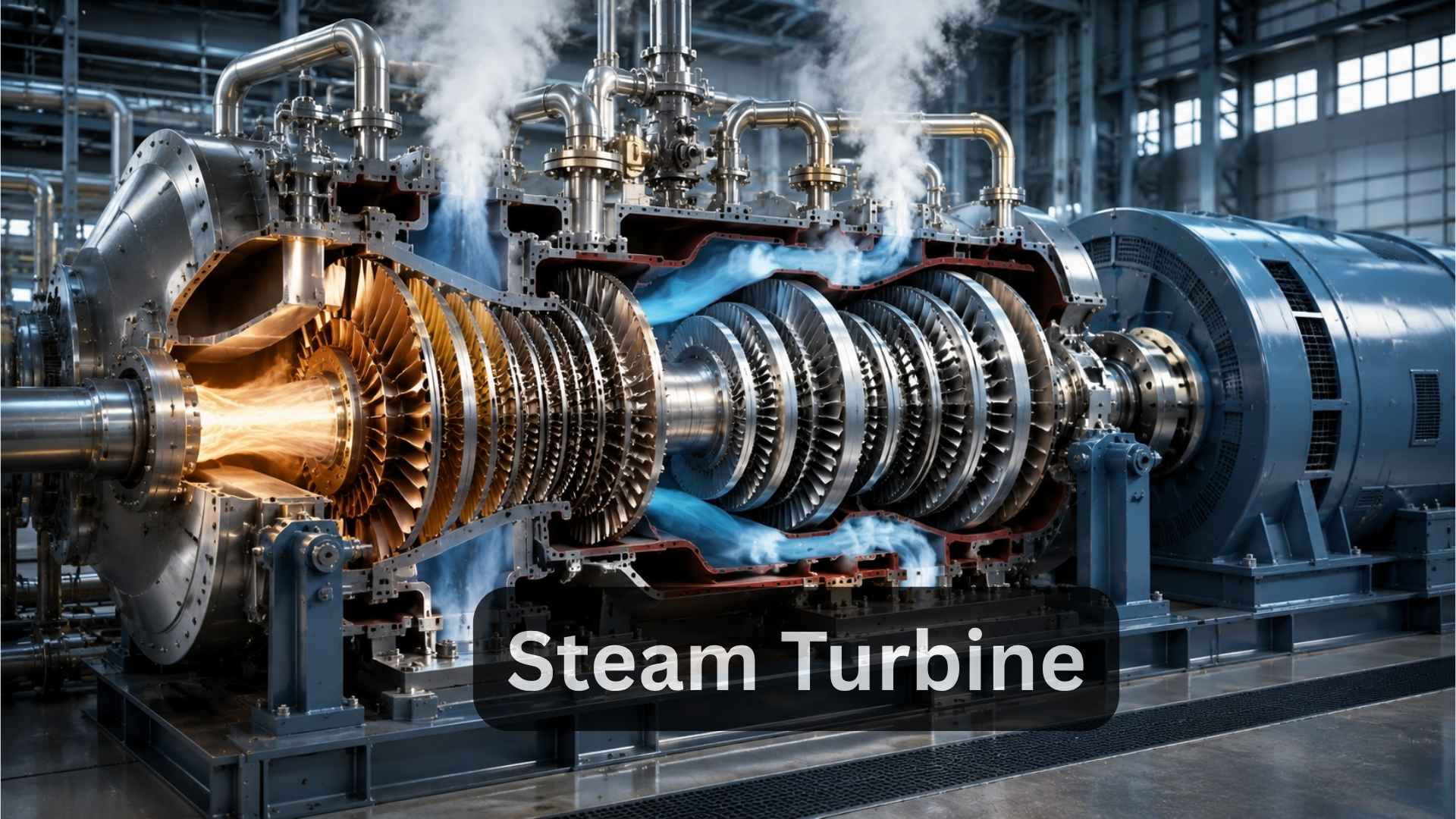
Steam turbines remain the backbone of global electricity generation, powering most coal, natural gas, and nuclear plants in the United States.
Condensing turbines
Condensing turbines exhaust spent steam into a condenser held at a vacuum, maximizing the pressure drop across the turbine and therefore maximizing power output. These are the standard choice for utility-scale power generation.
Non-condensing (backpressure) turbines
Non-condensing (backpressure) turbines exhaust steam at a pressure useful for an industrial process, such as heating or chemical processing, instead of wasting that remaining energy. Common in paper mills, refineries, and combined heat and power (CHP) plants.
Extraction turbines
Extraction turbines tap steam at intermediate stages for separate industrial or heating use, while the rest continues through the turbine to generate more power. Controlled-extraction turbines regulate this bleed automatically based on downstream demand.
Curtis and Parsons turbines
Curtis and Parsons turbines represent the two original blade design philosophies. The Curtis turbine uses fixed nozzles paired with multiple impulse blade rows in a single stage, which is compact but somewhat less efficient. The Parsons turbine uses reaction-style blading across many stages, which is longer and heavier but slightly more efficient for the same energy conversion. Most modern utility turbines blend both approaches across their high, intermediate, and low-pressure sections.
Gas Turbine Types
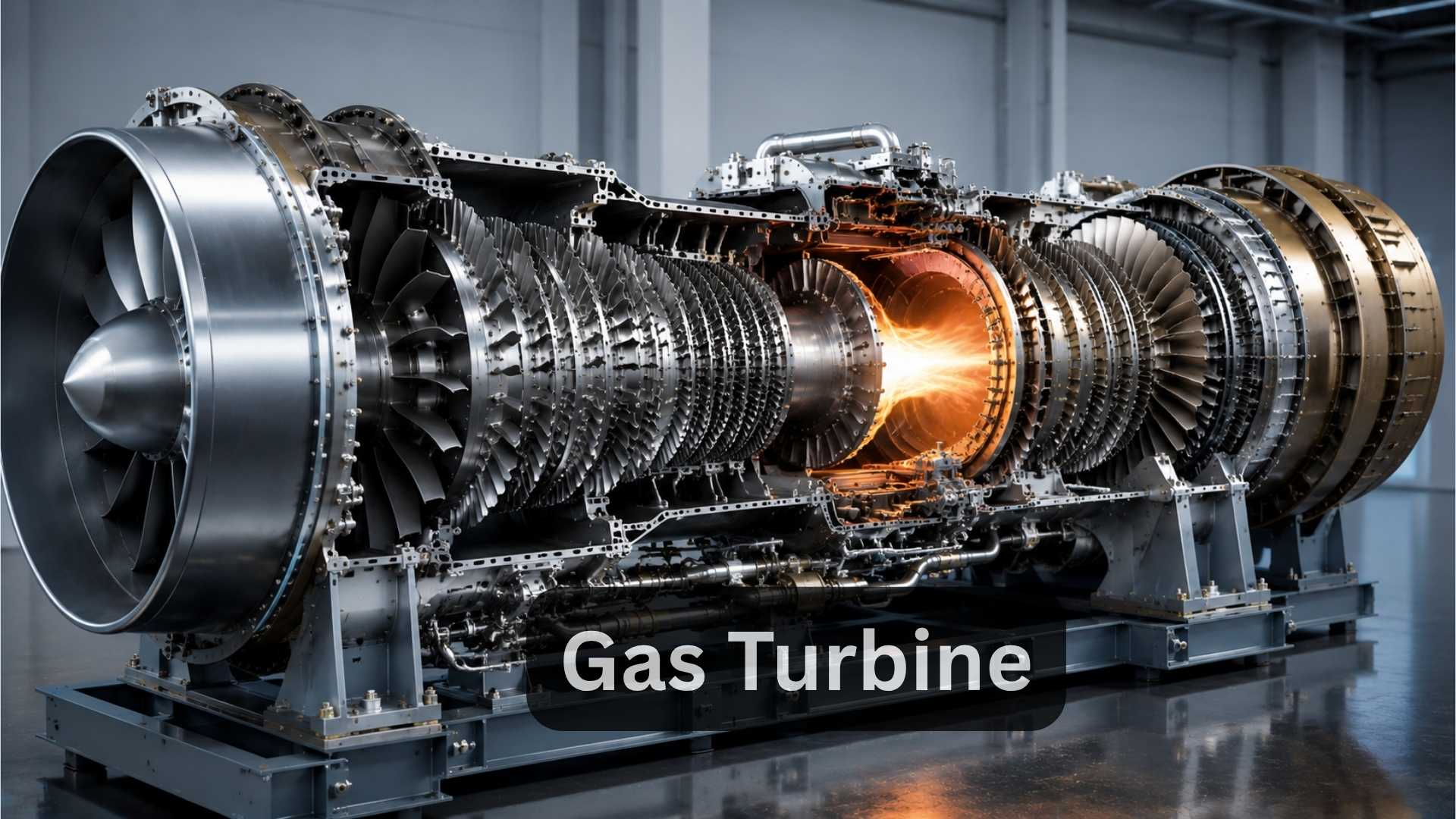
Gas turbines, also called combustion turbines, are internal combustion engines that compress air, mix it with fuel, ignite it, and direct the resulting high-temperature gas across a turbine section.
Industrial gas turbines drive generators for electricity and are popular for peaking power plants because they can start up in minutes, far faster than a steam plant.
Aeroderivative gas turbines are adapted from aircraft jet engines, valued for their light weight and fast response, often used in offshore platforms and grid backup power.
Turbojets push all exhaust gas through a nozzle to generate thrust directly. Loud and fuel-hungry, but capable of very high speeds; mostly limited to military aircraft today.
Turbofans add a large front fan that bypasses most of its airflow around the engine core, improving fuel efficiency and reducing noise. This is the dominant engine type on commercial airliners.
Turboprops connect a gearbox-driven propeller to the gas turbine core, offering excellent fuel efficiency at the 250 to 400 mph range typical of regional aircraft.
Turboshaft engines deliver power through a shaft instead of thrust, used in helicopters, ships, tanks, and stationary power units where high reliability and a compact size matter most.
Water Turbine Types
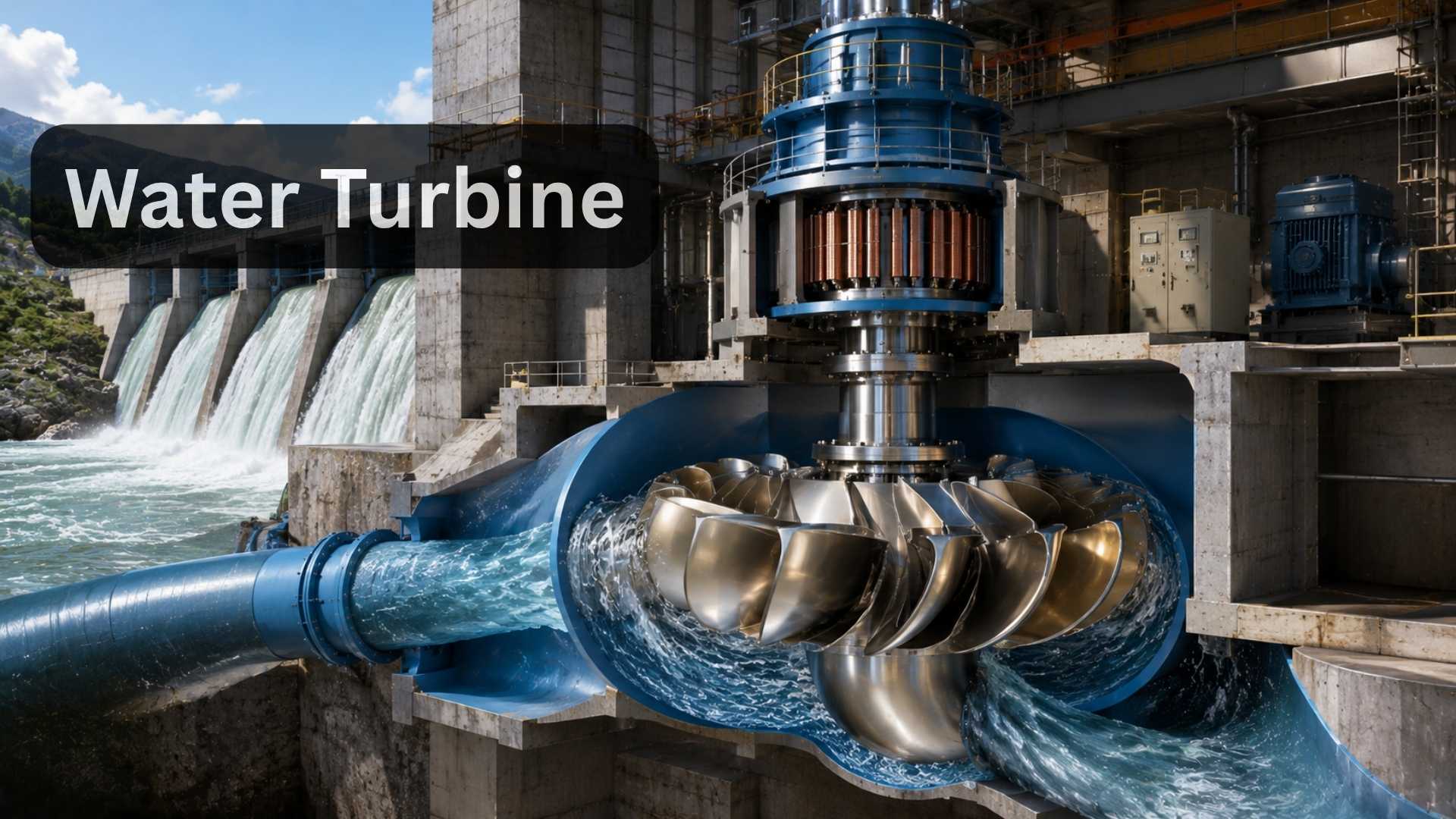
Hydropower turbine selection in the United States comes down to two factors: head (the vertical drop of water) and flow rate (the volume of water available).
Pelton turbines are impulse turbines that use one or more high-velocity jets striking spoon-shaped buckets on the runner. Best suited to high-head, low-flow sites, typically a drop of 50 to 2,000 meters with flow rates of 4 to 15 cubic meters per second.
Turgo turbines are a Pelton variation where the jet strikes the runner at an angle of roughly 20 to 25 degrees, allowing a smaller, faster-spinning runner for an equivalent flow.
Cross-flow (Banki-Michell) turbines pass water through the blades twice, making them well suited to larger flows at lower heads than a Pelton wheel can efficiently handle.
Francis turbines are reaction turbines suited to medium head, roughly 45 to 400 meters, and medium to high flow rates. They’re the most widely deployed turbine type at hydroelectric dams in the United States today.
Kaplan turbines are a propeller-style reaction turbine with adjustable blades and guide vanes, ideal for low-head, high-flow sites and capable of exceeding 90 percent efficiency at scale.
Gravity turbines, like the overshot waterwheel and Archimedes screw, rely simply on the weight of falling water rather than its pressure or velocity, and remain a low-cost option for very small-scale or low-head micro-hydro projects.
Wind Turbine Types
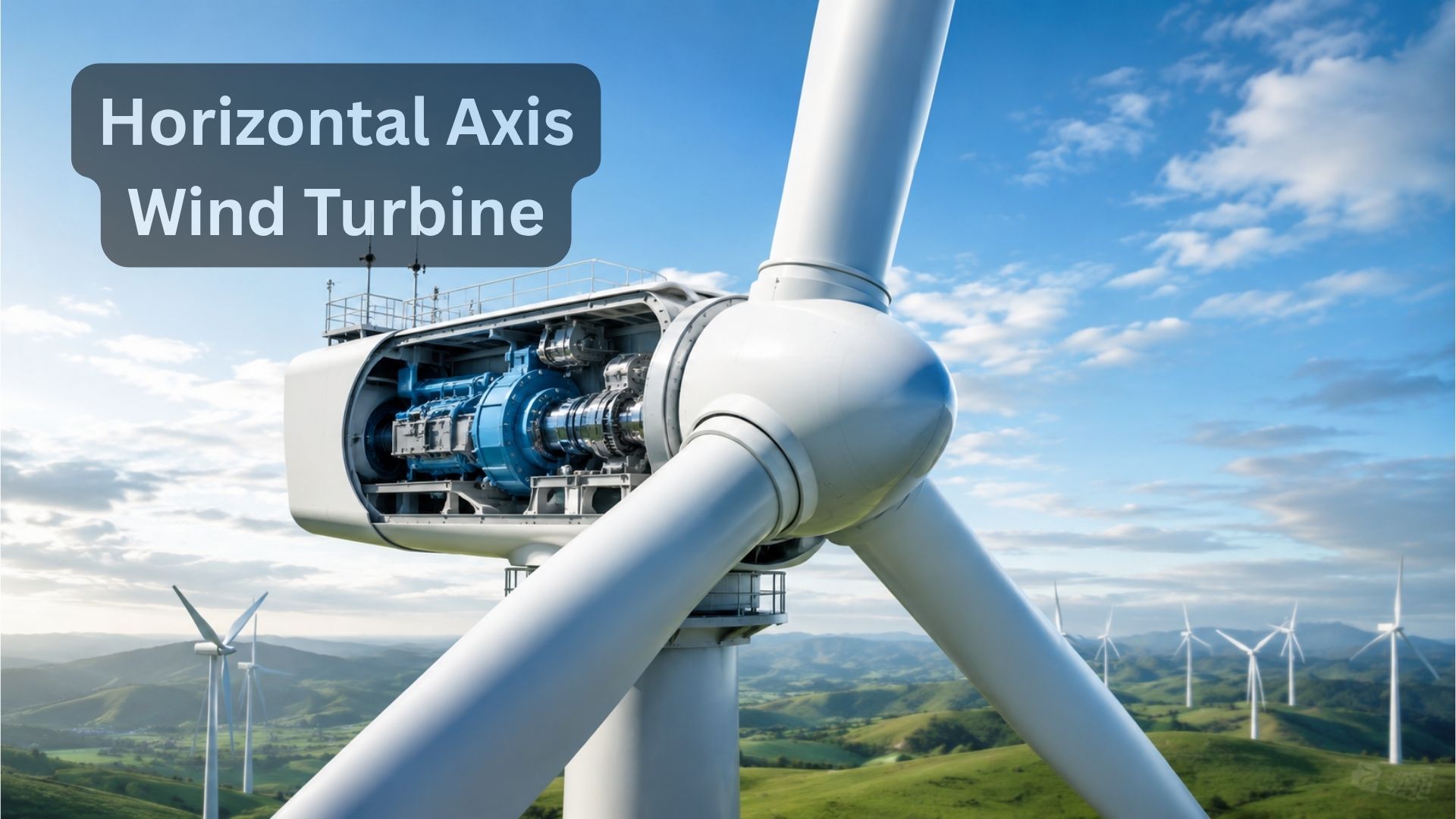
Wind turbines extract kinetic energy from moving air using airfoil-shaped blades that generate aerodynamic lift, a reaction-turbine principle, combined with a smaller impulse effect from deflecting the wind.
Horizontal-axis wind turbines (HAWT) are the familiar three-blade design seen across U.S. wind farms, with the rotor shaft oriented parallel to the ground. They dominate utility-scale wind generation because of their higher efficiency at converting wind energy.
Vertical-axis wind turbines (VAWT) have a rotor shaft perpendicular to the ground, allowing them to capture wind from any direction without a yaw mechanism. They’re generally less efficient at utility scale but useful in turbulent or urban settings where wind direction shifts constantly.
Comparison Table: Choosing the Right Turbine
| Turbine Type | Working Fluid | Energy Method | Best Application | Typical Efficiency |
| Pelton | Water | Impulse | High head, low flow hydro | 85-90% |
| Francis | Water | Reaction | Medium head, medium flow hydro | 90-95% |
| Kaplan | Water | Reaction | Low head, high flow hydro | 90-95% |
| Parsons/modern steam | Steam | Reaction | Utility power plants | 35-45% (cycle) |
| Curtis | Steam | Impulse | Compact, smaller-scale steam plants | Lower than Parsons |
| Industrial gas turbine | Combustion gas | Reaction | Grid power, peaking plants | 35-40% (simple cycle) |
| Turbofan | Combustion gas | Reaction | Commercial aviation | High thrust efficiency |
| HAWT | Wind | Mixed | Utility-scale wind farms | 35-45% (Betz-limited) |
Real-World Applications and Calculations
Consider a typical Francis turbine installation feeding a 100 MW hydroelectric unit at a U.S. dam with a net head of 100 meters and a flow rate of around 120 cubic meters per second. Using the basic hydraulic power equation:
P = ρ × g × Q × H × η
Where ρ is water density (1,000 kg/m³), g is gravitational acceleration (9.81 m/s²), Q is flow rate, H is head, and η is overall efficiency (typically 0.90 for a well-designed Francis unit):
P = 1,000 × 9.81 × 120 × 100 × 0.90 ≈ 105.9 MW
This matches well with the typical capacity ratings seen at mid-size U.S. hydro facilities, and it illustrates why head and flow are the two numbers every hydro engineer checks first when sizing a turbine.
On the gas turbine side, a single industrial unit like those used in U.S. peaking plants can spin up to full output in under 10 minutes, compared to several hours for a coal-fired steam plant. That responsiveness is exactly why utilities pair gas turbines with renewable sources: they fill the gaps when wind or solar output drops suddenly.
Key Takeaways
- Turbines are classified three ways: by working fluid (steam, gas, water, wind), by energy transfer method (impulse vs. reaction), and by flow direction (axial, radial, tangential).
- Water turbine selection depends mainly on site head and flow rate: Pelton for high head/low flow, Kaplan for low head/high flow, Francis for the middle range.
- Steam turbines power most U.S. utility-scale generation, while gas turbines offer faster startup and are increasingly paired with renewables for grid flexibility.
- Modern turbine designs often blend impulse and reaction principles within the same machine to balance efficiency, size, and cost.
Conclusion
Understanding the types of turbine isn’t just academic. Choosing the right turbine for a hydro site, power plant, or aircraft engine directly affects efficiency, cost, and reliability for decades of operation. Whether you’re sizing a Francis turbine for a dam, specifying a gas turbine for peaking power, or just trying to understand how your local wind farm works, the core distinctions covered here, working fluid, impulse versus reaction, and flow direction, give you the framework engineers actually use to make those decisions.
FAQs
The four main types, classified by working fluid, are steam turbines, gas turbines, water turbines, and wind turbines.
An impulse turbine converts fluid velocity into mechanical energy at constant pressure, while a reaction turbine extracts energy from a continuous pressure drop across the blades, requiring a sealed casing.
Kaplan and Francis water turbines can exceed 90 to 95 percent efficiency at their design point, making them among the most efficient turbines in use, though efficiency always depends on matching the turbine design to its specific head and flow conditions.
Most U.S. thermal and nuclear power plants use steam turbines, while natural gas peaking plants and many combined-cycle facilities use gas turbines paired with a steam turbine for added efficiency.
Kaplan and propeller-style turbines are best for low-head, high-flow hydro sites because their adjustable blades maintain efficiency across varying flow conditions.
A Pelton wheel is used at high-head, low-flow hydro sites, typically with drops between 50 and 2,000 meters, where a high-velocity water jet strikes spoon-shaped buckets to spin the runner.