
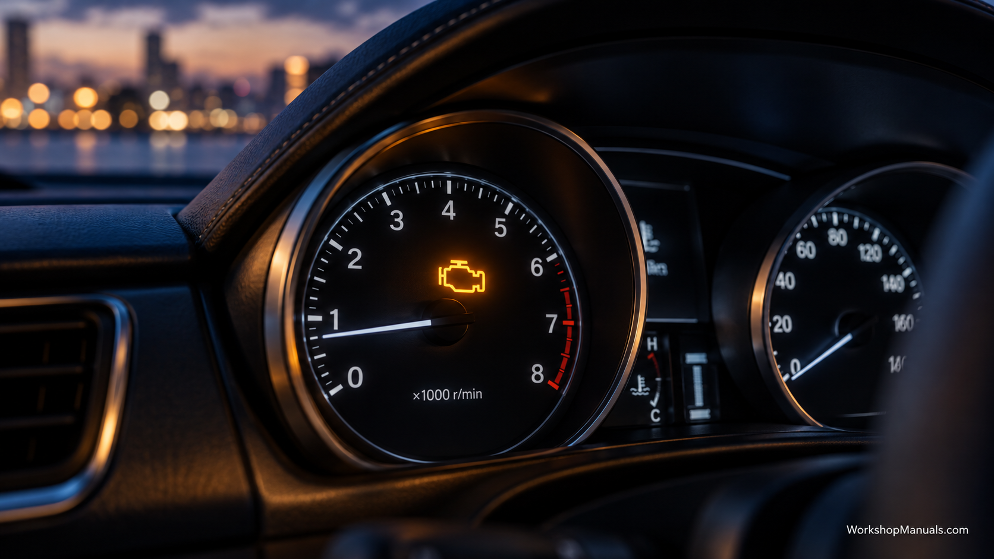
A flashing check engine light while the engine is running usually signals a misfire severe enough to threaten the catalytic converter. Ease off the accelerator, move to a safe stopping place and arrange prompt diagnosis. If the flashing continues or the car shakes, loses power or smells of fuel, stop the engine once safely parked and arrange recovery.
Why Flashing Matters
A misfire happens when a cylinder fails to burn its air and fuel mixture properly. Unburned fuel can reach the exhaust, where it may overheat and damage the catalytic converter. The flashing light warns about that risk; it does not identify the failed part.
A steady light also needs attention. It can indicate anything from an evaporative emissions fault to an engine problem, so the way the car behaves matters as much as the lamp. Rough running, overheating or a red oil-pressure warning requires urgent action regardless of whether the check engine light flashes.
Ford’s owner guidance similarly warns that flashing can indicate misfire and calls for immediate service. Follow the instructions for your own vehicle.
Get Safely Stopped and Preserve the Clues
Reduce the load. Avoid hard acceleration, high engine speeds and towing. Use only the movement needed to reach a safe place; do not keep driving to see whether the warning clears.
Check the symptoms. Persistent flashing, severe shaking, loss of power or a fuel or burning smell are reasons to shut down once safely stopped and call for recovery. Do not leave a badly misfiring engine idling while you investigate.
Keep the evidence. Note whether the problem began cold, at idle or under acceleration, and whether any work or refuelling preceded it. A light that stops flashing does not prove the underlying fault has been repaired.
Read the Codes Before clearing Anything
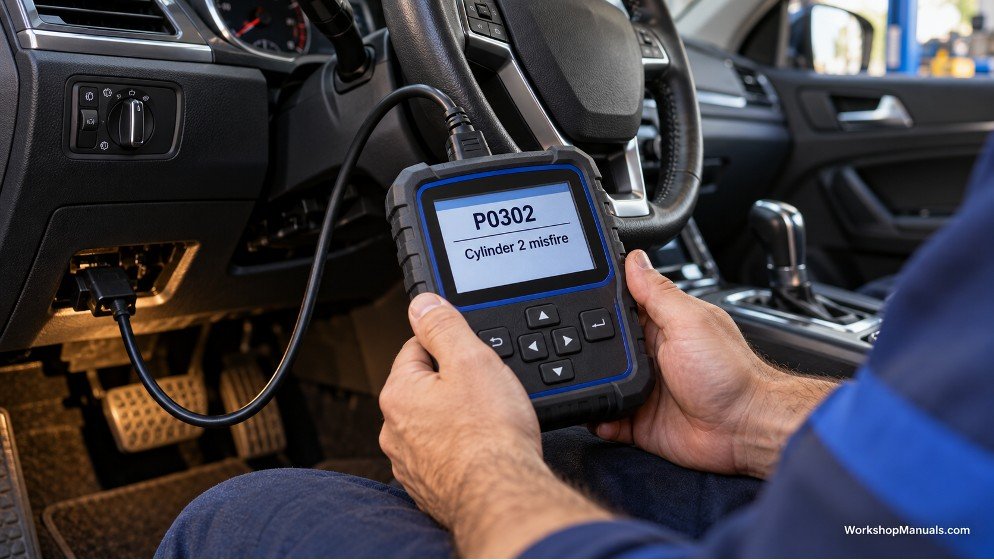
Most US-market passenger cars and light trucks from model year 1996 onward use OBD-II. With the vehicle safely parked, connect a compatible scanner according to its instructions; the diagnostic socket is commonly below the dashboard. You can usually retrieve stored codes with the ignition on and engine off.
P0300 Random or multiple-cylinder misfire detected.
P0301 through P0308 Misfire detected in the corresponding cylinder: P0301 is cylinder 1, P0302 is cylinder 2, and so on. Confirm cylinder locations in the correct service information.
Save all stored and pending codes, plus freeze-frame data if available. That snapshot can include engine speed, load and coolant temperature. Clearing codes or disconnecting the battery can remove useful evidence and reset emissions readiness monitors. A code is the start of diagnosis, not a shopping list.
Find the Cause Before Buying Parts
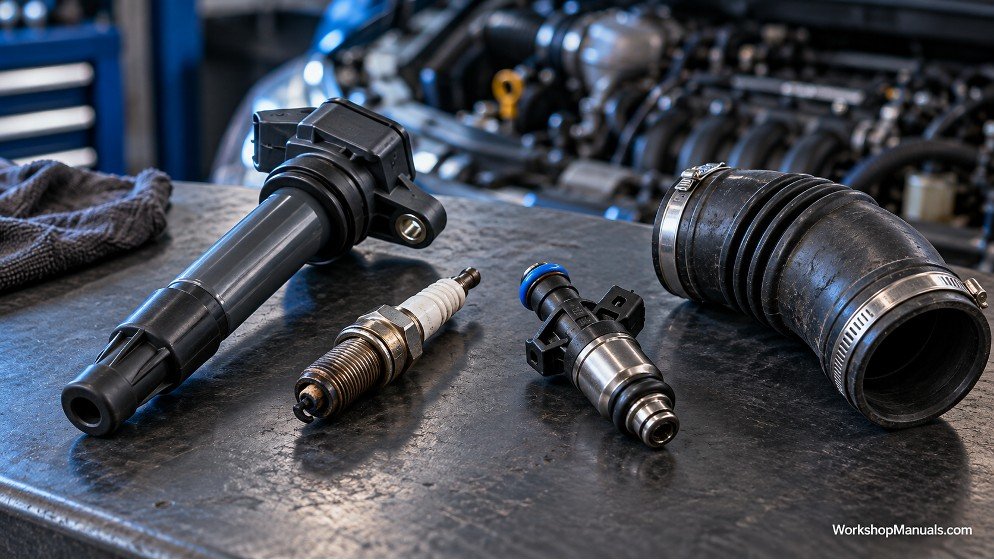
A single-cylinder code narrows the search, but several faults can make the same cylinder stumble. Start with service history and a visual inspection, then follow the manufacturer’s tests. These are common possibilities, not a ranking that applies to every engine.
Ignition coils and boots. A weak coil, damaged boot or poor electrical connection can interrupt the spark. Oil or moisture in a plug well may contribute. Inspect the surrounding components before assuming the coil alone has failed.
Spark plugs. Worn electrodes, fouling, cracked insulation or an incorrect plug can cause rough running, especially under load. If a plug is fouled by oil or fuel, replacing it without finding the reason may give only temporary relief.
Fuel delivery. An injector fault or a broader fuel-supply problem can upset combustion. Injector and fuel-pressure tests require the right equipment; never loosen high-pressure fuel lines as a DIY check.
Unmetered air. A split intake hose or leaking gasket can let air enter where the engine computer does not expect it. Associated lean-mixture codes and fuel-trim readings can help a technician choose the next test.
Compression and timing. Valve damage, sealing problems or incorrect valve timing can also cause misfires. Compression or leak-down testing may be needed when ignition and fuel checks do not explain the fault.
NGK’s ignition-coil guidance stresses that the coil, boot and spark plug work together as one high-voltage circuit. That is why replacing one part without inspecting the others can miss the cause.
Use the Workshop Manual For Your Exact Engine
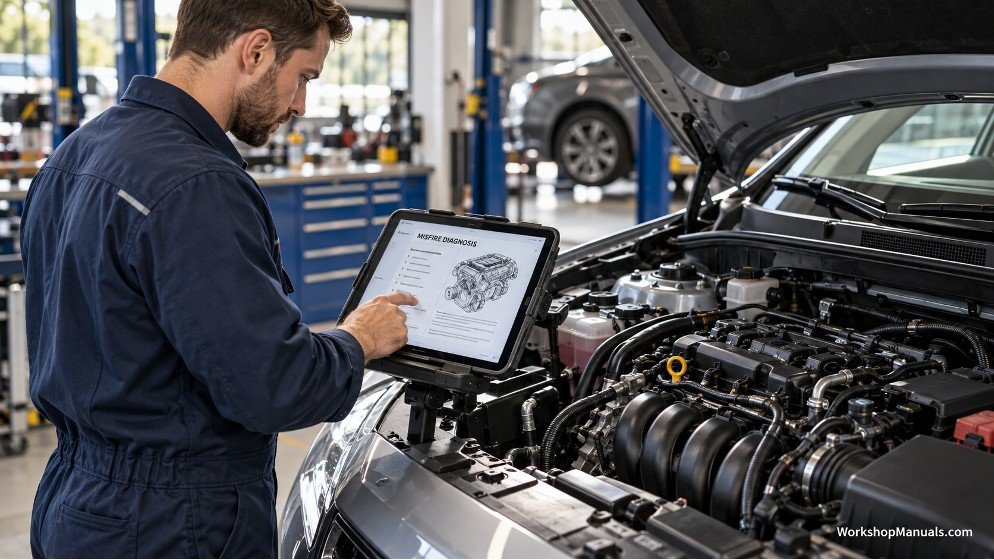
The same car model can use several engines with different cylinder numbering, coil layouts and test procedures. Confirm the model year and engine code before following a repair guide. The owner’s manual explains the warning; the workshop manual supplies the diagnostic and repair detail.
Factory workshop manuals available through WorkshopManuals.com can help you locate components, interpret wiring diagrams and find the specified checks and tightening torques. Choose documentation that matches your vehicle and engine. This matters especially when removing spark plugs from an aluminium cylinder head, where incorrect installation can damage the threads.
What a Coil Swap Can Tell You
On engines with interchangeable individual coils, a technician may move a suspect coil to another cylinder and monitor whether the misfire follows it. If it does, that supports a coil-related fault. If it does not, the plug, wiring, injector or mechanical condition still needs investigation.
This is not a reason to clear the codes and road-test a car with a flashing warning. Record the evidence first, work only with the engine off and cool, and follow the manufacturer’s procedure. Leave controlled running tests to a professional if the engine is actively misfiring. Never disconnect coils on a running engine.
Know When to Hand the Job to a Professional
Persistent flashing, several affected cylinders, suspected fuel-pressure or compression problems, or a warning that returns after repair all justify professional diagnosis. Bring the saved codes and symptom notes. Ask the shop to verify the cause, complete the repair and confirm that the misfire has stopped under the relevant operating conditions.