
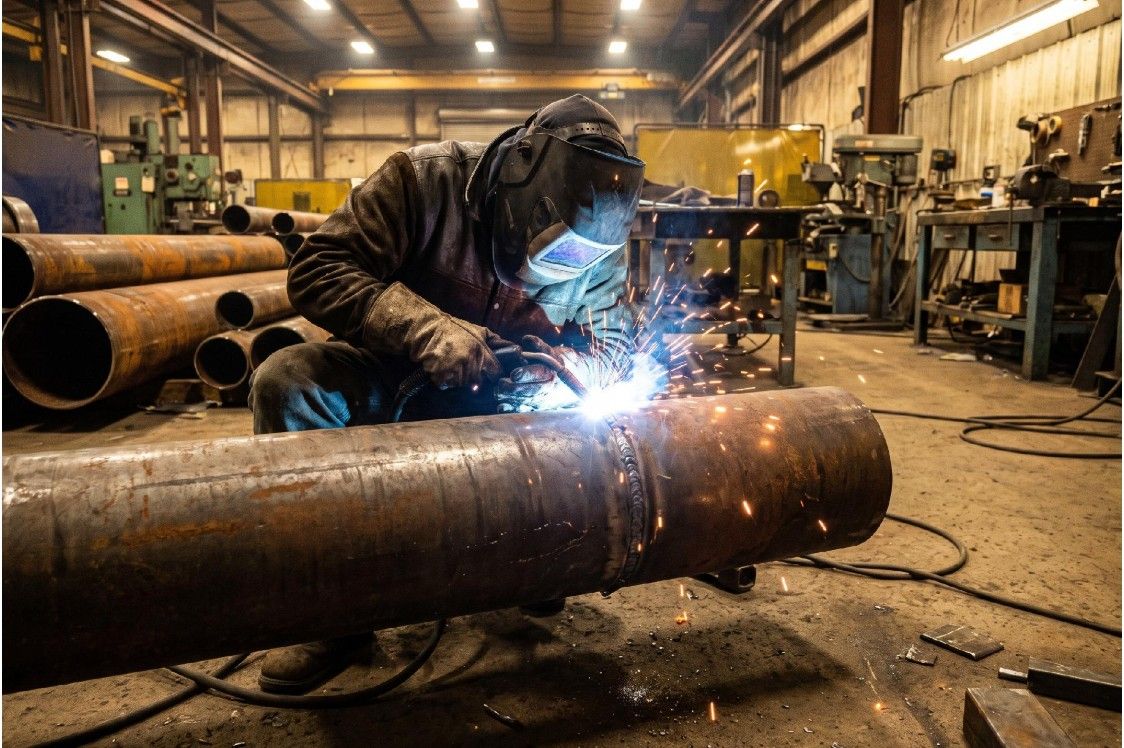
A pipeline weld can look flawless and still be a ticking problem. The bead is smooth, the joint passes a visual check, and the crew moves on to the next section. But underneath that clean surface, the metal is holding onto stress it picked up during welding, stress that didn’t exist before the torch touched it. Left alone, that stress can turn a good weld into a future crack.
Welding solves one problem and quietly creates another. Rapid heating and cooling alter the metal’s grain structure near the joint, and the surrounding material resists this change, locking in internal tension. On a garden gate, this barely matters. On a pressure vessel or a high-pressure pipeline carrying hydrocarbons at a refinery, it’s the difference between decades of safe service and a catastrophic failure. This is where post-weld heat treatment, or PWHT, earns its place as a required step rather than a nice-to-have.
Why Welded Joints Need Heat Treatment After the Arc Goes Out
Welding doesn’t just join two pieces of metal; it reshapes them. The intense, localized heat causes the weld zone and the heat-affected area around it to expand and contract at different rates than the rest of the part. That mismatch is what engineers call residual stress, and it doesn’t go away on its own. It sits inside the metal, waiting for a load, a temperature swing, or a corrosive environment to cause a crack.
Rapid cooling compounds the issue. In carbon and low-alloy steels, rapid cooling after welding can produce brittle microstructures, most notably martensite, that are hard but have very little ductility. A joint like that might pass a pressure test on day one and still fail months later under cyclic loading or hydrogen exposure.
This is why specialized heat-treating services exist as a distinct trade rather than a side task for a general welding contractor. Crews that do this work full-time apply controlled thermal cycles, ramping temperature up slowly, holding it within a tight band, and cooling it down gradually, to relieve residual stress before it becomes a structural liability. Getting the ramp rate or soak time wrong can be as damaging as skipping the process altogether, so precision here isn’t optional.
Mechanical Booster has covered how metals are hardened through controlled heating and cooling in the classroom sense, and PWHT is really that same principle applied at an industrial scale, with far higher stakes.
The Engineering Codes That Make PWHT Mandatory, Not Optional
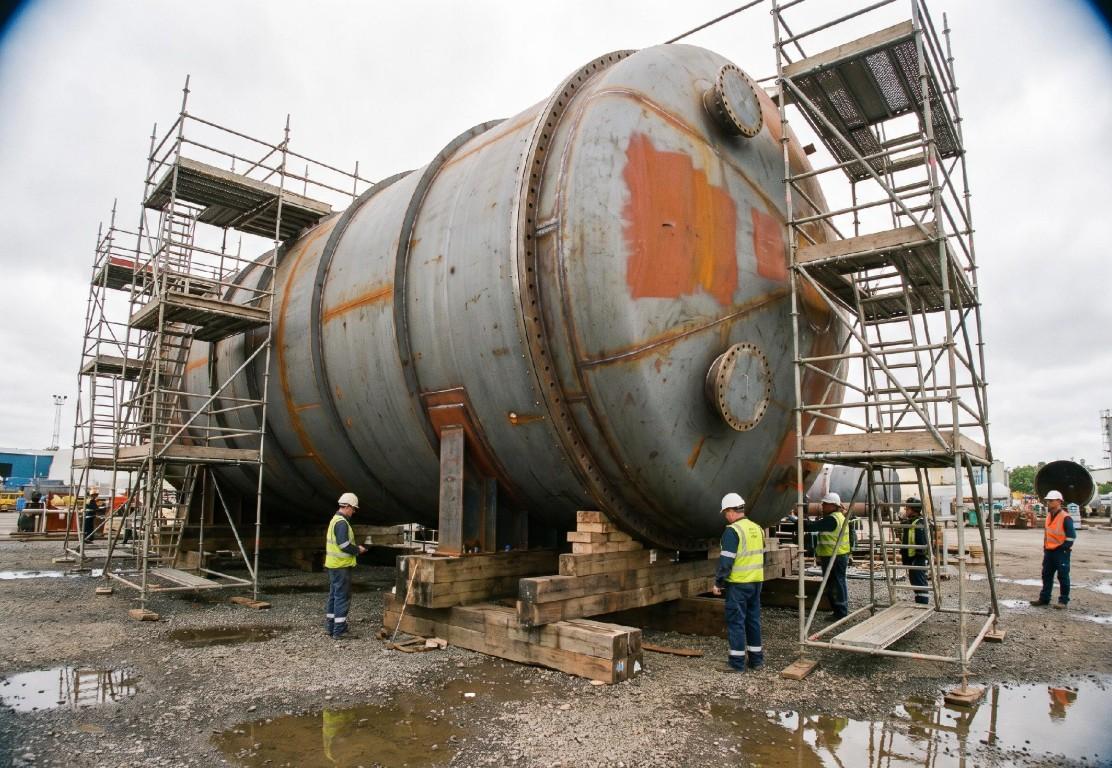
Large pressure vessels like this one often exceed the thickness thresholds that make post-weld heat treatment a code requirement, not an option.
PWHT isn’t just good practice recommended by cautious engineers; it’s frequently a legal and code requirement. Under ASME Section VIII, Division 1, carbon steel weld joints must undergo post-weld heat treatment when the wall thickness exceeds 1-1/4 inches, or 1-1/2 inches if the material was preheated to 200°F. For certain P-No. 1 steels used in specific vessel categories, that threshold drops to just 5/8 inch, according to the National Board of Boiler and Pressure Vessel Inspectors.
Field repairs add another layer of complexity. API 510 governs PWHT for in-service pressure vessel repairs and alterations, and it can actually override the original ASME VIII construction code requirements, because a vessel that’s already installed at a refinery often can’t be disassembled and run through a shop furnace. The repair has to happen where the vessel sits, which changes both the equipment and the technique used, as detailed in ASME Digital Collection’s analysis of ASME VIII and API 510 heat treatment requirements. An inspector isn’t going to accept “we skipped it to save time” as a justification when the code sets a hard thickness trigger.
What Happens When PWHT Is Skipped or Done Wrong
Skip PWHT on a joint that requires it, or perform it incorrectly, and the consequences show up later, usually at the worst possible time. Residual stress combined with a hard, brittle microstructure reduces tensile strength and creep resistance, meaning the material can’t handle sustained load or high-temperature service as well as it should. In sour service environments common in oil and gas, untreated welds are also far more susceptible to hydrogen-induced cracking, since trapped stress provides a path for hydrogen atoms to concentrate and split the metal internally.
None of this happens instantly. A vessel might run for a year, two years, or five years before a stress-corrosion crack finally propagates far enough to leak or rupture. That delay is exactly what makes skipped PWHT so dangerous: the crew that cut the corner is rarely the one dealing with the failure. It’s worth noting that heat treatment isn’t unique to welding repairs either. Mechanical Booster’s own piece on case hardening techniques used to increase surface durability covers a related but distinct process: adding hardness at the surface rather than relieving stress throughout the joint. The two are sometimes confused by newer engineers.
Field-Based vs. Shop-Based Heat Treatment: Why On-Site Matters
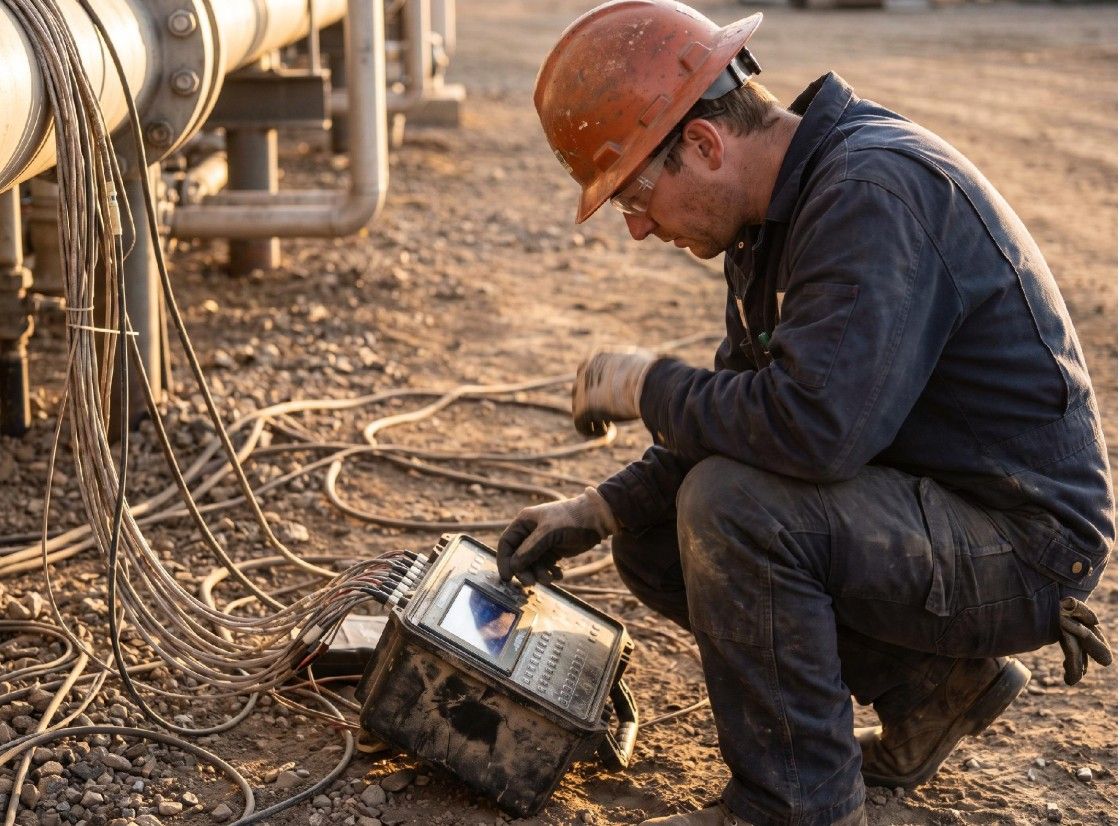
A small bracket can be heat-treated in a shop furnace under near-perfect, controlled conditions. A 40-foot section of pipeline or a refinery column welded in place cannot. That’s the practical reality driving most industrial PWHT work into the field, where portable equipment is used instead of a furnace.
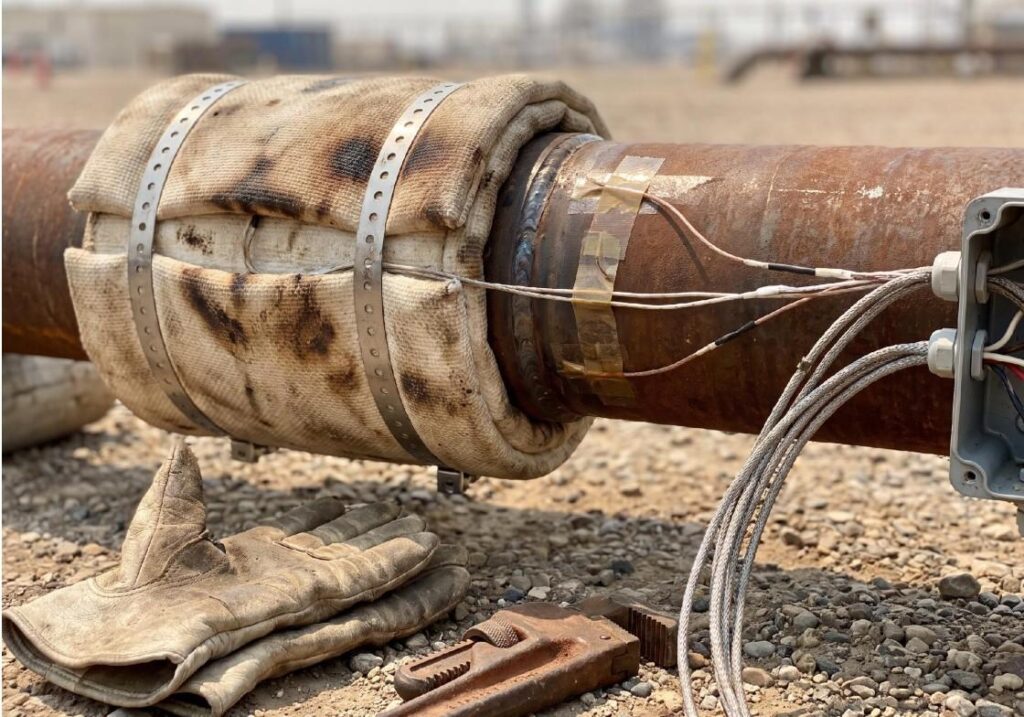
Field crews typically wrap the weld area with electrical resistance heating blankets or induction coils, attach thermocouples at multiple points around the joint, and monitor temperature continuously with data loggers to ensure the entire cross-section heats and cools at the specified rate and within the specified range. Get the coverage wrong, and you end up with an unevenly treated joint, one that looks finished but has cooler, harder spots that never got the stress relief they needed.
Demand for this kind of specialized field service isn’t static. North America holds an estimated 22.6% share of the global heat-treating market in 2025 and is showing the fastest regional growth rate, driven largely by aerospace, automotive, and energy-sector activity, according to the IMARC Group’s heat-treating market report. Renewable energy buildout is adding to that pressure, too. Roughly 5,500 gigawatts of new capacity is projected globally between 2024 and 2030, and a lot of that infrastructure, pipelines, structural steel, and power components will need welded joints treated to code before they go into service.
The Market Is Scaling, and So Is the Skill Requirement
The numbers back up what’s happening on the ground. The global heat treating market was valued at USD 111.7 billion in 2025 and is projected to reach USD 150.0 billion by 2034, a 3.19% compound annual growth rate, per IMARC Group’s figures. A separate estimate from the Business Research Company puts the 2025 value at USD 117.18 billion, climbing to USD 153.12 billion by 2033 at a 3.4% CAGR. The two estimates don’t agree exactly, which is normal for market forecasting, but they tell the same underlying story: this isn’t a shrinking niche service, it’s a growing, code-driven necessity tied directly to infrastructure spending.
That growth puts pressure on the labor side too. Technicians doing this work need to understand not just the mechanics of heating and cooling but the underlying reason for it, the same grain-structure and stress-relief fundamentals covered in the annealing process used to relieve internal stress in metals. Annealing and PWHT share a common goal even though they’re applied in different contexts, and engineers who understand one tend to pick up the other faster.
The Bottom Line for Engineers and Asset Owners
A weld isn’t finished when the arc goes out, and the bead cools. For anything above the code thresholds, whether that’s a refinery vessel, a cross-country pipeline, or a power plant component, the heat-treatment step afterward is what determines whether the joint holds up for thirty years or fails in three.
Treat PWHT as an afterthought, and you’re gambling with both compliance and safety. Treat it as the specialized, code-driven discipline it actually is, and the weld becomes what it was supposed to be in the first place: a permanent, reliable connection rather than a hidden weak point waiting for the wrong combination of stress and time.