
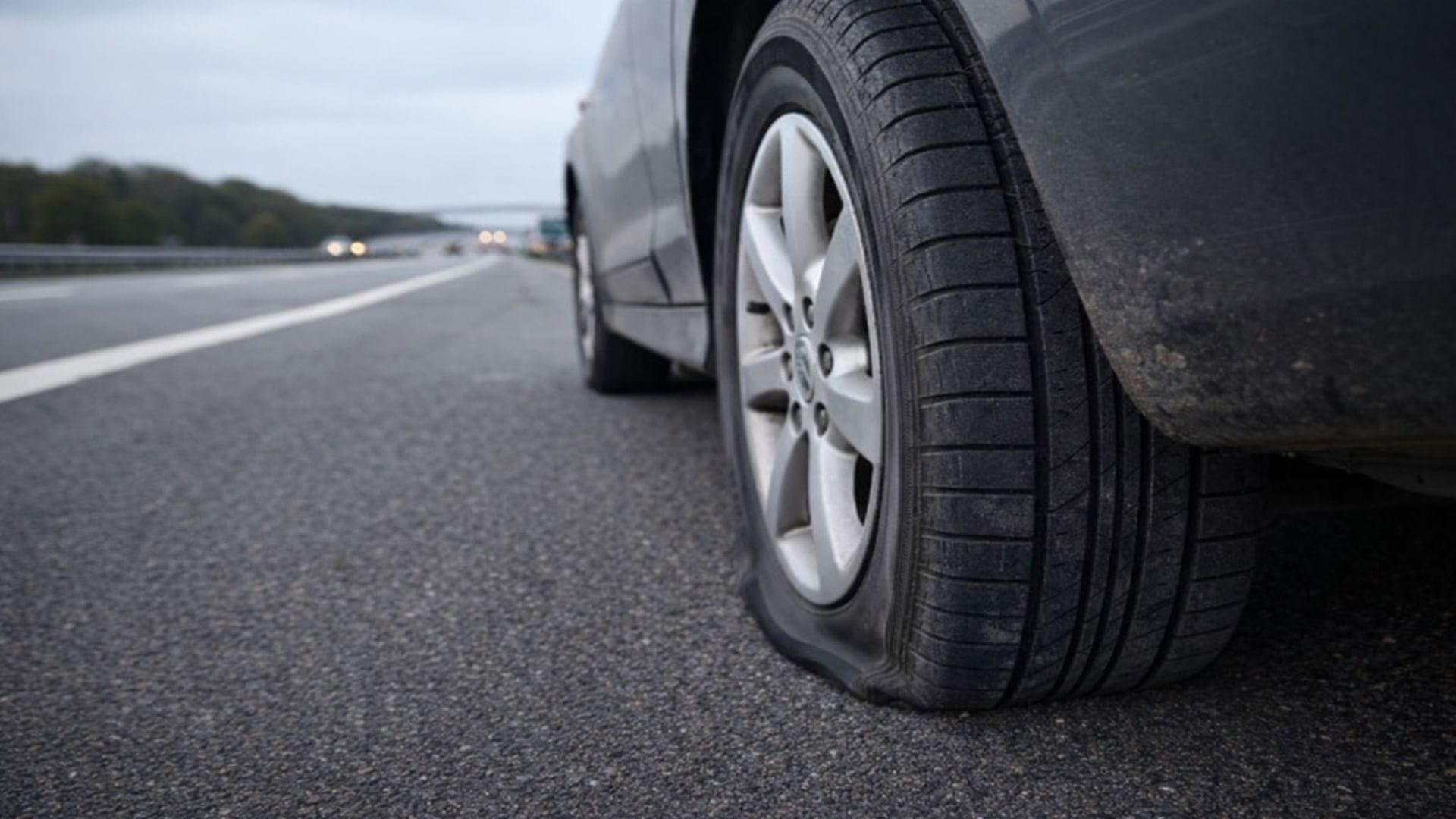
A nail in your tire at highway speed used to mean one outcome: pull over immediately, swap in a spare, and lose 20 minutes on the shoulder of a busy road. Run flat tires changed that equation entirely. They allow a vehicle to continue travelling, typically up to 50 miles at 50 mph, after complete loss of air pressure, without any driver intervention. Understanding why that is possible means looking inside the tire itself. The engineering behind run-flat technology is a direct response to a fundamental problem: standard tires rely entirely on pressurized air to support the vehicle’s weight. Remove that air, and the tire collapses in seconds. Run flat tires are built so that the tire structure itself, not the air, can bear that load temporarily.
The Problem Run Flat Tires Are Solving
A standard pneumatic tire is not a solid rubber structure; it is closer to a pressure vessel. The air inside, maintained at 30 to 40 PSI, physically supports the vehicle’s weight. The rubber, cords, and steel belts provide containment and contact surface, but they are not the load-bearing element. When a conventional tire loses pressure through a puncture, valve failure, or sidewall damage, the structural support disappears almost instantly. The sidewall collapses inward, the rim drops onto the inner tire surface, and within a few hundred meters the tire is destroyed. At speed, the sudden loss of handling and the risk of the driver overcorrecting makes this a genuine safety event. Run flat technology solves this by building redundancy directly into the tire structure, ensuring that even at zero air pressure, something else can temporarily carry the vehicle’s weight long enough to reach safety.
The Two Core Engineering Approaches
There are two distinct engineering architectures used in run flat tire design. Both achieve extended mobility after pressure loss, but through fundamentally different structural strategies.
The first is the self-supporting sidewall system, the most widely used approach, found on BMW, Mercedes-Benz, Mini, and most luxury brands. In a conventional tire, the sidewall rubber is 3 to 5mm thick and flexible by design. In a self-supporting run flat, that sidewall is 8 to 12mm thick, reinforced with heat-resistant rubber compounds, additional steel belt reinforcement, and a crescent-shaped insert of harder material embedded within the sidewall profile. Polyimide combined with glass fibre dramatically increases load-bearing capacity, while aramid fibres, the same material used in Kevlar, balance strength against weight.
The second approach is the support ring system. A ring of hardened rubber or composite polymer is mounted to the wheel inside the tire cavity. Under normal conditions the ring contributes nothing. When air pressure drops, the deflating tire collapses onto the ring, which then bears the vehicle’s weight. This approach handles heavier vehicle loads more effectively and can offer extended mobility of 100 miles or more. The trade-off is complexity: support ring systems require specially designed wheels.
Why the 50-Mile, 50 mph Limit Exists
Every run flat tire specification includes an extended mobility rating: typically 50 miles at a maximum speed of 50 mph after complete pressure loss. These numbers come directly from heat accumulation testing. When a tire runs deflated, the sidewall flexes far more than it does under normal inflation, generating heat through internal friction. Under normal inflation, the air inside acts as a heat sink. At zero pressure, that heat management mechanism is gone. At 70 mph, a tire rotates approximately 40% more times per mile than at 50 mph, generating proportionally more heat. The speed limit keeps heat generation within the engineered thermal tolerance of the reinforced sidewall compounds. The distance limit reflects where cumulative heat begins breaking down the internal rubber-to-cord bond. Critically, the tire may look completely normal externally even as it suffers internal structural damage, which is why most manufacturers do not permit repair of a run flat tire that has been driven deflated.
Also Read:
- Bike Tire Pressure : Ultimate Guide to the Right PSI for Bike Tires
- What Should Be the Tire Pressure for Road Bike?
- Car Maintenance Checklist: Keep Your Vehicle Running Smooth
Why TPMS Is Not Optional on a Run Flat Vehicle
Tire Pressure Monitoring Systems (TPMS) are legally mandated on all new passenger vehicles in the US and EU. On a conventional tire vehicle, TPMS is a useful early warning. On a run flat vehicle, it is a safety-critical component. Because the reinforced sidewall does not visually collapse at zero pressure, a driver cannot tell from handling feel or visual inspection alone that a tire has lost pressure. A run flat running flat feels slightly different, with marginally heavier steering and subtly reduced responsiveness, but most drivers would not identify this as a flat tire. Without TPMS, a driver could unknowingly exceed the extended mobility limit entirely, causing irreversible structural damage. TPMS detects pressure drop within seconds and alerts the driver immediately, starting the clock on the 50-mile window from the correct moment.
Self-sealing technology works by coating the inside of the tire’s inner liner with a viscous sealant compound. When a nail or screw penetrates the tread, the escaping air draws the sealant into the hole where it solidifies, maintaining pressure automatically. Punctures up to approximately 5mm in the tread area are sealed without the driver noticing. However, self-sealing technology provides zero extended mobility capability. If the sidewall is struck by a kerb impact or road debris, there is no sealant that can close that failure. Run flat technology accepts that pressure loss will occur and engineers the tire to survive it. Some manufacturers now combine both technologies, offering puncture prevention alongside pressure-loss survival capability.
The Real Trade-Offs
The reinforced sidewall that enables zero-pressure operation also makes the tire stiffer during normal driving. A run flat sidewall, two to three times thicker and substantially harder, provides less vertical compliance over potholes and uneven surfaces. Modern compounds have narrowed this gap significantly, but some stiffness remains inherent to the concept. A self-supporting run flat tire also weighs 20 to 30% more than a comparable conventional tire, adding unsprung mass that the suspension must manage with every road input. On cost, run flat tires typically cost 35 to 200% more than conventional equivalents depending on size and specification, and they are not universally stocked. Finally, a run flat tire that has been driven deflated typically cannot be repaired, as internal damage to the reinforced sidewall cannot be reliably assessed without destructive testing.
The Bottom Line
Run flat technology is one of the more elegant engineering solutions in modern automotive design. It takes a problem that has caused countless roadside incidents and dangerous loss-of-control events, and solves it by rethinking the fundamental assumption that a tire needs air to support a vehicle. Whether through reinforced sidewalls or internal support rings, the core achievement is the same: buying the driver time to stay calm, reach a safe location, and avoid the risks of stopping unexpectedly at speed. The trade-offs in ride quality, weight, and cost are real and worth understanding honestly, but for drivers who regularly travel long distances or want to eliminate a category of roadside emergency from their lives, the engineering case for run flat technology is solid and keeps getting better.
FAQs: Frequently Asked Questions
Generally no, if the tire has been driven at zero pressure. Internal heat damage to the reinforced sidewall cannot be reliably assessed without destructive inspection. Most manufacturers recommend full replacement after deflated operation. A run flat that loses pressure but is detected immediately by TPMS before the car moves may be repairable if the puncture is tread-only and within size limits.
No. Run flat tires use the same inflation pressure as conventional tires. Check the sticker on your door jamb or fuel cap for the correct figure. The difference is what happens when that pressure is lost, not the pressure required during normal operation.
Technically, yes, but it is not recommended without TPMS. Without pressure monitoring, you may drive on a deflated run flat without knowing, exceeding the extended mobility limit and causing irreversible structural damage. Most run flat-equipped vehicles have no spare tire provision, so fitting conventional tires eliminates your contingency if the run flat fails beyond its mobility limit.
Airless tires require no air at all, using a structural web or foam core instead. Run flat tires are still pneumatic tires that require normal inflation for everyday driving; they simply survive temporary pressure loss. Airless tires remain largely limited to low-speed industrial applications as of 2026, though several manufacturers are actively developing passenger vehicle versions.