

New car prices have climbed almost everywhere over the past few years. Steel costs more. Safety regulations are stricter. Even entry-level models now carry touchscreens and airbags that used to be reserved for higher trims.
That’s exactly why the search for the top 5 cheapest cars in the world 2026 has grown louder. Buyers want a reliable car without the debt.
First-time buyers, students, and budget-conscious families aren’t looking for luxury. They want a car that starts every morning, sips fuel, and doesn’t drain their savings on repairs.
This guide breaks down the cheapest cars in the world for 2026, how we picked them, what they cost to own, and which one actually suits your situation. Prices, availability, and specifications vary by country, so we’ve noted regional differences throughout.
How We Selected the Cheapest Cars
We ranked these budget-friendly cars using seven factors: starting price, fuel economy, reliability history, maintenance cost, safety rating, market availability, and overall value for money.
1. Price
Price was the starting filter, but a low sticker price means little if the car breaks down often or costs a fortune to service. So we weighed real ownership costs alongside the showroom figure.
2. Fuel economy
Fuel economy matters more in a budget car than almost anywhere else. A car that costs less upfront but drinks fuel can end up costing more over five years.
3. Reliability
Reliability came from long-term ownership patterns and brand track records in each region, since budget cars are often driven hard, daily, for years without a break.
4. Maintenance cost
Maintenance cost covers routine servicing, spare parts availability, and how easy it is to find a trained mechanic outside major cities.
5. Safety rating
Safety rating is non-negotiable. We prioritized cars with standard airbags, ABS, and where available, independent crash-test results from agencies like Global NCAP, Euro NCAP, or NHTSA.
6. Availability
Availability matters because a “cheapest car” title means nothing if you can’t actually buy the vehicle new in your country.
7. Overall value
Overall value ties all of this together, the balance of price, running cost, and what you actually get for your money.
Top 5 Cheapest Cars in the World (2026)
Because vehicle pricing differs drastically by country due to taxes, import duties, and local manufacturing, this list draws from two of the world’s largest budget-car markets: India, home to some of the least expensive new cars on Earth, and Europe, where Dacia has redefined what an affordable new car can look like. Currency conversions are approximate and change with exchange rates.
1. Maruti Suzuki S-Presso
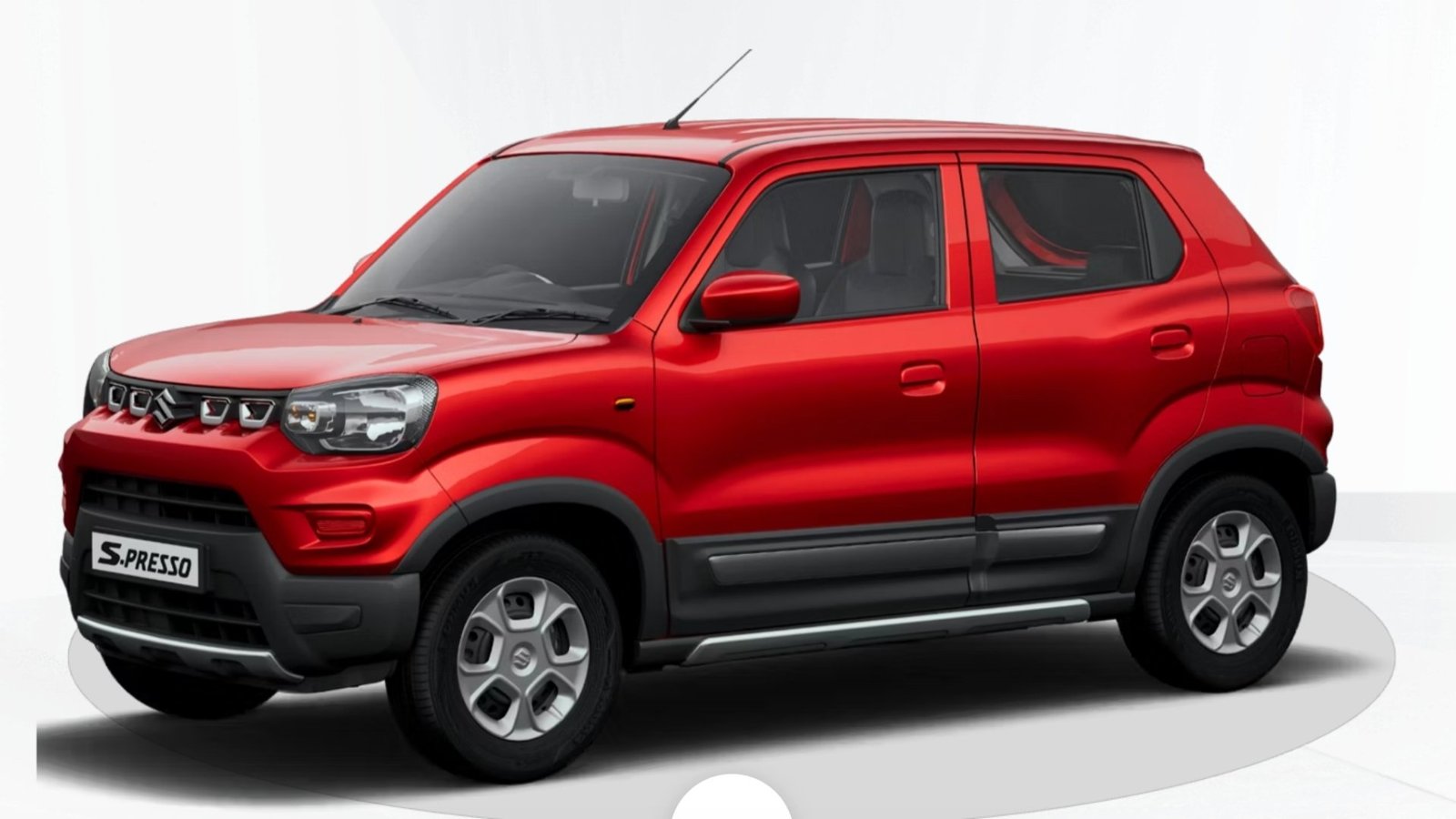
Overview: The S-Presso is currently the least expensive new car sold in India, styled as a compact, tall-boy hatchback with a mini-SUV stance. It’s built for city driving above everything else.
Starting Price: Around ₹3.50 lakh to ₹6.32 lakh (roughly $4,200–$7,600), ex-showroom, depending on trim and transmission.
Engine: 1.0-litre, 3-cylinder petrol producing about 67 bhp and 89 Nm of torque.
Transmission: 5-speed manual, with a 5-speed AMT (automated manual transmission) available on higher trims.
Mileage: Rated fuel efficiency of roughly 21–24 km/l on petrol, with a factory-fitted CNG option for even lower running costs.
Safety Features: Dual airbags, ABS with EBD, rear parking sensors, and a high seating position that improves visibility in traffic.
Interior: A surprisingly roomy cabin for its footprint, with a simple dashboard, a 7-inch touchscreen on top trims, and decent headroom thanks to the tall-boy design.
Technology: Optional SmartPlay touchscreen infotainment with Android Auto and Apple CarPlay, digital instrument cluster on select variants.
Pros:
- Lowest starting price in its home market
- CNG variant available for cheap running costs
- Easy to park and maneuver in dense traffic
- Low-cost servicing through a wide dealer network
Cons:
- Basic interior materials
- Limited safety equipment on base trim
- Not sold in most markets outside South Asia
Best For: First-time buyers and city commuters who prioritize price above all else.
Verdict: The S-Presso earns its spot as one of the cheapest new cars in the world through sheer affordability and low running costs, though buyers should opt for a higher trim for better safety coverage.
2. Maruti Suzuki Alto K10
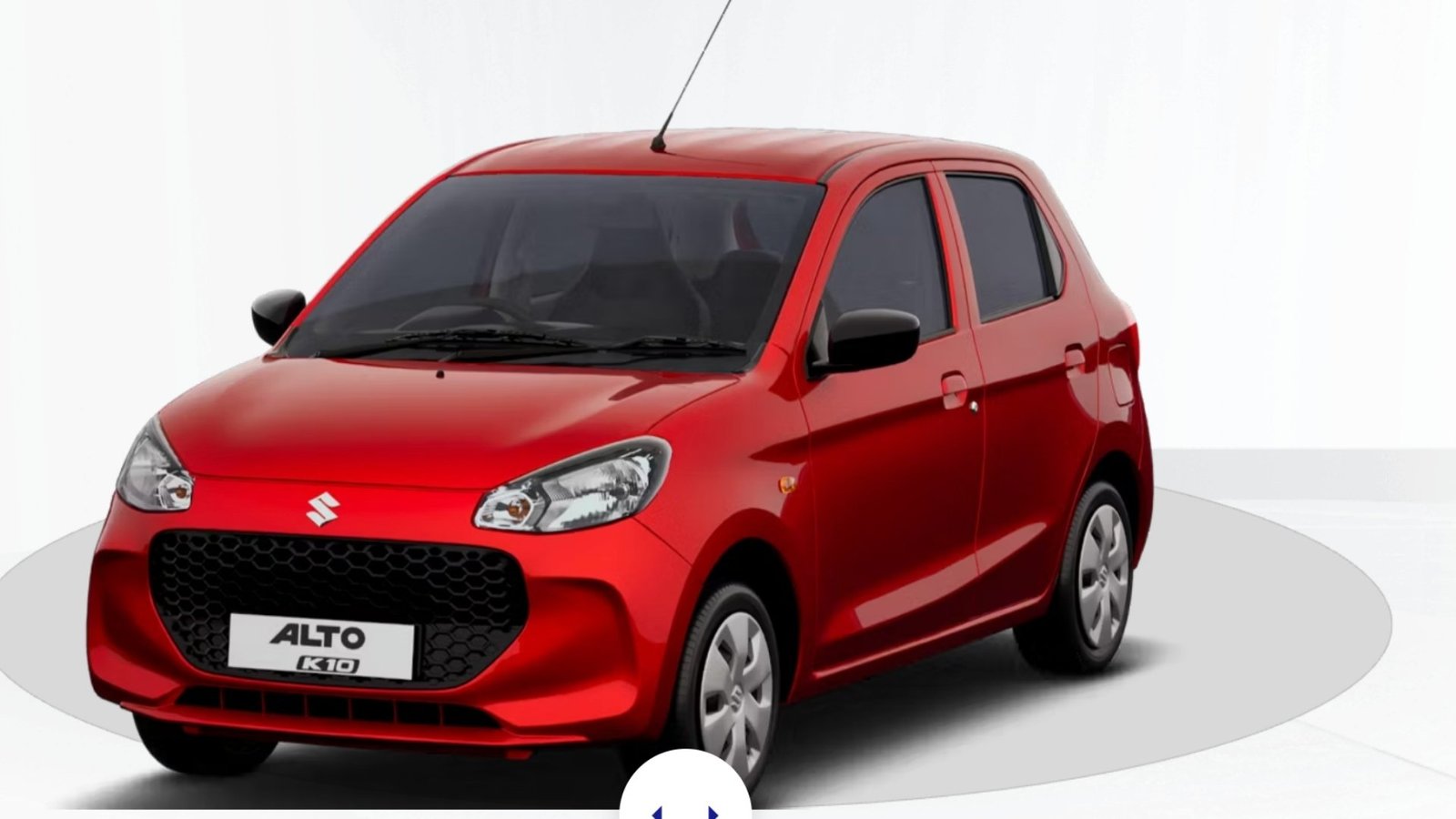
Overview: The Alto nameplate has been India’s default entry-level car for over two decades, and the current K10 generation carries that reputation forward with a peppier engine and improved safety kit.
Starting Price: Approximately ₹3.70 lakh to ₹5.45 lakh (about $4,450–$6,550), ex-showroom.
Engine: 1.0-litre, 3-cylinder petrol making around 67 bhp and 89 Nm.
Transmission: 5-speed manual and 5-speed AMT options.
Mileage: Among the best in its class, with claimed figures around 24 km/l, plus a CNG variant for further savings.
Safety Features: Dual airbags standard, with six airbags available on top variants — a rarity in this price bracket, making it one of the safer budget cars sold in India.
Interior: Compact but functional, with enough room for four adults and a small boot.
Technology: Basic infotainment on lower trims, with a touchscreen unit offered higher up the range.
Pros:
- Exceptional fuel economy for a petrol car
- Strong resale value
- Six-airbag option unusual at this price point
- Widely available service network
Cons:
- Cramped rear seat for taller passengers
- Modest power output
- Sparse feature list on entry trims
Best For: Budget-conscious families and daily commuters who want low running costs without sacrificing basic safety.
Verdict: The Alto K10 balances affordability with genuine safety upgrades, making it one of the best cheap cars for buyers who drive daily and want dependable mileage.
3. Renault Kwid
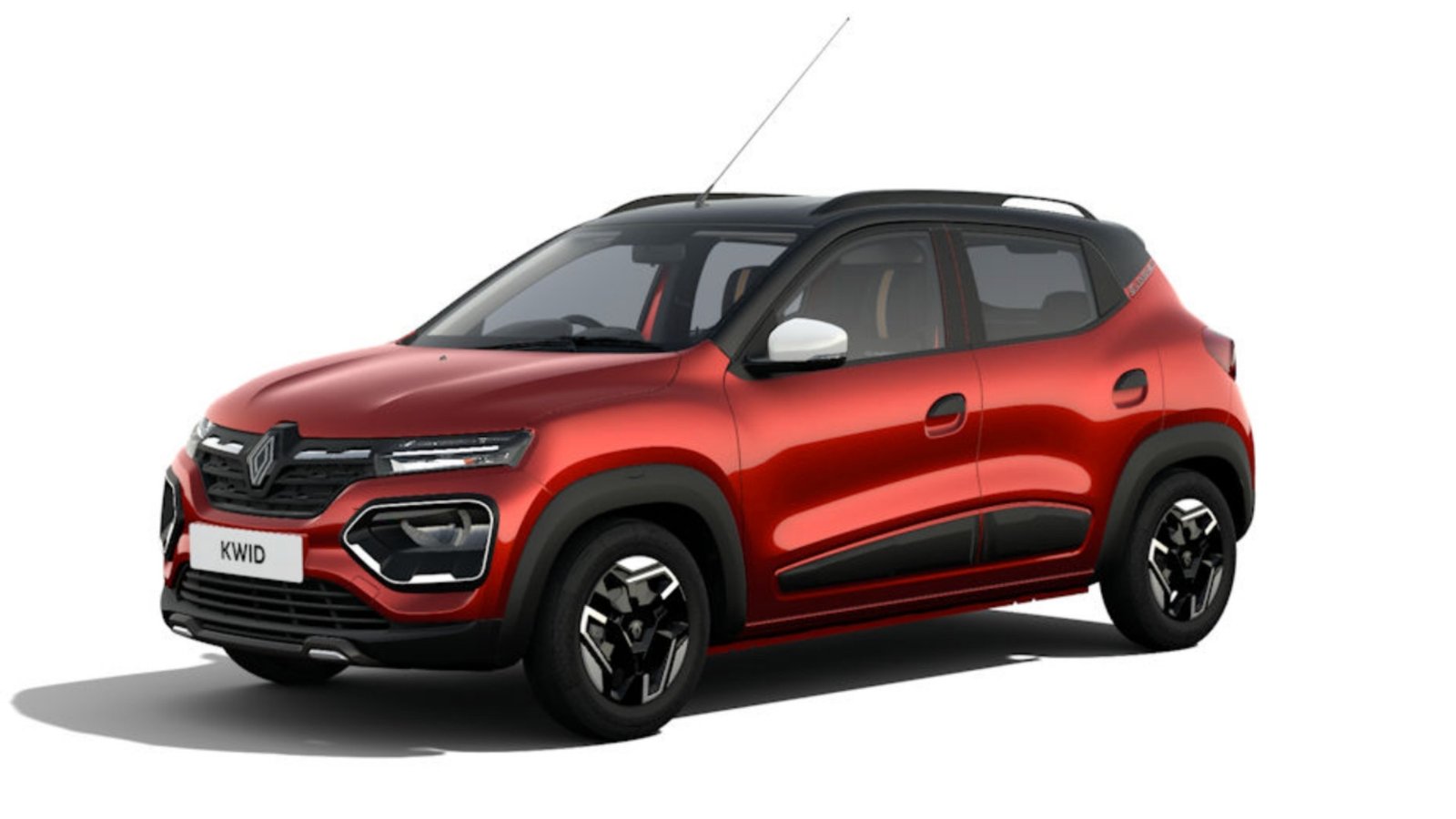
Overview: The Kwid brought SUV-inspired styling to the budget segment when it launched, and it remains one of the most feature-rich affordable cars in its class. It’s also sold, in various forms, across parts of Latin America and Africa.
Starting Price: Roughly ₹4.53 lakh to ₹6.45 lakh (about $5,450–$7,750), ex-showroom in India, with different pricing structures in other markets.
Engine: 1.0-litre, 3-cylinder petrol producing about 67–69 bhp and up to 91 Nm of torque.
Transmission: 5-speed manual or 5-speed AMT.
Mileage: Claimed efficiency up to 22 km/l, helped by light overall weight.
Safety Features: Dual airbags, ABS with EBD, and rear parking sensors on higher trims.
Interior: One of the more spacious cabins in the segment, with light, easy-to-use controls.
Technology: Touchscreen infotainment, digital instrument cluster, and wireless smartphone connectivity on top variants — features that feel a step above rivals at this price.
Pros:
- SUV-style looks at a hatchback price
- Feature list punches above its price class
- Light controls make city driving easy
- Comfortable ride quality
Cons:
- Rear-seat space is average
- Engine feels underpowered on highways
- Ground clearance can be an issue on rough terrain
Best For: Style-conscious first-time buyers who still want a genuinely low price.
Verdict: The Kwid remains one of the most affordable new cars with a genuinely modern feature set, making it a smart pick for buyers who want more than just basic transportation.
4. Tata Tiago
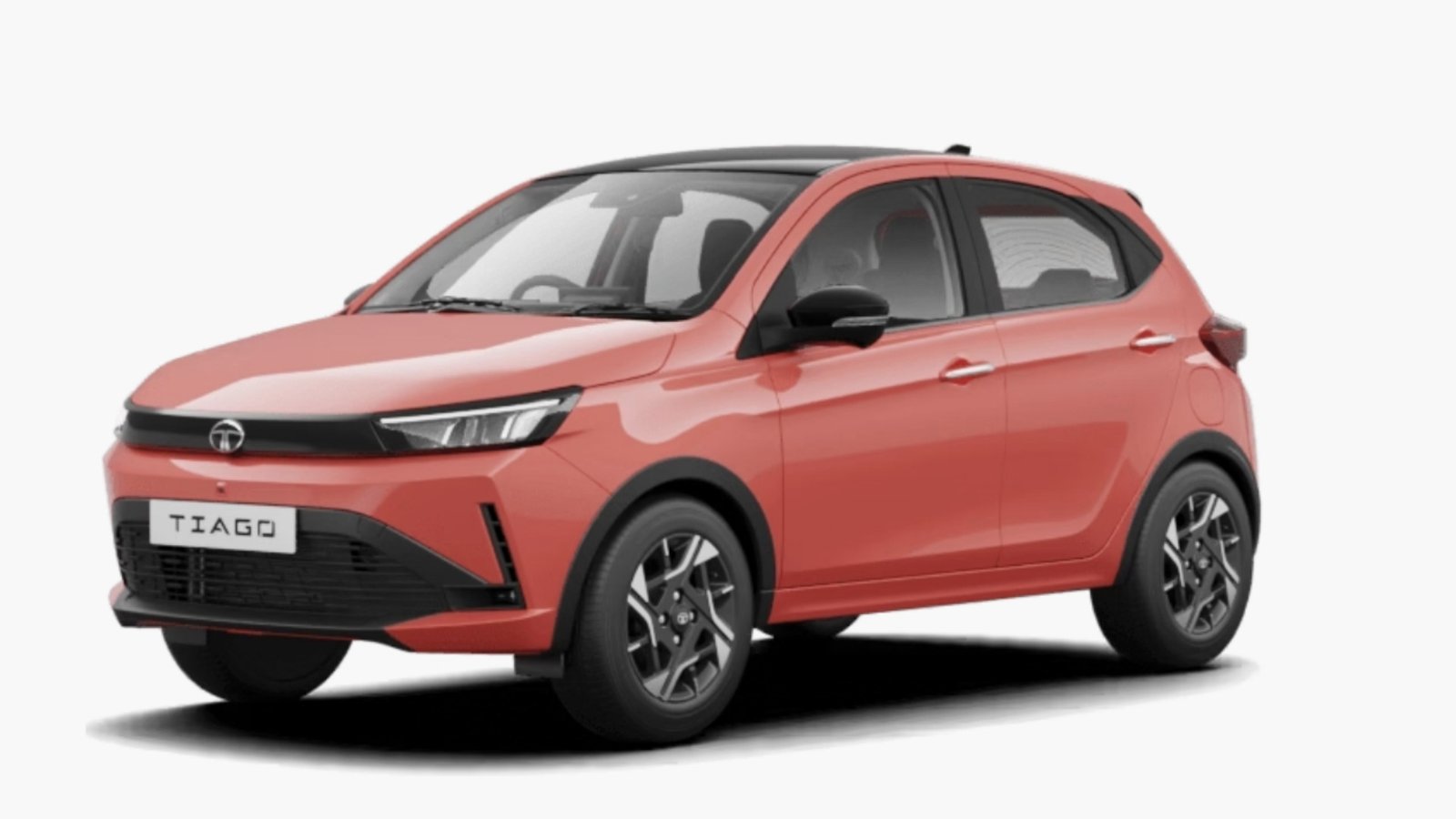
Overview: The Tiago sits slightly above the cheapest entries on this list but earns its place through class-leading safety, something increasingly important to buyers researching affordable family cars.
Starting Price: Around ₹4.70 lakh to ₹8.55 lakh (roughly $5,650–$10,300), ex-showroom.
Engine: 1.2-litre, 3-cylinder petrol producing about 86 bhp, with a CNG variant rated around 75.5 bhp.
Transmission: 5-speed manual, with a 5-speed AMT, including on the CNG version, a rare combination in this segment.
Mileage: Strong efficiency on both petrol and CNG, appealing to buyers who drive long daily distances.
Safety Features: Six airbags standard across the range, along with a reinforced bodyshell, a genuine standout in the budget segment.
Interior: Well-built cabin with better perceived quality than most rivals, plus decent rear-seat space.
Technology: Touchscreen infotainment with connected-car features on higher trims.
Pros:
- Six airbags as standard, not an option
- Strong build quality and crash-test reputation
- CNG-AMT combination is unique in its price range
- Comfortable for small families
Cons:
- Higher starting price than the cheapest rivals
- Engine refinement is average
- Boot space is modest
Best For: Budget-conscious families who won’t compromise on safety.
Verdict: The Tiago proves that a cheap car doesn’t have to mean a less safe car, making it one of the best affordable family cars on this list.
5. Dacia Sandero
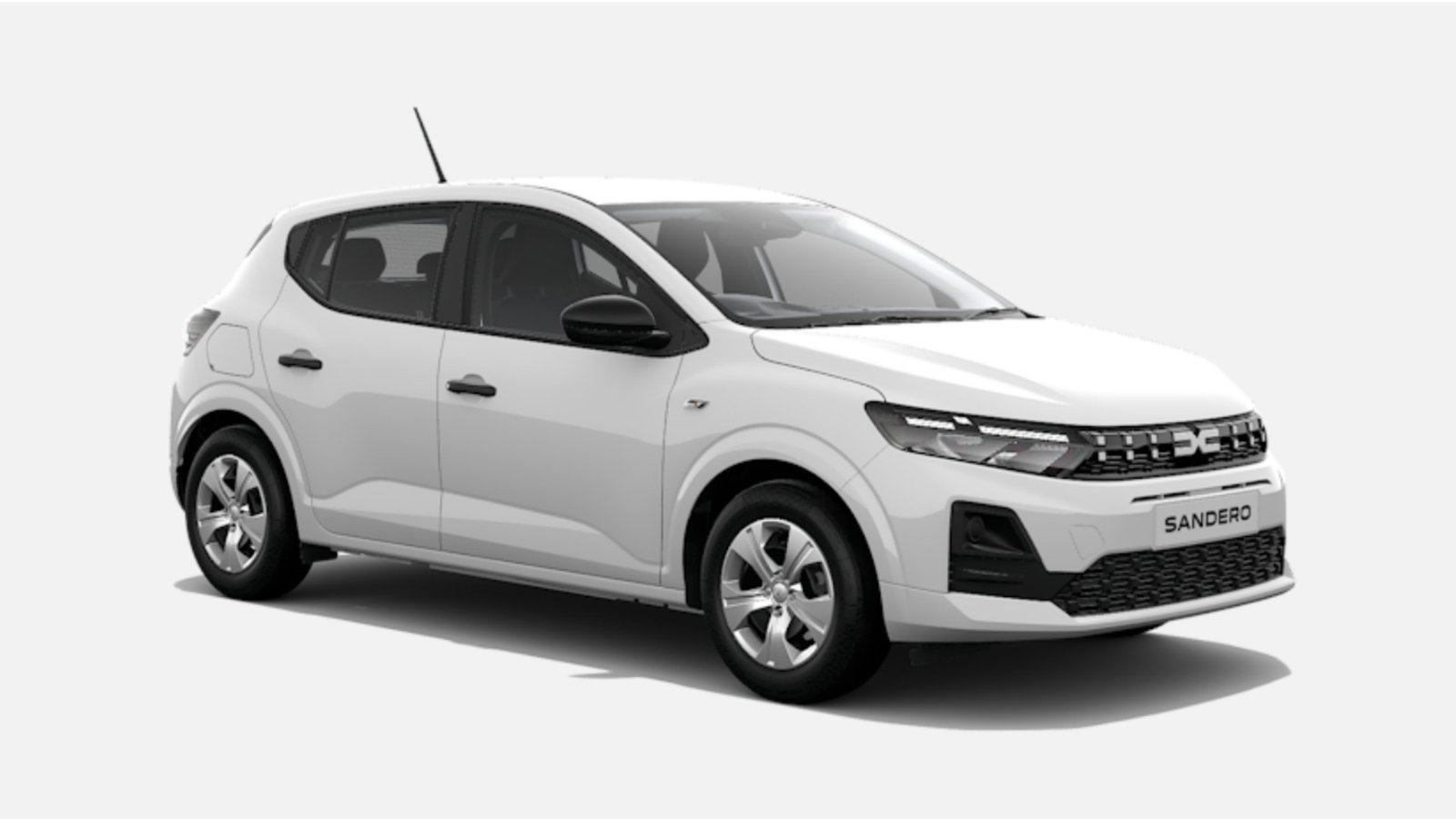
Overview: In Europe, where new-car prices have risen sharply, the Sandero has held its position as the continent’s best-selling retail car and its most affordable new model, all while adding modern safety tech.
Starting Price: From about £14,765 in the UK, or approximately €15,500 in other European markets (roughly $18,700–$19,700).
Engine: 1.0-litre, 3-cylinder turbocharged petrol (TCe), producing around 100 bhp in its latest form, with an LPG Bi-Fuel variant also offered.
Transmission: 5-speed manual, with a CVT automatic available on select trims.
Mileage: Competitive fuel economy for a turbo-petrol supermini, with the LPG version offering lower running costs per mile.
Safety Features: Automatic Emergency Braking, Lane Keep Assist, Traffic Sign Recognition, and Driver Attention Warning are all standard, meeting current Euro NCAP expectations.
Interior: A notable step up from older Dacia models, with a 10-inch touchscreen, reach-and-rake adjustable steering wheel, and improved cabin materials.
Technology: Dacia’s Media Control smartphone-based infotainment system, wireless charging on select trims, and full LED headlights.
Pros:
- Cheapest new car in several European markets
- Standard driver-assistance safety tech
- Shares its platform with the Renault Clio
- LPG option for lower fuel costs
Cons:
- Significantly pricier than budget cars sold in India
- Interior materials remain basic on entry trims
- Limited engine choice compared with mainstream rivals
Best For: European buyers who want the lowest possible price on a new car without dropping to the used market.
Verdict: The Sandero shows that “cheapest” looks very different depending on where you live, but it remains the benchmark for affordable new cars across Europe.
Also Read:
- What Is a Hybrid Car? Types, Benefits & Best Hybrid Cars Explained
- Hydrogen vs Electric Cars: Which Is the Future of Sustainable Transportation?
- 10 Most Affordable Electric Cars in 2026 (USA Edition)
Quick Comparison Table
| Car | Starting Price (approx.) | Engine | Mileage | Transmission | Fuel Type | Seating | Pros | Cons |
| Maruti Suzuki S-Presso | $4,200–$7,600 | 1.0L, 3-cyl petrol | 21–24 km/l | Manual / AMT | Petrol, CNG | 5 | Lowest price, low running cost | Basic safety on base trim |
| Maruti Suzuki Alto K10 | $4,450–$6,550 | 1.0L, 3-cyl petrol | Up to 24 km/l | Manual / AMT | Petrol, CNG | 5 | Great mileage, 6-airbag option | Cramped rear seat |
| Renault Kwid | $5,450–$7,750 | 1.0L, 3-cyl petrol | Up to 22 km/l | Manual / AMT | Petrol | 5 | Feature-rich, stylish | Underpowered on highways |
| Tata Tiago | $5,650–$10,300 | 1.2L, 3-cyl petrol | Strong on petrol/CNG | Manual / AMT | Petrol, CNG | 5 | 6 airbags standard, safe | Higher starting price |
| Dacia Sandero | $18,700–$19,700 | 1.0L turbo petrol | Competitive | Manual / CVT | Petrol, LPG | 5 | Standard driver-assist tech | Pricier than Indian rivals |
Cheapest Cars vs Used Cars
A brand-new budget car offers a full warranty and zero prior wear, while a used car offers a lower upfront cost but carries unknown history and higher long-term risk. The right choice depends on your budget, how long you plan to keep the car, and your tolerance for unexpected repairs.
Advantages of buying new:
- Full manufacturer warranty
- No hidden mechanical history
- Latest safety features and emissions compliance
- Easier financing terms in many markets
Disadvantages of buying new:
- Immediate depreciation once the car leaves the dealership
- Higher upfront cost than a comparable used model
- Insurance premiums are often higher initially
Advantages of buying used:
- Lower purchase price for the same model or a higher trim
- Depreciation has already happened
- Can sometimes buy a more feature-rich car for the same budget
Disadvantages of buying used:
- Warranty coverage may be expired or limited
- Maintenance history can be unclear or unverifiable
- Older safety tech compared with current models
When buying used makes more sense: If your budget is tight and you’re comfortable inspecting a vehicle’s history, a two- or three-year-old version of these same models often costs significantly less while still offering many years of service.
When buying new makes more sense: If you want a full warranty, the latest safety systems, and predictable running costs from day one, a new budget car is the safer long-term bet.
Things to Consider Before Buying a Budget Car
Before signing anything, weigh nine practical factors: your total budget, fuel economy, maintenance schedule, insurance premium, safety rating, resale value, spare-parts availability, warranty terms, and total ownership cost over five years.
- Budget: Include on-road costs, not just the sticker price, registration, taxes, and insurance can add a meaningful percentage on top.
- Fuel economy: Even a small difference in mileage adds up over tens of thousands of kilometers a year.
- Maintenance: Ask about service intervals and typical costs for common parts like brake pads and filters.
- Insurance: Get quotes before buying, since premiums vary more than buyers expect between similarly priced cars.
- Safety: Check for independent crash-test results where available, rather than relying on brand reputation alone.
- Resale: Some budget models hold value far better than others, which affects your total cost when you eventually sell.
- Spare parts availability: A cheap car with expensive or hard-to-find parts can cost more over time than a pricier, well-supported model.
- Warranty: Compare warranty length and what it actually covers, since terms differ significantly by manufacturer.
- Ownership costs: Add fuel, insurance, servicing, and depreciation together to get a realistic five-year picture, not just the purchase price.
Which Cheapest Car Offers the Best Value?
- Best overall: Maruti Suzuki Alto K10, for its balance of price, mileage, and available safety kit.
- Best for students: Maruti Suzuki S-Presso, thanks to its rock-bottom entry price and easy city maneuverability.
- Best for families: Tata Tiago, due to its standard six-airbag safety setup and sturdier build.
- Best mileage: Maruti Suzuki Alto K10, especially in its CNG configuration.
- Lowest maintenance: Maruti Suzuki S-Presso and Alto K10, both benefiting from a vast, low-cost service network.
- Best city car: Renault Kwid, for its light controls and easy parking in tight urban spaces.
Conclusion
The top 5 cheapest cars in the world 2026 prove that a tight budget doesn’t have to mean a bare-bones car. Options like the Maruti Suzuki S-Presso, Alto K10, Renault Kwid, Tata Tiago, and Dacia Sandero each bring something different to the table, from unbeatable mileage to standard six-airbag safety.
Before you decide, compare on-road prices in your own city, since taxes and dealer offers can shift the numbers noticeably. Check fuel type options, since CNG or LPG variants often cut running costs further.
Most importantly, book a test drive. Specifications on paper can’t tell you how a car feels in daily traffic, and five minutes behind the wheel often reveals more than any brochure. Compare prices, take a test drive, and choose the budget car that actually fits how you drive.
FAQs:
Based on ex-showroom pricing in India, the Maruti Suzuki S-Presso is currently among the cheapest new cars in the world, starting around ₹3.50 lakh (roughly $4,200). However, “cheapest” varies significantly by country due to local taxes, import duties, and manufacturing costs, so the title shifts depending on which market you’re comparing.
The cheapest new car depends on your region. In South Asia, the Maruti Suzuki S-Presso and Alto K10 top the list. In Europe, the Dacia Sandero holds the title of the most affordable new car, despite costing several times more in dollar terms than its Indian counterparts.
The Maruti Suzuki Alto K10 typically delivers the best fuel economy among budget cars, especially in its CNG variant, which can significantly lower per-kilometer running costs compared with pure petrol options.
Yes, most budget cars from established manufacturers like Maruti Suzuki, Tata, Renault, and Dacia are built on proven platforms and mechanically simple engines, which tends to improve long-term reliability. Reliability depends more on regular maintenance than on the price tag itself.
The Maruti Suzuki S-Presso and Alto K10 are popular first-car choices because of their compact size, light steering, and low running costs, making them easier and cheaper to learn on than larger vehicles.
Cars with simple, widely used engines and large dealer networks, like the Alto K10 and S-Presso, typically have the lowest maintenance costs, since parts are cheap and mechanics are familiar with the platform in most towns and cities.
It varies significantly by model. The Tata Tiago and higher trims of the Alto K10 offer six airbags as standard, which is above average for the segment. Always check independent crash-test data, such as Global NCAP or Euro NCAP results, rather than assuming all budget cars perform the same in a crash.
It depends on your priorities. A new budget car gives you a warranty and zero wear, while a used mid-range car may offer more features and comfort for a similar price, though with unknown maintenance history. Buyers who value predictability often prefer new; those who prioritize features often go used.