
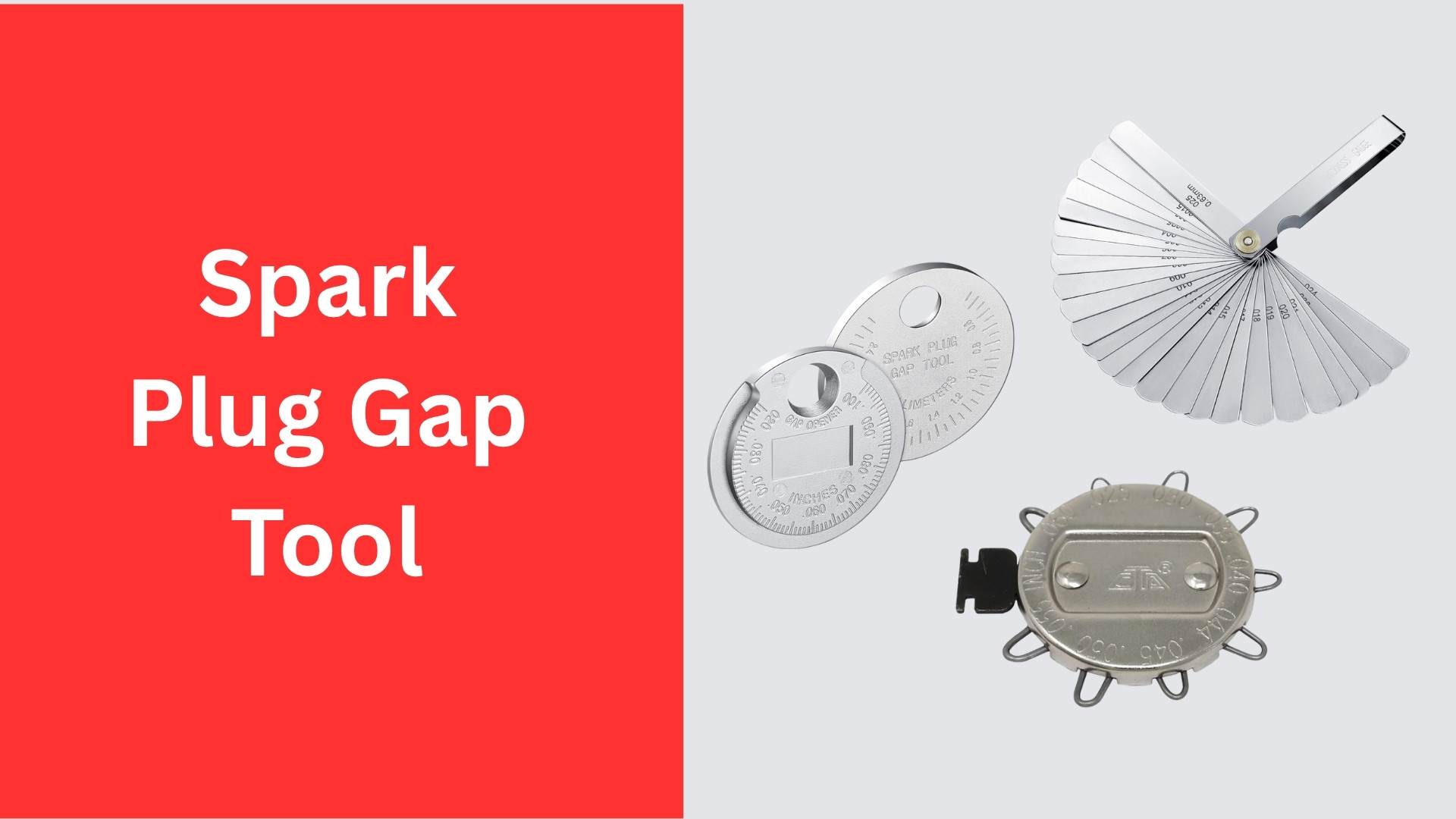
Ever installed new spark plugs only to experience rough idling, engine misfires, poor fuel economy, or hard starting? In many cases, the issue isn’t the spark plug itself, it’s the spark plug gap.
A spark plug gap tool is a simple but essential device that helps you measure and adjust the distance between a spark plug’s center electrode and ground electrode. Setting the correct gap ensures a strong, consistent spark that ignites the air-fuel mixture efficiently, helping your engine deliver maximum performance, fuel economy, and reliability.
Whether you’re replacing spark plugs in a car, motorcycle, lawn mower, generator, or marine engine, using a spark plug gapping tool is an important step that should never be skipped.
In this guide, you’ll learn:
- What a spark plug gap tool is
- Why spark plug gap matters
- Different types of spark plug gap gauges
- How to use a spark plug gap tool correctly
- Common mistakes to avoid
- Frequently asked questions
What Is a Spark Plug Gap Tool?
A spark plug gap tool is a measuring and adjustment tool used to set the correct distance between a spark plug’s center electrode and ground electrode.
This distance, known as the spark plug gap, determines how far the electrical spark must travel to ignite the air-fuel mixture inside the engine cylinder.
A spark plug gap tool is a device used to measure and adjust the gap between a spark plug’s electrodes so that it matches the manufacturer’s recommended specification and ensures proper engine performance.
Most spark plug gap tools include:
- A measuring gauge
- A gap adjustment feature
- Markings for various gap sizes
The correct spark plug gap varies by vehicle and engine design, making it important to follow the manufacturer’s specifications rather than relying on a generic setting.
Why Is a Spark Plug Gap Tool Important?
Proper spark plug gapping plays a critical role in engine performance.
When the gap is set correctly, the ignition system produces a strong and reliable spark that efficiently ignites the air-fuel mixture.
Benefits of Proper Spark Plug Gapping
- Improved fuel economy
- Smoother engine operation
- Better throttle response
- Reduced engine misfires
- Easier cold-weather starting
- Lower emissions
- Reliable ignition performance
Even spark plugs sold as “pre-gapped” should always be checked before installation. Shipping, handling, and vehicle-specific requirements can affect the final gap measurement.
Types of Spark Plug Gap Tools
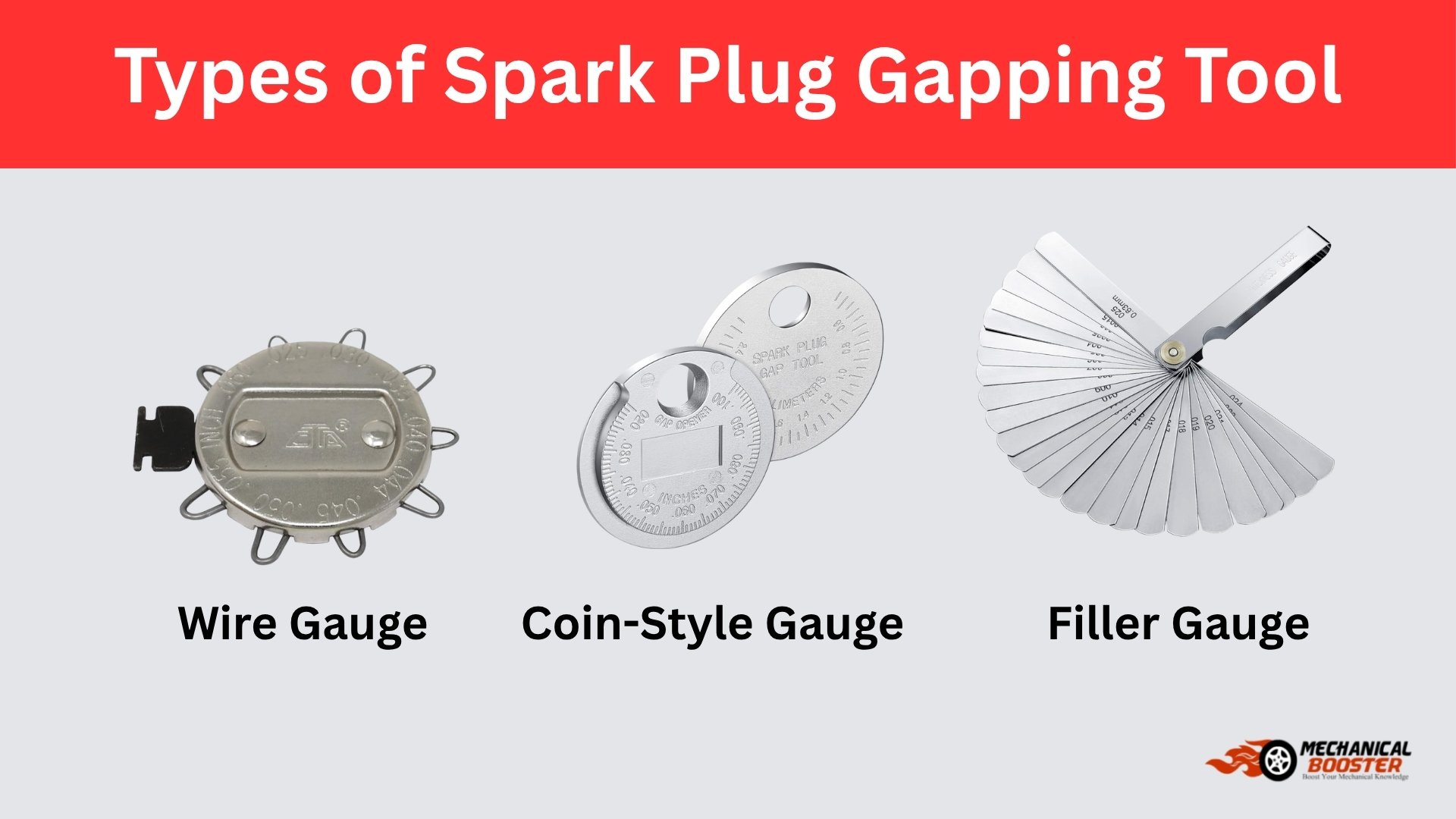
Several types of spark plug gap gauges are available, each offering different levels of convenience and accuracy.
| Tool Type | How It Works | Best For | Accuracy |
| Wire Gauge | Uses calibrated wire loops to measure the gap | Modern vehicles and precision work | High |
| Coin-Style Gauge | Uses a tapered measuring edge on a rotating disc | Quick measurements | Medium to High |
| Feeler Gauge | Uses flat metal blades of known thickness | Older engines and wider gaps | Medium |
Wire Gauge
Wire-style gauges are the most commonly recommended option for modern spark plugs because they provide accurate measurements while reducing the risk of damaging fine-wire platinum and iridium electrodes.
Coin-Style Gauge
Coin-style gauges are inexpensive and easy to use. They work well for general maintenance but may be less precise than wire gauges.
Feeler Gauge
Flat feeler gauges are useful for measuring larger gaps and are commonly found in general automotive tool kits.
How Does a Spark Plug Gap Tool Work?
A spark plug gap tool measures the distance between the center electrode and ground electrode using a calibrated gauge.
If the measurement does not match the manufacturer’s specification, the tool allows you to carefully adjust the ground electrode until the desired gap is achieved.
The process typically involves:
- Measuring the existing gap.
- Comparing it to the recommended specification.
- Adjusting the ground electrode if necessary.
- Rechecking the measurement.
- Installing the spark plug once the correct gap is confirmed.
How to Use a Spark Plug Gap Tool
Tools Required
- Spark plug gap tool
- Spark plug
- Vehicle owner’s manual
- Clean cloth
- Torque wrench (recommended)
Step 1: Find the Correct Gap Specification
Check the owner’s manual, under-hood sticker, service manual, or spark plug manufacturer’s documentation.
Most passenger vehicles use gaps ranging from approximately 0.028 inch to 0.060 inch, although specifications vary by engine.
Step 2: Measure the Existing Gap
Insert the appropriate wire or gauge into the space between the center and ground electrodes.
The gauge should move through the gap with slight resistance.
Step 3: Adjust the Gap
If the gap is too small:
- Gently bend the ground electrode outward.
If the gap is too large:
- Carefully bend the ground electrode inward.
Always adjust the ground electrode only.
Never bend the center electrode.
Step 4: Recheck the Gap
Measure again after each adjustment until the specified gap is reached.
Step 5: Install the Spark Plug
Thread the spark plug by hand first to prevent cross-threading.
Use the manufacturer’s recommended torque specification during installation.
Correct Spark Plug Gap Size Chart
The correct spark plug gap depends on the engine type, ignition system, and manufacturer specifications. Always verify the exact gap in your owner’s manual or service manual before installation.
| Engine Type | Typical Spark Plug Gap |
|---|---|
| Small Engines (Lawn Mowers, Chainsaws) | 0.020″–0.030″ (0.5–0.8 mm) |
| Motorcycles | 0.024″–0.035″ (0.6–0.9 mm) |
| Older Carbureted Cars | 0.025″–0.035″ (0.6–0.9 mm) |
| Modern Gasoline Cars | 0.028″–0.060″ (0.7–1.5 mm) |
| Performance Vehicles | 0.020″–0.040″ (0.5–1.0 mm) |
| Turbocharged Engines | 0.020″–0.032″ (0.5–0.8 mm) |
| Marine Engines | 0.028″–0.045″ (0.7–1.1 mm) |
Safety Tips
- Work on a cool engine.
- Wear safety glasses.
- Avoid dropping spark plugs.
- Never force adjustments.
- Inspect plugs for cracks or damage before installation.
- Disconnect the ignition system when performing maintenance.
Common Problems and Solutions
| Problem | Possible Cause | Solution |
| Engine misfire after installation | Incorrect gap or damaged plug | Verify gap and inspect plug |
| Gauge will not fit | Gap too narrow | Adjust ground electrode outward |
| Ground electrode damaged | Excessive force | Replace spark plug |
| Inconsistent measurements | Worn gauge | Use a quality wire gauge |
| Hard starting | Incorrect gap setting | Recheck specification and gap |
Common Mistakes to Avoid
Skipping Gap Verification: Never assume a pre-gapped spark plug is correctly set for your engine.
Using the Wrong Specification: Always use the exact specification provided by the manufacturer.
Bending the Center Electrode: This can permanently damage the spark plug and affect ignition performance.
Using Excessive Force: Small adjustments are usually all that is needed.
Installing Without Final Inspection: Always perform one final gap measurement before installation.
Expert Tips
- Recheck gaps immediately before installation.
- Use wire gauges for modern platinum and iridium spark plugs.
- Store gap tools in a dry environment.
- Replace worn gauges periodically.
- Follow the spark plug manufacturer’s installation instructions.
Important Note About Anti-Seize
Many modern spark plugs feature plated threads and do not require anti-seize compound. Some manufacturers specifically advise against its use because it can alter torque values. Always follow the spark plug manufacturer’s recommendations.
Final Verdict
A spark plug gap tool is one of the simplest and most affordable automotive tools you can own, yet it plays a major role in engine performance and reliability.
By measuring and adjusting the spark plug gap according to manufacturer specifications, you can improve combustion efficiency, reduce misfires, support fuel economy, and help your engine perform as intended.
For most DIY mechanics, a wire-style spark plug gap gauge offers the best combination of accuracy, affordability, and ease of use.
FAQs: Frequently Asked Questions
A wire-style spark plug gap gauge is generally considered the most accurate and safest option for modern spark plugs.
The correct spark plug gap varies by vehicle and engine design. Always follow the manufacturer’s specifications.
Yes. Even pre-gapped spark plugs should be checked before installation.
A gap that is too wide requires more voltage to fire and can lead to misfires, hesitation, poor fuel economy, and hard starting.
A gap that is too narrow may create a smaller spark kernel, reducing combustion efficiency and potentially leading to reduced power and increased emissions.
Yes. A feeler gauge can accurately measure the gap, although a dedicated spark plug gap tool may make adjustments easier.