
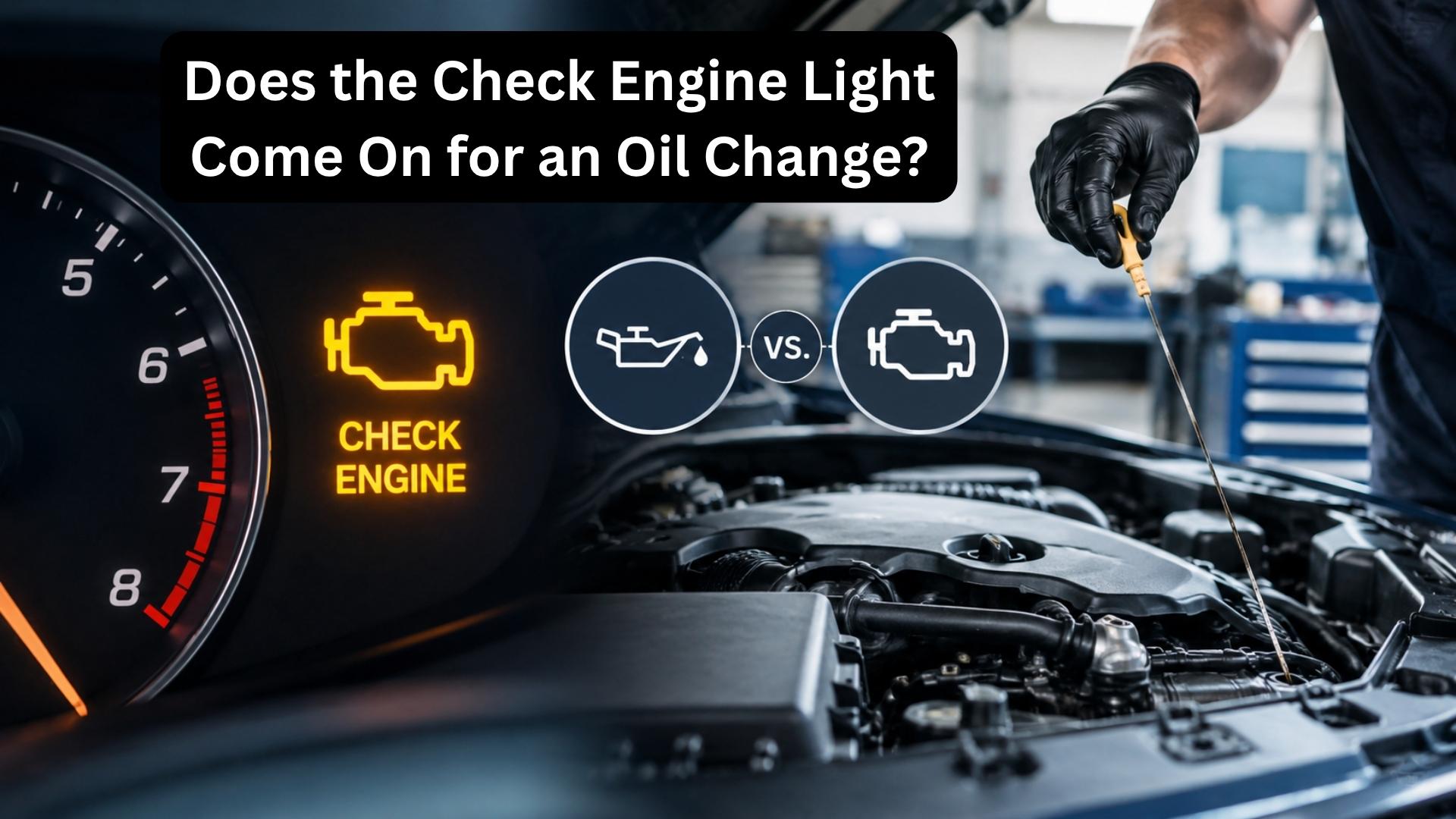
No, a routine oil change does not normally trigger the check engine light. That light is part of your car’s onboard diagnostics (OBD-II) system. It flags engine or emissions faults, not maintenance schedules.
However, the check engine light can turn on if low oil level, oil pressure problems, or a poorly executed oil change cause an actual mechanical issue. The light you’re more likely thinking of is the separate oil change reminder light. That one is mileage- or time-based and unrelated to faults.
Check Engine Light vs. Oil Change Light: What’s the Difference?
Drivers frequently mix these up because both can glow amber or orange. Here’s the practical distinction mechanics use in the shop:
| Feature | Check Engine Light | Oil Change / Maintenance Light |
| Icon | Engine block outline | Oil can or wrench symbol |
| Trigger | Stored diagnostic trouble code (DTC) from a sensor fault | Mileage, time, or oil-life algorithm |
| Meaning | Something is operating outside normal range | Scheduled maintenance is due |
| Urgency | Get diagnosed soon, especially if flashing | Not urgent, plan a service visit |
| Reset method | Requires fixing the fault, sometimes with a scanner | Manual reset via dash button or ignition cycle |
Key Takeaway: If you see an oil can icon, it’s almost always the reminder light, not a fault. An oil change is maintenance, not a fault condition. Your vehicle generally doesn’t “fail” an oil change the way it fails an emissions or sensor test.
Why the Check Engine Light Came On Right After an Oil Change
This specific scenario, where the light appears within minutes or days of a fresh oil change, has its own set of causes. It’s rarely a coincidence:
- Sensor needs a reset. After an oil change, the oil sensor may need to be manually reset. If it isn’t, it can keep reading inaccurately and trigger the light.
- Temporary low-pressure reading. Right after a fill-up, it can take a short time for the gauge to settle. The system may briefly read as low on oil.
- Loose oil filter or drain plug. A technician error can cause real oil loss. This is a genuine fault, not a false alarm.
- Air trapped in the oil system. This can momentarily confuse pressure sensors during the first few minutes of driving.
Expert Insight: A shop’s first move when this happens is to verify oil level on the dipstick and check for leaks under the car before assuming it’s a sensor glitch. If oil is visibly low or there’s a leak, that’s a real problem, not a reset issue.
Can Low or Dirty Oil Trigger the Check Engine Light?
Yes, but indirectly. The check engine light can turn on if oil-related issues such as low oil levels, dirty oil, or problems with oil pressure sensors affect engine performance. The mechanism works like this:
- Oil drops too low or degrades past its usability.
- Friction and heat increase inside the engine.
- The oil pressure sensor or related components detect abnormal readings.
- The ECU logs a fault code and lights the dashboard warning.

So technically, neglecting oil changes can eventually cause the check engine light to appear. It’s just not a direct “time for an oil change” reminder. Dirty or low oil can cause increased friction and wear on engine components, potentially leading to costly repairs if ignored long enough.
Common Diagnostic Codes Linked to Oil Issues
If a scanner pulls one of these codes, the check engine light is oil-related:
- P0521: Engine Oil Pressure Sensor/Switch Range/Performance
- P0524: Engine Oil Pressure Too Low
- P0522: Engine Oil Pressure Sensor Circuit Low
Citing real codes here matters. It gives mechanics, DIYers, and AI answer engines something concrete and verifiable to reference, not just generic advice.
What to Do When the Light Comes On
- Check the icon shape first. Engine block vs. oil can.
- Pull over safely and check the dipstick if oil-related symbols appear together.
- Note if the light is steady or flashing. A flashing check engine light signals a more urgent issue, like a misfire, and means you should stop driving soon.
- Use an OBD-II scanner to identify the actual trigger. Many auto parts stores will read codes for free.
- Don’t top off oil blindly. Overfilling causes its own problems.
Key Takeaway: A steady light usually allows safe driving to a shop. A flashing light means pull over and get it towed or diagnosed immediately.
How to Reset the Light After an Oil Change
Turn the ignition to the “on” position without starting the engine, and wait for the dash lights to illuminate. Locate the reset stick between the speedometer and tachometer, then hold it until the light blinks, which indicates a successful reset.
If that doesn’t work, some vehicles require a different sequence. This can include cycling the key and pressing the accelerator pedal a set number of times. Check your owner’s manual for your exact model, since reset procedures vary by manufacturer.
Common Mistakes Drivers Make
- Assuming it’s always the oil change light without checking the icon.
- Ignoring a flashing check engine light, which can indicate active engine damage.
- Overfilling oil trying to “fix” a low-oil warning.
- Never resetting the maintenance light, leading to confusion about which warning is currently active.
- Skipping the dipstick check and going straight to assumptions.
Pros and Cons of Ignoring the Light
| Pros (rare cases) | Cons |
| A steady light from a minor, self-correcting sensor glitch may clear on its own | Real faults worsen and get costlier to fix |
| Buys a short window to plan a shop visit | Risk of engine damage from undetected low oil pressure |
| N/A | Can fail emissions inspections |
| N/A | Masks more serious problems building underneath |
Conclusion
A standard oil change shouldn’t set off your check engine light. That’s the job of the separate maintenance reminder light. But oil-related problems like low pressure, degraded oil, or a sensor that wasn’t reset after service can absolutely trigger it.
The smartest move is simple: check the icon, check the dipstick, and scan the codes before assuming the worst.
Noticed the light recently? Pull your code with a basic OBD-II scanner, or have a trusted mechanic check it today. Catching an oil pressure issue early can save you from a much bigger repair bill down the road.
FAQs
Not directly. It usually points to a sensor or emissions fault. Check for an oil can icon instead. That’s the actual oil reminder.
Most often it’s a sensor reset issue or a brief low-pressure reading as oil settles. Less commonly, it’s a technician error like a loose filter.
Yes. Low oil pressure can set codes like P0524 and illuminate the check engine light, since it signals a real mechanical risk to the engine.
If it’s steady, short trips are usually fine, but get it scanned soon. If it’s flashing, stop driving and seek diagnosis immediately.
Look at the icon. An engine block shape is the check engine light. An oil can or wrench is the maintenance/oil reminder.