
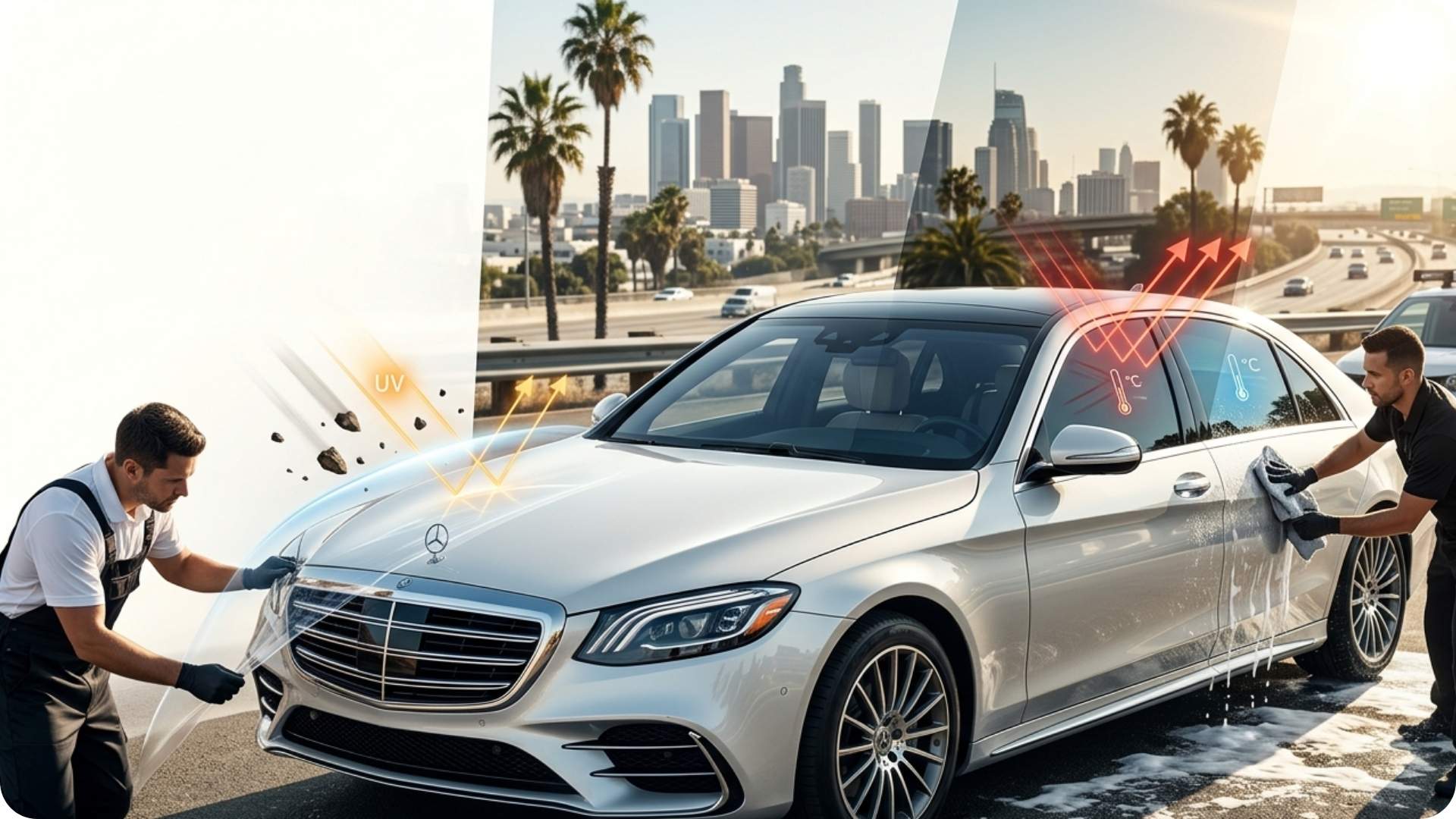
Congratulations on the new ride. Whether you’ve just picked up a sleek new EV from a showroom in Santa Monica or a luxury SUV in Beverly Hills, that “new car smell” comes with a side of anxiety. In a city like Los Angeles, your vehicle’s pristine condition is under constant attack from the moment you pull off the lot.
Between the gravel-strewn freeways, the intense UV index, and the airborne industrial fallout, a “wait and see” approach is the fastest way to tank your car’s resale value. To keep your investment looking showroom-fresh, there are three essential steps every Angeleno should take within the first week of ownership.
1. Shield the Paint from the Freeways
The 405, the 101, and the 5 freeways are essentially outdoor sandblasting chambers. Small rocks and road debris kicked up by semi-trucks can leave your hood and bumper peppered with unsightly white chips in a matter of days. Traditional waxes and ceramic coatings can help with shine, but they offer zero protection against physical impacts.
The only real solution is Paint Protection Film (PPF). This high-impact urethane film heals itself from swirls and light scratches. For many local owners, finding the best paint protection film installer is the first priority. A professional installation ensures that the edges are tucked and invisible, providing a literal suit of armor for your paint. If you’ve opted for a modern finish, you can even choose a matte film to change the look of your car while simultaneously protecting it.
The Financial Armor: Boosting Resale Value
In 2026, PPF is a calculated financial strategy. A new national survey of dealership professionals revealed that adding PPF can increase a vehicle’s resale value by up to 15%. With 96% of dealers agreeing that protected exteriors retain significantly more value, a $60,000 luxury SUV could see a $9,000 premium at trade-in. Beyond the price, PPF-protected cars sell up to 20% faster, as the film serves as a “certified” mark of meticulous ownership.
By the Numbers: How PPF Protects Your Car
The performance of modern 8-mil thermoplastic polyurethane (TPU) films is backed by staggering data:
- 90% Reduction in Damage: High-quality PPF prevents up to 90% of paint chips and scratches compared to unprotected vehicles over five years.
- 99% UV Blockage: Advanced inhibitors block nearly all UV radiation, cutting paint oxidation and color fading by 50%.
- High-Velocity Defense: Premium films dissipate the energy of stone impacts at speeds of 60–80 mph, protecting the metal beneath.
- 70% Fewer Swirls: Heat-activated topcoats “self-heal” minor abrasions, reducing visible maintenance marks by 70%.
By choosing a professional PPF team, you aren’t just washing your car; you’re insuring its factory finish and ensuring it remains at the top of the market when it’s time to sell.
Also Read:
- What is Coatings And Car Paint Protection?
- How To Choose Best Car Cover for Your Car?- Complete Guide
- How to Attach Jumper Cables to Start Your Car
2. Block the Heat (and the UV Rays)
Los Angeles averages nearly 300 days of sunshine a year. While that’s great for weekend trips to Malibu, it is devastating for your car’s interior. Standard factory glass offers very little in the way of infrared heat rejection. Without protection, your dashboard can reach temperatures exceeding 180°F, leading to cracking, fading, and a cabin that feels like an oven.
The solution is high-performance ceramic window film. Unlike the cheap, “bubbly” tint of the past, modern Carbon tint uses nano-ceramic particles to block up to 99% of UV rays and a massive percentage of solar heat. This doesn’t just keep you cool; it saves your leather from drying out and significantly reduces the strain on your AC system. Whether you need residential or auto tint for your daily driver, upgrading your glass is the most effective way to preserve your cabin’s interior.
The Science of Solar Rejection: Why Ceramic Wins
In 2026, ceramic technology has redefined what we expect from window film. Traditional dyed or metallic tints either fade over time or interfere with your vehicle’s GPS and cellular signals. Ceramic tint, however, is engineered on a molecular level to filter out the specific wavelengths that cause damage and heat.
- 60°F Temperature Drop: Scientific testing shows that ceramic window film can reduce interior surface temperatures by up to 60°F compared to untreated glass.
- 98% Infrared Rejection: While “darkness” provides privacy, it’s infrared rejection (IR) that stops the heat. Premium ceramic films block up to 98% of infrared rays, ensuring the heat stays outside where it belongs.
- 40% Faster Cooling: Data reveals that tinted vehicles cool down up to 40% faster once the AC is activated. This doesn’t just improve comfort; it directly reduces the workload on your engine or battery.
By investing in high-quality glass protection, you’re doing more than just darkening your windows; you’re preserving your luxury interior, increasing your vehicle’s efficiency, and securing a higher resale value for the future.
3. Establish a Professional Maintenance Routine
Once your car is shielded and tinted, the biggest mistake you can make is taking it through a “scratch-and-shine” automatic car wash. Those spinning plastic brushes are notorious for leaving deep swirl marks in your clear coat, dulling the finish you just worked so hard to protect.
To maintain that deep, wet look, you need a touchless or hand-wash routine. However, in a busy city like LA, finding two hours every weekend to properly wash your car isn’t always feasible. This is where the “pro” approach comes in. Utilizing a mobile detailing service allows you to keep your car in top-tier condition while you work or relax at home. A professional Mobile Detail specialist uses the two-bucket method and pH-balanced chemicals to ensure your paint stays swirl-free and your wheels stay clear of corrosive brake dust.
The True Cost of Convenience: Automatic vs. Professional Care
In 2026, the data is clear: the $20 drive-through wash is one of the most expensive “shortcuts” you can take. Studies from industry leaders like Autoglym have shown that regular use of automatic brush washes can reduce a vehicle’s paint gloss by up to 25% in a single year.
- The “Sandpaper” Effect: Automatic brushes often trap grit and sand from the hundreds of dirty trucks that went through before you. At high speeds, these brushes act like light-grit sandpaper, creating a “halo” of micro-scratches that permanently dull your clear coat.
- Chemical Erosion: To compensate for a lack of precision, automatic washes use high-pH detergents that are aggressive enough to strip away waxes and degrade the hydrophobic properties of your ceramic tint and PPF.
- The Paint Correction Penalty: Once your paint is swirled, the only fix is a professional paint correction, which in 2026 can cost anywhere from $500 to $2,500. Regular maintenance through a Mobile Detailing service prevents this damage from ever occurring.
By choosing Auto Detailing Spot, you aren’t just getting a clean car; you’re executing a high-yield maintenance strategy that pays for itself the moment you’re ready for your next upgrade.
Conclusion
In Los Angeles, your car is more than just transportation; it’s an investment and a reflection of your lifestyle. By combining the physical protection of PPF, the climate control of ceramic tint, and the consistent care of professional detailing, you ensure that your vehicle remains an asset rather than a depreciating liability.
Don’t wait for the first rock chip or the first signs of interior fading. Take these three steps now, and you’ll enjoy that “new car” feeling for years to come.