
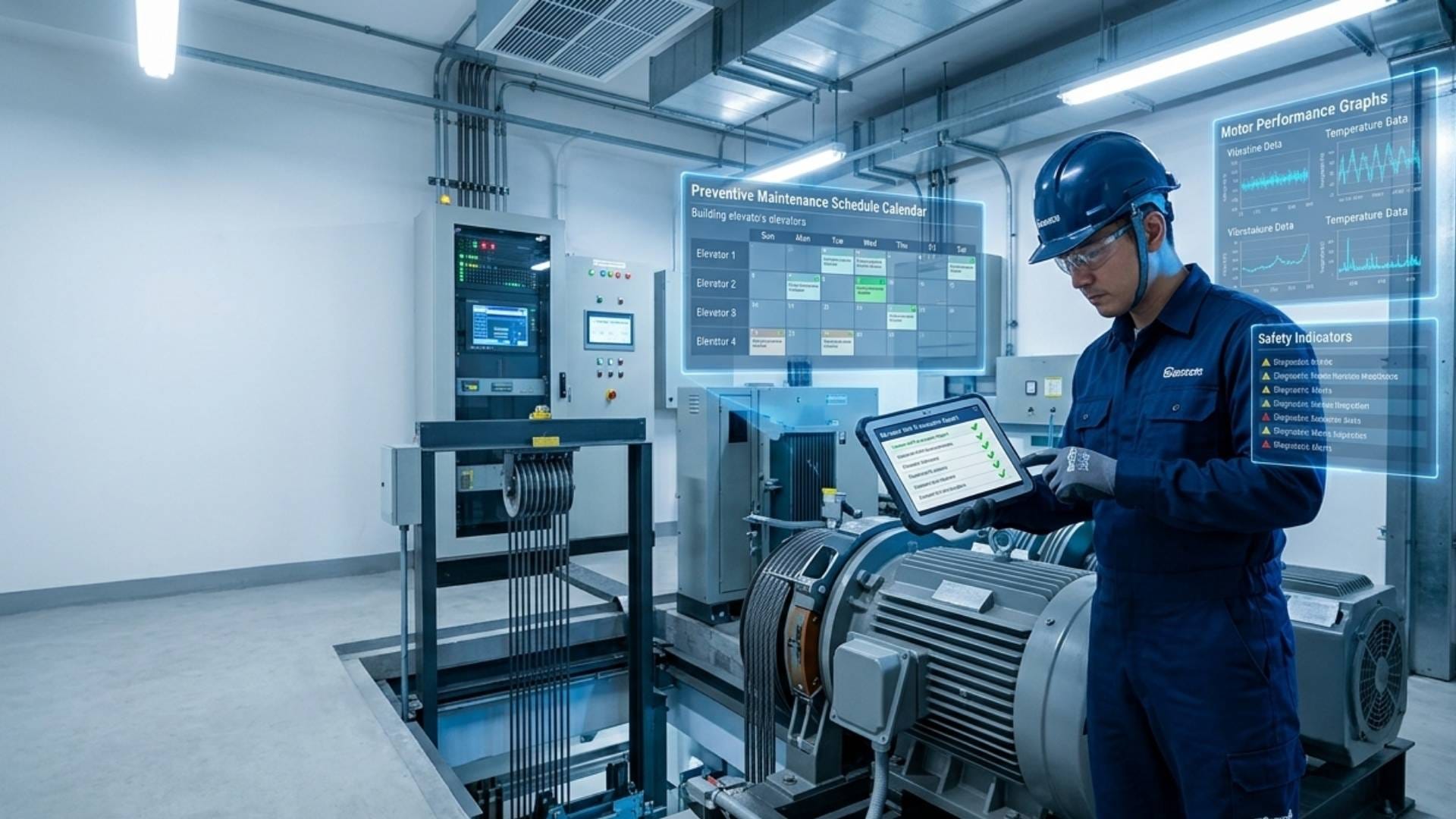
Most commercial buildings have an elevator maintenance contract. Far fewer have a maintenance program that actually prevents problems.
The difference matters. A contract is a document that says a technician will show up once a month. A real preventive maintenance program ties visit frequency to how the elevator is used, defines exactly what gets inspected on each visit, layers in deeper checks throughout the year, and builds a documentation trail that supports both compliance and budgeting decisions.
For property managers and facility teams, understanding what separates a checkbox maintenance schedule from one that reduces downtime, extends equipment life, and keeps you inspection-ready is worth the few minutes it takes to read this.
Start With Usage, Not a Calendar
The most common mistake in elevator maintenance scheduling is defaulting to a standard monthly visit regardless of how the equipment is actually used. A passenger elevator in a busy medical office running hundreds of door cycles per day has completely different wear patterns than a freight elevator in a warehouse that moves heavy loads a few dozen times per shift.
A good program starts by reviewing actual usage data: ride counts, peak traffic periods, door cycles, and environmental factors like humidity, temperature swings, or dust exposure that affect electronics and door operators. From there, visit frequency gets matched to real demand.
Most commercial passenger elevators land on a monthly schedule, but high-traffic buildings — hospitals, courthouses, large office towers — often benefit from visits every two to three weeks, especially during the first few months after a modernization or a major tenant move-in that changes traffic patterns. Freight elevators with abused doors and heavy loads may need their own cadence entirely.
The schedule also needs to account for building access rules and staffing. A missed visit isn’t just inconvenient — it breaks the data trail. When you can’t compare month-over-month performance, you lose the ability to spot trends before they become failures.
Define the Work, Not Just the Date
A calendar with “maintenance visit” penciled in on the first Tuesday of every month is not a program. Each visit needs a defined scope tied to recognized wear areas.
Doors come first on every visit. Door-related issues account for the majority of elevator service calls. Technicians should inspect rollers, tracks, gibs, hangers, interlocks, and gate switches. They test closing force and reversal behavior, clean light curtains or detector edges, and check the car gate clutch for proper engagement. Debris in the door track — the kind that accumulates in lobbies with heavy foot traffic — gets cleared before it causes a nuisance shutdown.
Machine room and controller checks happen every visit too. Technicians look for loose wiring connections, overheating components, dust buildup on circuit boards, and any signs of moisture intrusion. Brake operation and safety circuit function get verified. Leveling accuracy at each landing gets checked — nothing generates tenant complaints faster than a car that stops an inch above or below floor level.
System-specific checks round out each visit. On traction elevators, that means inspecting hoist ropes or belts for wear, proper tension, and alignment. On hydraulic systems, technicians check fluid levels, inspect for leaks around the cylinder and fittings, and verify that valves and the power unit are operating within spec. At every visit, the technician should be listening and watching for vibration, unusual noise, or erratic car movement — the early warning signs that something is wearing beyond tolerance.
When every technician follows the same task list, you get consistent data. When task definitions are vague, you get inconsistent inspections and missed problems.
Also Read:
- What is Predictive Maintenance? Definition, Types & Benefit
- Preventive Maintenance vs Predictive Maintenance: Key Differences
Layer in Quarterly and Semiannual Deep Dives
Monthly visits catch fast-developing issues. But some problems build slowly — over months, not weeks — and need dedicated inspection time that a routine visit can’t accommodate, especially in occupied buildings where elevator downtime must be minimized.
Quarterly inspections typically expand into more thorough door operator work: measuring component wear, verifying that door timing is consistent across all landings, and inspecting car top equipment including sheaves, roller guides, and traveling cables. Pit inspections at this interval check buffers, limit switches, and any evidence of water intrusion that could compromise safety devices or structural components.
Semiannual visits go deeper. This is when technicians inspect sheaves, bearings, and drive components for wear that isn’t visible during shorter visits. Controller fault logs get reviewed — not just cleared — to identify recurring codes that point to developing problems. Terminal connections and grounding points get cleaned and retightened, since vibration loosens them over time. Emergency communication systems, alarms, and car lighting get tested under realistic conditions.
For certain buildings, semiannual maintenance includes load testing or brake performance verification to confirm the system can stop and hold safely under full load.
This layered approach creates a rhythm: monthly visits handle everyday wear, while quarterly and semiannual visits catch the slower-developing problems that cause expensive failures when they’re ignored.
Build Annual Compliance Into the Schedule
Every commercial elevator faces periodic inspections mandated by local authorities having jurisdiction (AHJs). These tests vary by region, but the consequences of failure are universal: shutdowns, fines, and tenant disruption.
A strong maintenance program doesn’t treat annual testing as a separate event that appears out of nowhere. It builds inspection prep into the schedule so the elevator arrives at test day in known-good condition.
Pre-inspection prep typically includes verifying all safety devices, confirming door lock engagement and monitoring, checking floor leveling accuracy, and reviewing any historical issues that could cause a test failure. The maintenance provider should also ensure that all required documentation — service records, modification history, previous inspection reports — is organized and accessible.
Scheduling matters here too. Tests require access to machine rooms, pits, and car tops, and may require brief shutdowns. Building management and tenants need advance notice. When the annual test is baked into the maintenance calendar months ahead of time, it’s a planned event instead of a fire drill.
Companies like Elevator Support Company have built their preventive maintenance programs around this principle — every routine visit generates documented service records that feed directly into compliance readiness, so annual inspections become a confirmation of ongoing work rather than a scramble to get things in order.
What Good Documentation Actually Does
The least glamorous part of a maintenance program is also the most valuable: the paper trail.
Detailed service records from every visit — what was inspected, what was found, what was done — create a performance history for each elevator. Over time, that history reveals patterns. If a particular door operator starts generating more frequent adjustments, the data makes the case for proactive replacement before it fails during peak hours. If a controller throws the same fault code three months running, the trend is visible in the logs even if each individual occurrence seemed minor.
Good documentation also gives property managers what they actually want: predictable budgeting. When you can see component wear trending toward replacement thresholds, you can plan capital expenditures instead of reacting to emergency invoices. And when it’s time for contract renewal or provider comparison, a complete service history lets you evaluate performance on facts rather than promises.
For buildings with multiple elevators or multi-site portfolios, centralized documentation through service management platforms turns raw visit data into actionable reporting — callback rates, uptime percentages, and maintenance cost trends across the entire portfolio.
The Bottom Line
A preventive maintenance schedule works when it’s built around how the elevator is actually used, not how a standard template says it should be maintained. Monthly visits catch everyday wear. Quarterly and semiannual inspections address slower-developing problems. Annual planning keeps you ahead of compliance testing instead of behind it. And consistent documentation ties the whole program together, turning individual service visits into a continuous performance record that supports better decisions about repairs, replacements, and budgeting.
The buildings that experience the fewest surprises — the fewest after-hours emergency calls, the fewest failed inspections, the fewest angry tenant emails — are almost always the ones where the maintenance program was designed with this kind of structure from the beginning.