
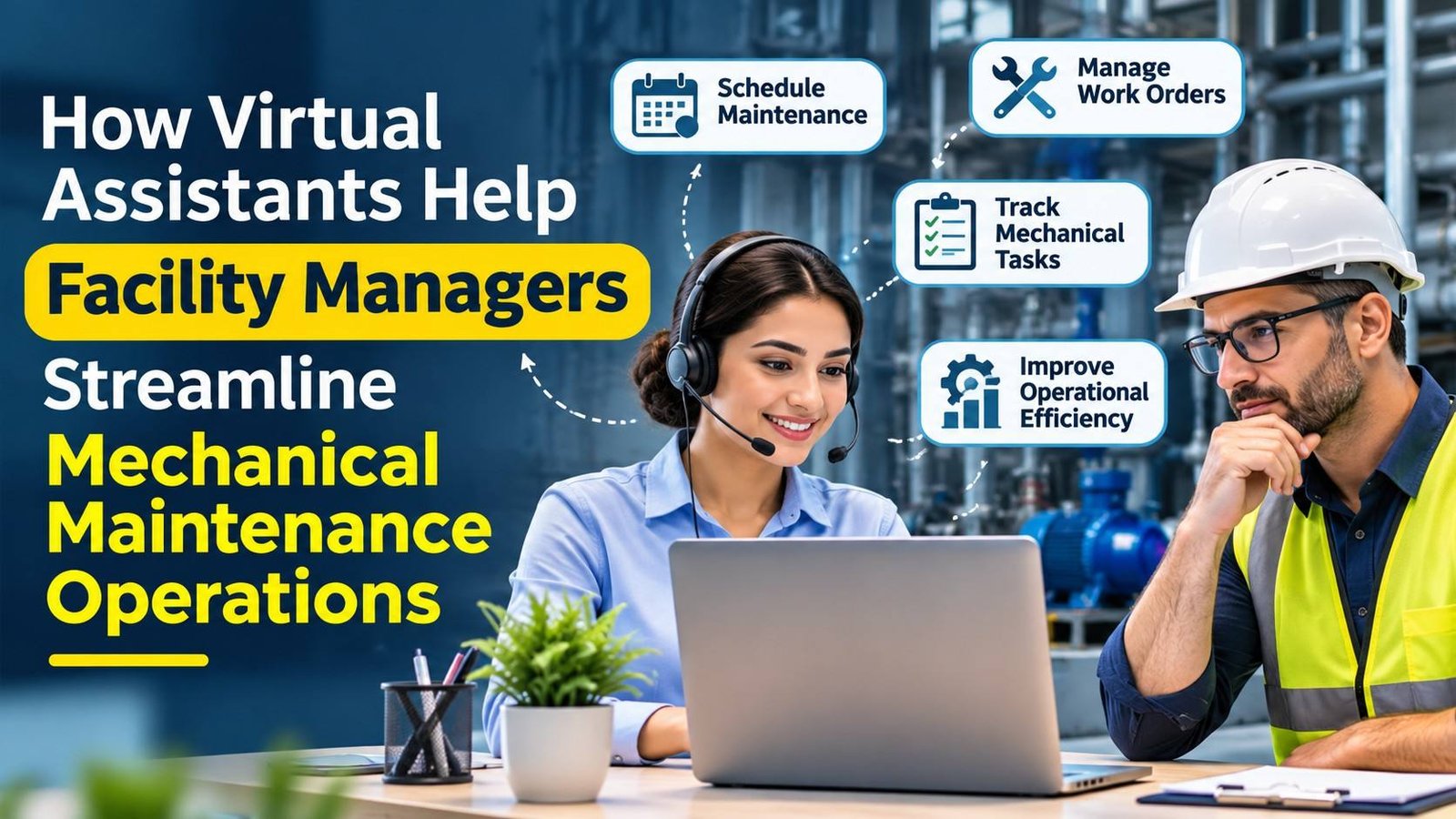
A facility manager’s day rarely follows the plan on the whiteboard. An HVAC system stops cooling a commercial building. A maintenance technician needs an approved work order before starting a repair. A vendor is waiting for confirmation to service an industrial air compressor, and the building owner wants to know why this month’s maintenance expenses are higher than last month’s. By lunchtime, equipment inspections, preventive maintenance planning, and service reports may still be waiting.
Much of this workload is not technically complex, but it is constant and requires careful coordination. A virtual assistant for property management can also support facility operations by handling routine administrative tasks. The purpose is not to replace engineering judgment, but to give facility managers and mechanical engineers more time to focus on technical decisions.
Here are some practical ways virtual assistants can support mechanical maintenance and facility management operations.
Maintenance Requests Stop Piling Up
Commercial buildings and industrial facilities receive maintenance requests from occupants, operators, and other departments. These requests may involve HVAC systems, water pumps, electric motors, compressors, ventilation equipment, and plumbing installations.
A virtual assistant can monitor shared inboxes and maintenance portals, record incoming requests, capture equipment locations and identification numbers, and create maintenance tickets. They can also forward urgent or technically complex issues to the responsible engineer or maintenance supervisor.
For example, when an occupant reports that an air-conditioning unit is not cooling properly, the assistant can record the location, unit number, reported symptoms, and time of the complaint. The maintenance team can then assess the issue and decide what action is required.
Consistent request logging improves communication, reduces the risk of missed complaints, and creates a useful history of equipment-related issues.
Equipment Maintenance Scheduling Becomes More Efficient
Preventive maintenance helps maintain the reliability and service life of mechanical equipment. HVAC systems, industrial pumps, compressors, motors, and ventilation units all require periodic inspections and servicing. Managing these schedules becomes challenging when a facility contains many assets.
A virtual assistant can help facility managers by:
- Maintaining preventive maintenance calendars.
- Scheduling equipment inspections and servicing appointments.
- Sending reminders before maintenance deadlines.
- Coordinating visits with technicians and contractors.
- Updating records after maintenance work is completed.
- Tracking upcoming servicing requirements and overdue tasks.
For example, if an industrial air compressor is scheduled for servicing every three months, the assistant can maintain the calendar entry and remind the maintenance team before the due date. The assistant does not carry out the inspection or determine whether equipment is safe to operate; those responsibilities remain with qualified personnel.
Maintenance Work Gets Coordinated, Not Just Logged
A maintenance work order often involves several steps. Someone must confirm the reported problem, contact an approved service provider, obtain a quotation, check the required approval, arrange site access, schedule the work, and confirm that the service report has been received.
Consider a chilled-water pump that develops unusual noise. A virtual assistant can coordinate a technician’s visit, collect the quotation, route it for approval, confirm access to the equipment room, and follow up for the completed work order. The facility manager or engineer remains responsible for diagnosing the fault, reviewing the technical recommendation, and approving the repair.
Clear procedures, vendor lists, spending limits, and escalation rules help assistants manage routine coordination while ensuring technical decisions stay with the appropriate professionals.
Maintenance Records and Equipment Histories Stay Organized
Accurate documentation helps engineering teams understand equipment condition, review previous repairs, and plan future maintenance. Relevant records may include installation and commissioning documents, preventive maintenance schedules, inspection reports, service histories, spare-parts records, invoices, warranties, and technical manuals.
A virtual assistant can organize these documents in a shared filing system using consistent equipment names or asset identification numbers. For example, service reports for a particular pump can be stored together so that an engineer can quickly review its maintenance history.
Assistants can also prepare routine summaries showing completed work orders, pending repairs, maintenance expenses, and upcoming inspections. These reports help managers monitor the workflow without replacing technical assessments.
HVAC and Building Systems Maintenance Gets Better Support
Heating, ventilation, and air-conditioning systems are among the major mechanical installations in commercial buildings. Regular servicing supports system reliability, indoor comfort, and efficient operation.
Virtual assistants can help coordinate air-conditioning servicing, filter replacement schedules, ventilation inspections, chiller and cooling-tower maintenance visits, contractor communication, service-report filing, and maintenance expense tracking.
For a manager responsible for several buildings, keeping track of dozens of HVAC units can be time-consuming. An assistant can maintain the service calendar, send reminders, and follow up with contractors. Technical inspections, refrigerant handling, system adjustments, and repairs must still be completed by qualified HVAC professionals.
Spare Parts and Vendor Coordination Become Easier
Mechanical maintenance can be delayed when the required spare parts are unavailable. Virtual assistants can support the administrative side of procurement by maintaining supplier contacts, requesting quotations, tracking purchase orders, and following up on delivery dates.
They can help maintain records of part descriptions and identification numbers, suppliers, previous purchase prices, inventory quantities, order status, and warranty documents. For commonly used items such as bearings, filters, belts, and seals, these records can help the maintenance team see when stock may need replenishing.
The selection and technical approval of replacement components should remain with the engineering or procurement team.
Equipment Performance and Energy Reports Stay Updated
Energy efficiency is an important consideration in commercial and industrial facilities. HVAC units, pumps, compressors, and ventilation systems can contribute significantly to energy consumption. Facility managers therefore need reliable records to monitor usage and identify unusual changes.
A virtual assistant can collect utility data, update energy spreadsheets, organize monthly reports, and compare current figures with previous periods. If electricity consumption rises noticeably, the assistant can flag the change for the engineering team to investigate.
Engineers can then assess possible causes, including inefficient HVAC operation, equipment deterioration, incorrect operating schedules, or other technical issues. The assistant supports data collection and reporting; engineering analysis and energy-optimization decisions remain with qualified professionals.
How to Delegate Mechanical Maintenance Administration Without Creating Problems
Facility managers can get more value from virtual assistance by following four practical steps:
- Start with one task. Choose a repetitive activity such as maintenance request logging, vendor follow-ups, or preventive maintenance reminders. Make the process reliable before adding more responsibilities.
- Document the process. Prepare a checklist or short screen recording explaining how to record requests, update equipment details, file service reports, and communicate with vendors.
- Set technical and approval boundaries. Explain which administrative actions the assistant can take independently and which require approval. An assistant may schedule an inspection, but should not independently diagnose equipment failures, approve safety-critical repairs, or authorize technical modifications.
- Review work regularly. Check completed tasks and records frequently at the beginning. Once the workflow is established, periodic reviews can help maintain accuracy and identify problems.
Data security also matters. Facility records may contain building layouts, equipment specifications, vendor contracts, and sensitive operational information. Provide access only to the systems needed for assigned tasks, use individual login credentials, and set confidentiality expectations in writing.
The Real Payoff Is More Time for Engineering and Maintenance Decisions
An unfilled maintenance role can put pressure on an already busy team. Vacancy is the most expensive when essential work is left uncovered, but not every recurring administrative task requires another on-site technical employee.
The value of a facility manager or mechanical engineer lies in technical decisions, equipment reliability, maintenance planning, and operational efficiency. Every hour spent chasing quotations, organizing service reports, updating spreadsheets, or arranging routine inspections is an hour not spent reviewing equipment performance or improving maintenance practices.
A trained virtual assistant can take responsibility for these repetitive administrative activities while engineering professionals focus on their core responsibilities. When implemented properly, this approach can improve maintenance coordination, keep equipment records organized, support preventive maintenance schedules, and help facilities operate more efficiently.
The objective is not to replace mechanical engineers or maintenance technicians. It is to give them better administrative support so they can concentrate on keeping mechanical systems reliable and operational.
FAQs
Virtual assistants can support facility managers by scheduling preventive maintenance, organizing equipment service records, coordinating maintenance vendors, tracking work orders, managing HVAC servicing appointments, and preparing maintenance reports. These activities help organize daily operations while engineers and technicians focus on inspections, troubleshooting, and technical maintenance.
They can help reduce administrative workload by handling repetitive coordination and documentation. They can also support preventive maintenance planning through reminders, schedule tracking, and work-order follow-ups. Preventive maintenance may help identify problems earlier and reduce the likelihood of unexpected breakdowns, although actual savings depend on equipment condition and maintenance practices.
They can maintain HVAC servicing calendars, schedule inspections, coordinate with contractors, send reminders, organize service reports, and track maintenance expenses. Technical troubleshooting, system inspections, refrigerant handling, and repair work must be performed by qualified HVAC professionals.
Yes. They can maintain calendars for pumps, compressors, motors, HVAC units, and ventilation systems; send reminders; coordinate inspection appointments; update completed maintenance records; and notify managers about overdue servicing. This administrative support helps teams follow their maintenance plans more consistently.
No. Virtual assistants provide administrative and coordination support. Mechanical engineers and maintenance technicians remain responsible for troubleshooting, technical inspections, repair decisions, safety assessments, and maintenance execution.