
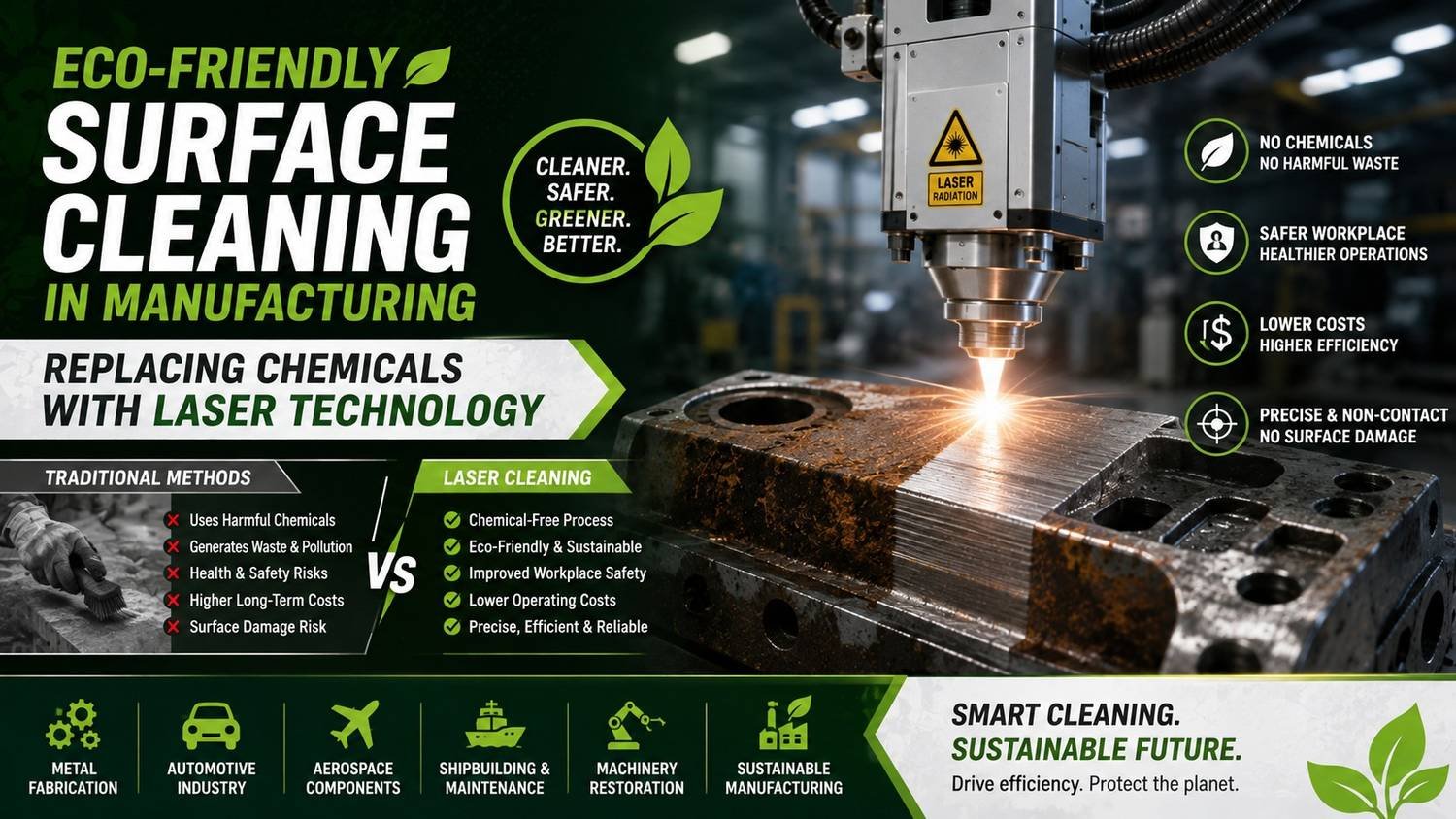
In modern manufacturing, surface cleaning is an essential step in many production processes. Whether preparing metal components for coating, removing rust from industrial equipment, or restoring machinery parts, manufacturers need reliable cleaning methods to maintain product quality and operational efficiency.
For decades, chemical cleaning agents, solvents, and abrasive techniques have been widely used in industrial environments. While these methods can achieve effective results, they often create challenges related to waste disposal, worker safety, environmental impact, and long-term operating costs.
As industries continue to focus on sustainability and cleaner production methods, laser cleaning technology is emerging as an environmentally friendly alternative. By using concentrated laser energy to remove contaminants without chemicals or physical contact, manufacturers can improve surface preparation while reducing their environmental footprint.
The Environmental Challenges of Traditional Cleaning Methods
Traditional industrial cleaning methods often rely on chemical solvents, detergents, or abrasive materials to remove unwanted substances from surfaces. These substances may include rust, paint, oil, oxide layers, grease, and other contaminants.
Although chemical cleaning can be effective, it comes with several disadvantages. Many cleaning chemicals require special storage, handling procedures, and disposal systems to prevent environmental contamination. In addition, workers may need protective equipment when dealing with potentially hazardous substances.
Abrasive methods such as sandblasting can also create problems. The process generates dust and waste materials, requires additional cleanup, and may damage delicate surfaces if not carefully controlled.
For manufacturers seeking more sustainable production practices, these limitations have encouraged the adoption of cleaner technologies.
How Laser Cleaning Technology Works
Laser cleaning uses a high-energy laser beam to remove unwanted materials from a surface. When the laser interacts with contaminants such as rust, paint, oil, or oxidation, the energy causes these layers to separate from the base material through a controlled process.
Unlike chemical cleaning, laser cleaning does not require solvents or additional cleaning agents. It is also a non-contact process, meaning the laser does not physically scrape or wear down the surface.
Modern laser cleaning systems can be adjusted according to different materials and applications. Manufacturers can control parameters such as laser power, scanning speed, and cleaning patterns to achieve precise results while protecting the original surface.
This makes laser technology suitable for various industrial applications, including metal fabrication, automotive manufacturing, aerospace components, ship maintenance, and machinery restoration.
Benefits of Replacing Chemicals with Laser Cleaning
1. Reduced Environmental Impact
One of the biggest advantages of laser cleaning is eliminating the need for chemical solvents. Since the process does not rely on harmful cleaning agents, manufacturers can reduce chemical waste and simplify waste management.
This supports companies working toward greener manufacturing goals and stricter environmental standards.
2. Improved Workplace Safety
Chemical cleaning processes may expose workers to fumes, residues, or hazardous substances. Laser cleaning reduces these risks by providing a cleaner operation with fewer consumable materials.
A safer working environment can help manufacturers improve employee protection while reducing the complexity of safety management.
3. Lower Long-Term Operating Costs
Although laser cleaning equipment requires an initial investment, it can provide long-term savings by reducing the need for chemicals, abrasive materials, and frequent replacement of cleaning supplies.
Because laser cleaning is highly precise, manufacturers can also minimize material waste and improve process efficiency.
4. Precision Cleaning Without Surface Damage
Different industrial components require different cleaning approaches. Some parts have complex structures or sensitive surfaces that cannot withstand aggressive methods.
Laser cleaning allows manufacturers to remove contaminants selectively while maintaining the integrity of the underlying material. This precision is especially valuable in industries where component quality and durability are critical.
Applications of Laser Cleaning in Manufacturing
Laser cleaning technology is becoming increasingly popular across different manufacturing sectors.
In metal processing, it can remove rust, oxide layers, and coatings before welding or painting. In automotive manufacturing, laser cleaning helps prepare components and maintain production equipment.
For heavy industries, laser cleaning can support maintenance operations by restoring machinery parts, removing corrosion, and extending equipment service life.
Manufacturers are increasingly adopting industrial laser cleaning machines to achieve more efficient, precise, and sustainable surface preparation processes compared with traditional cleaning approaches.
The Future of Sustainable Manufacturing
As sustainability becomes a priority across global industries, manufacturers are searching for technologies that improve efficiency while reducing environmental impact. Laser cleaning represents an important step toward cleaner production by combining precision, automation, and environmental responsibility.
Future developments in laser technology will likely make cleaning systems even more flexible, energy-efficient, and accessible for different industrial applications.
The transition from chemical-based cleaning to laser-based solutions is not only about replacing one method with another. It reflects a broader movement toward smarter manufacturing practices that prioritize safety, efficiency, and sustainability.
Conclusion
Traditional cleaning methods have supported manufacturing for many years, but growing environmental and operational demands are driving industries toward better alternatives. Laser cleaning provides a modern solution that reduces chemical usage, improves workplace safety, and delivers precise surface treatment.
For manufacturers looking to upgrade their cleaning processes, investing in advanced laser technology can help create cleaner, more efficient, and more sustainable production environments.