
Quick Answer
The average cost to fully charge an electric vehicle in the United States is somewhere between $9 and $28 when you charge at home, depending on your battery size and your local electricity rate. Charging at a public DC fast station usually costs two to three times more per kWh than charging in your garage overnight.
As of mid-2026, the national average residential electricity rate sits around 18.8 cents per kWh, though it ranges from about 12 cents in North Dakota to over 45 cents in Hawaii. For comparison, filling a gas tank now runs drivers close to $4.00 per gallon nationally (the AAA national average as of late July 2026), a gap that still tilts firmly in favor of EV ownership on a cost-per-mile basis.
Here’s the breakdown that matters most:
| Charging Method | Typical Cost per kWh | Cost to Add ~200 Miles |
| Home (Level 1 or 2) | $0.13–$0.30 | $8–$20 |
| Public Level 2 | $0.25–$0.45 | $15–$27 |
| DC Fast Charging | $0.35–$0.60 | $21–$36 |
| Tesla Supercharger | $0.25–$0.60 | $15–$36 |
Below, we’ll walk through exactly what shapes that final number and how to keep it as close to the low end as possible.
What Determines EV Charging Cost?
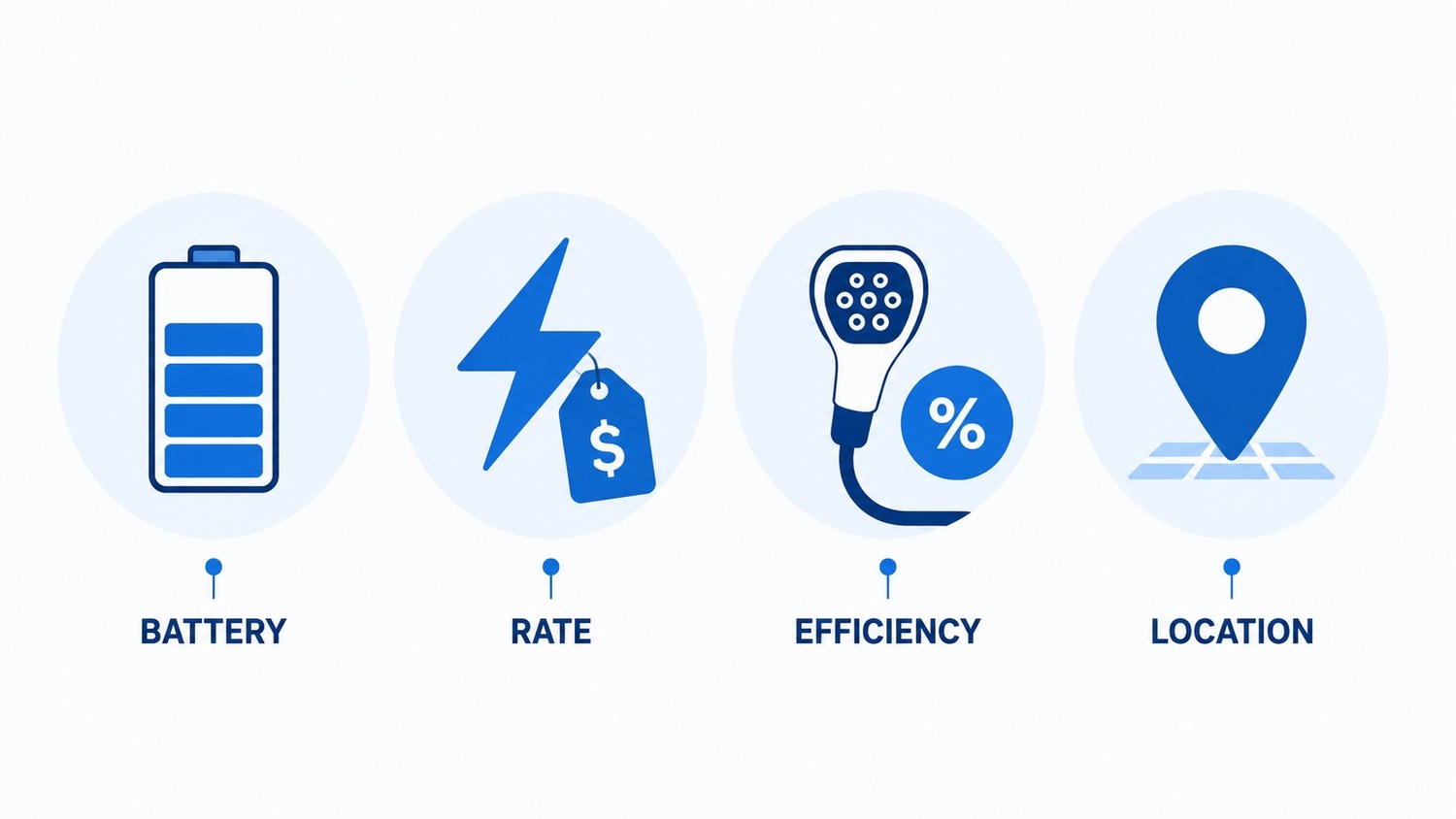
Four variables decide what you’ll actually pay to charge: how big your battery is, what your electricity costs, how efficiently your car and charger convert that electricity into range, and where you plug in.
Battery Capacity (kWh)
Every EV battery is rated in kilowatt-hours, think of it as the size of your fuel tank. A 40 kWh battery (common in smaller EVs like the base Nissan Leaf) costs far less to fill than a 100 kWh battery (found in larger trucks and long-range SUVs). At the national average rate of roughly 18.8¢/kWh:
- 40 kWh battery: about $7.50 for a full charge
- 60 kWh battery: about $11.30
- 80 kWh battery: about $15.00
- 100 kWh battery: about $18.80
Electricity Price per kWh
Your local rate matters more than almost anything else. Rates vary by state, by utility provider, and even by time of day. A driver in North Dakota might pay a third of what a driver in Hawaii or California pays for the exact same charge, simply because of where the electricity comes from and how the grid is priced in their region.
Charging Efficiency
Not every kWh you pull from the wall ends up in your battery. Some energy is lost as heat during the AC-to-DC conversion that happens inside the car (for Level 1 and Level 2 charging) or inside the charger itself (for DC fast charging). Typical charging efficiency runs 85–95%, meaning your real-world cost is usually 5–15% higher than the “battery capacity times rate” math suggests.
Charging Location
Where you plug in changes the price dramatically:
- Home: generally the cheapest option, especially overnight
- Workplace: often free or subsidized as an employee perk
- Public Level 2: moderate cost, usually billed per hour or per kWh
- Public DC fast: the most expensive, priced for speed and convenience
- Free charging: some retailers, hotels, and municipalities still offer no-cost Level 2 stations, though they’re becoming less common
Cost to Charge EV at Home
Level 1 Charging
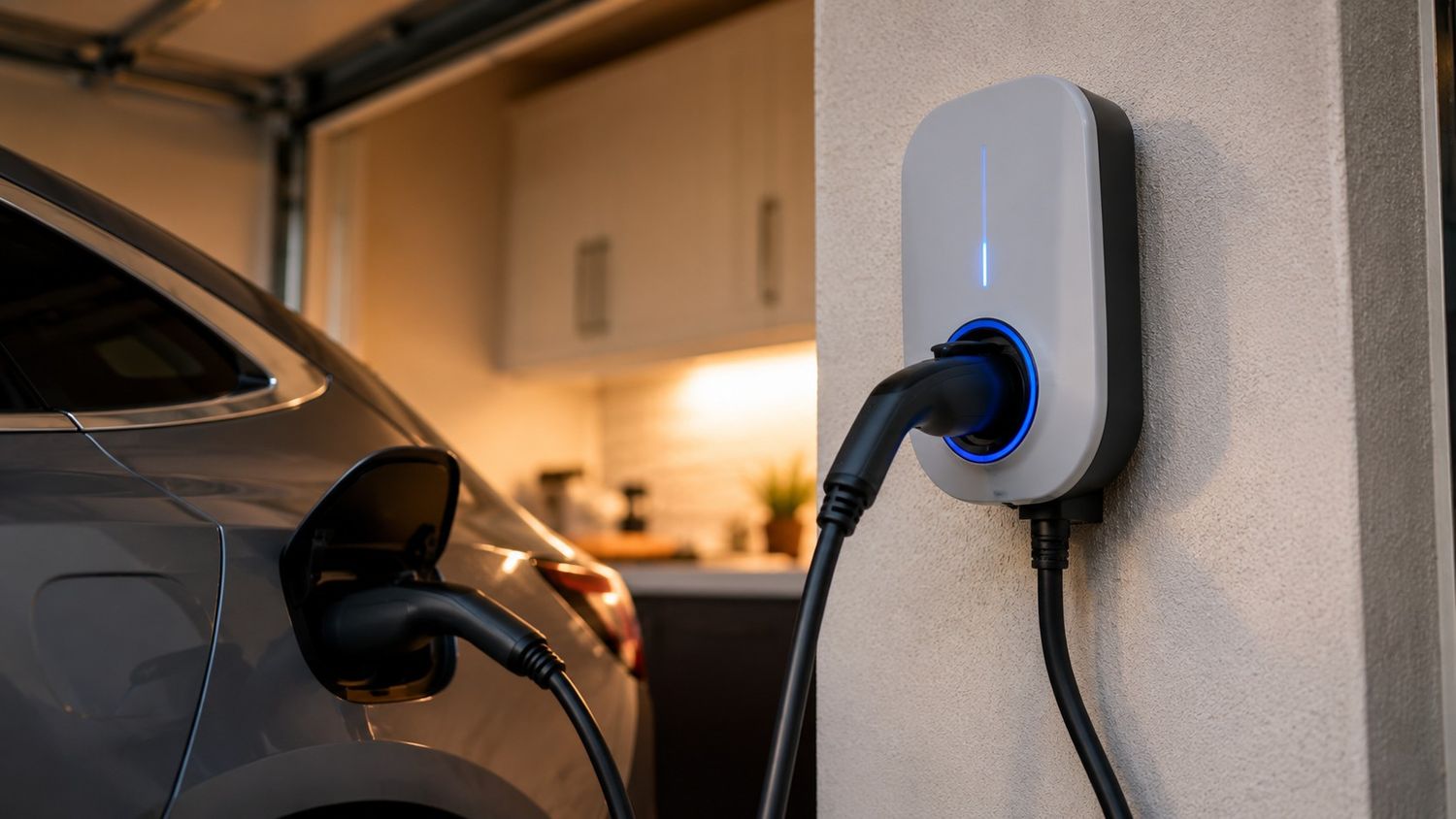
Level 1 charging uses a standard 120-volt household outlet, the same one your toaster uses. No special equipment or installation required. It’s slow, typically adding only 3–5 miles of range per hour, which makes it best suited for drivers with short commutes who can plug in every night and let the car trickle-charge for 8–12 hours.
Level 2 Charging
Level 2 charging uses a 240-volt circuit, the same type that powers a clothes dryer or electric oven. It’s the most common home charging setup for EV owners, adding 20–40 miles of range per hour. A Level 2 home charger and installation typically costs $500–$2,000 depending on your home’s electrical panel and how far the charger sits from it, but the speed and convenience usually make it worth the upfront investment for daily drivers.
Sample Home Charging Calculations
Using the national average rate of about 18.8¢/kWh and assuming 90% charging efficiency:
| Battery Size | Full Charge Cost | Approx. Range Added |
| 40 kWh | ~$8.35 | 150 miles |
| 60 kWh | ~$12.50 | 220 miles |
| 75 kWh | ~$15.65 | 270 miles |
| 100 kWh | ~$20.90 | 320 miles |
Cost to Charge EV at Public Charging Stations
Public Level 2 Chargers
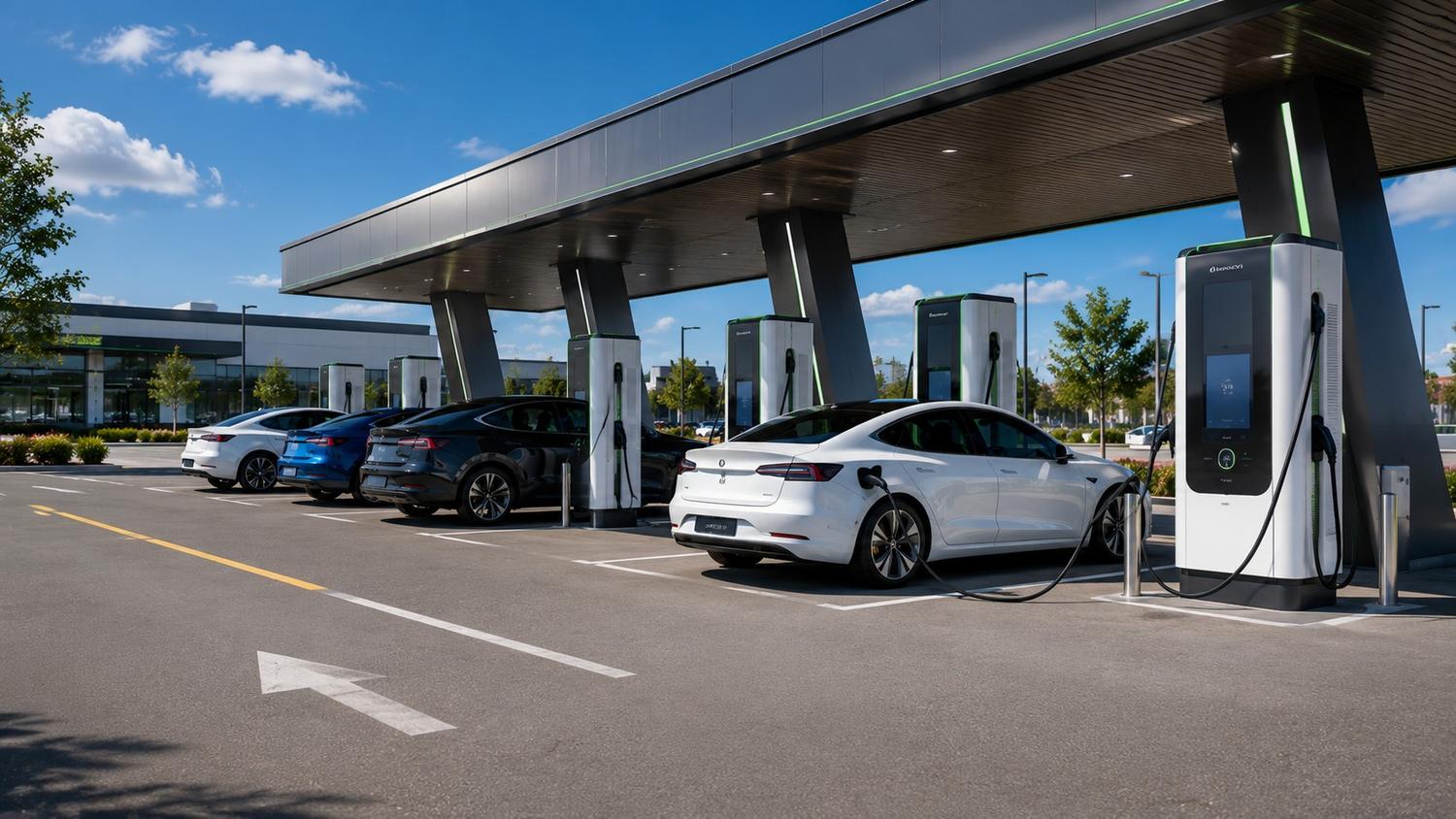
Public Level 2 stations, found at grocery stores, garages, and workplaces, typically bill $0.25–$0.45 per kWh or a flat hourly rate around $1–$3. They’re a reasonable option for topping off during errands but aren’t meant for a full charge from empty.
DC Fast Chargers
DC fast chargers can take a battery from roughly 10% to 80% in 20–45 minutes, but that speed comes at a premium, often $0.35–$0.60 per kWh, sometimes with a per-minute fee layered on top during peak hours.
Tesla Superchargers
Tesla’s Supercharger network, now open to many non-Tesla EVs as well, has a wide pricing spread. As of July 2026, the standard (non-member) rate averages around $0.60/kWh, while Tesla owners and drivers who pay the roughly $13/month membership fee typically pay closer to $0.43/kWh. Rates also vary a lot by state and time of day, from around $0.43/kWh in lower-cost states to $0.74/kWh in Hawaii.
Charging Networks
The major public charging networks, Electrify America, EVgo, ChargePoint, and Blink, each have their own pricing structures. Most offer:
- Pay-as-you-go pricing with no commitment, usually at the highest per-kWh rate
- Membership plans ($4–$15/month) that unlock discounted per-kWh rates for frequent users
If you charge in public more than a few times a month, a membership often pays for itself quickly.
Home Charging vs. Public Charging
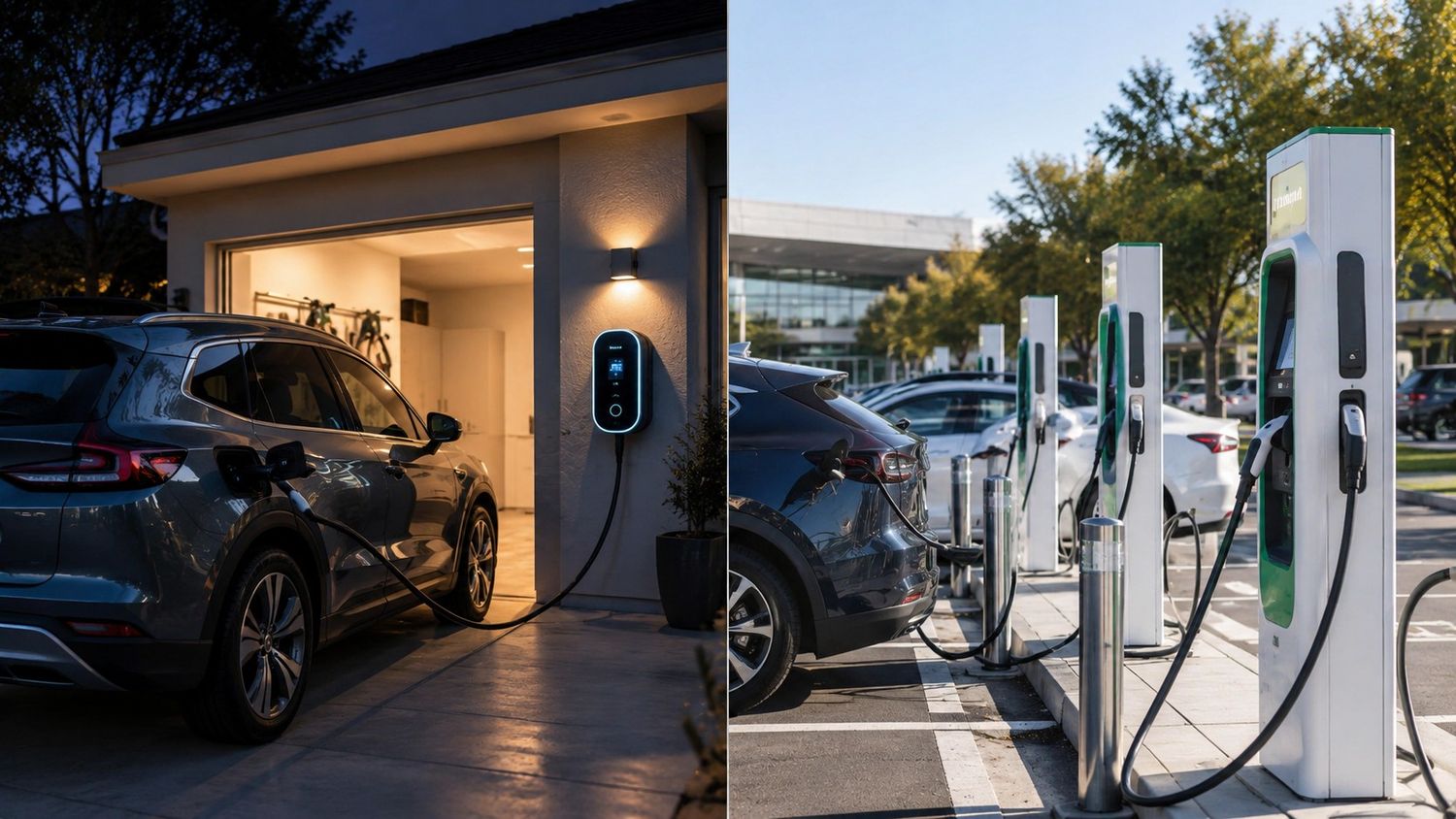
| Feature | Home | Public |
| Cost | Lowest, especially off-peak | Higher, sometimes 2–3x home rates |
| Convenience | High; charge overnight | Moderate; requires a trip |
| Charging Speed | Slower (Level 1/2) | Faster (especially DC fast) |
| Best For | Daily commuters | Road trips, apartment dwellers |
| Availability | Only where you live | Widely available in most cities |
| Long Trips | Not practical alone | Essential |
| Overnight Charging | Ideal | Rarely available |
EV Charging Cost by Battery Size
| Battery Size | Estimated Home Cost | Estimated Range |
| 40 kWh | $7–$9 | 130–160 miles |
| 50 kWh | $9–$11 | 160–190 miles |
| 60 kWh | $11–$13 | 200–230 miles |
| 75 kWh | $14–$16 | 250–280 miles |
| 80 kWh | $15–$17 | 260–300 miles |
| 100 kWh | $19–$21 | 300–340 miles |
Monthly and Annual EV Charging Costs
Assuming home charging at the national average rate and a typical EV efficiency of about 3–4 miles per kWh:
| Monthly Mileage | Monthly Charging Cost | Annual Charging Cost |
| 500 miles | ~$28 | ~$340 |
| 1,000 miles | ~$56 | ~$675 |
| 1,500 miles | ~$85 | ~$1,015 |
Compare that to a gasoline car averaging 28 mpg at today’s national gas price of roughly $4.00/gallon:
- 500 miles/month: about $71/month, or $857/year
- 1,000 miles/month: about $143/month, or $1,714/year
- 1,500 miles/month: about $214/month, or $2,571/year
At current prices, home EV charging typically costs less than half what the equivalent gasoline would cost, savings that shrink somewhat if you rely heavily on DC fast charging, but hold up well for anyone who can charge at home most nights.
Is Charging an EV Cheaper Than Driving a Gas Car?
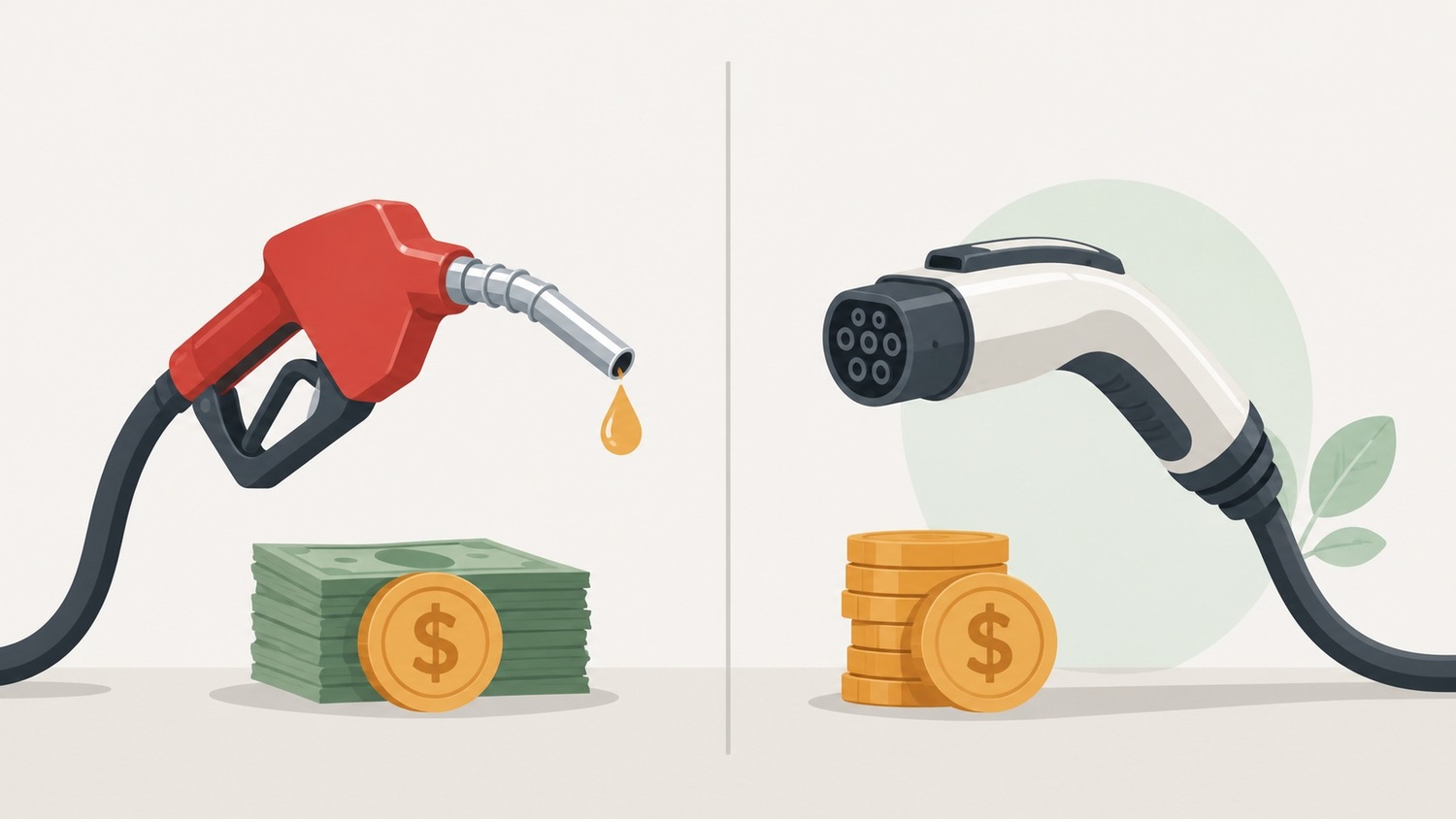
In almost every scenario, yes, as long as most of your charging happens at home. Beyond the fuel savings themselves, EVs also tend to cost less to maintain: no oil changes, far fewer moving parts in the drivetrain, and less frequent brake wear thanks to regenerative braking. The main trade-off is convenience on long trips, where charging stops take longer than a gas station fill-up and public fast-charging costs eat into the savings.
Hidden Costs of Charging an EV
A few expenses don’t show up in the per-kWh math:
- Home charger purchase ($300–$800 for a Level 2 unit)
- Professional installation ($200–$1,500+, more if your panel needs an upgrade)
- Electrical panel upgrades (occasionally required for older homes)
- Demand charges (some commercial or multi-unit properties bill based on peak usage)
- Apartment or condo charging fees, including parking or access fees
- Network subscription fees for discounted public charging rates
Ways to Reduce EV Charging Costs
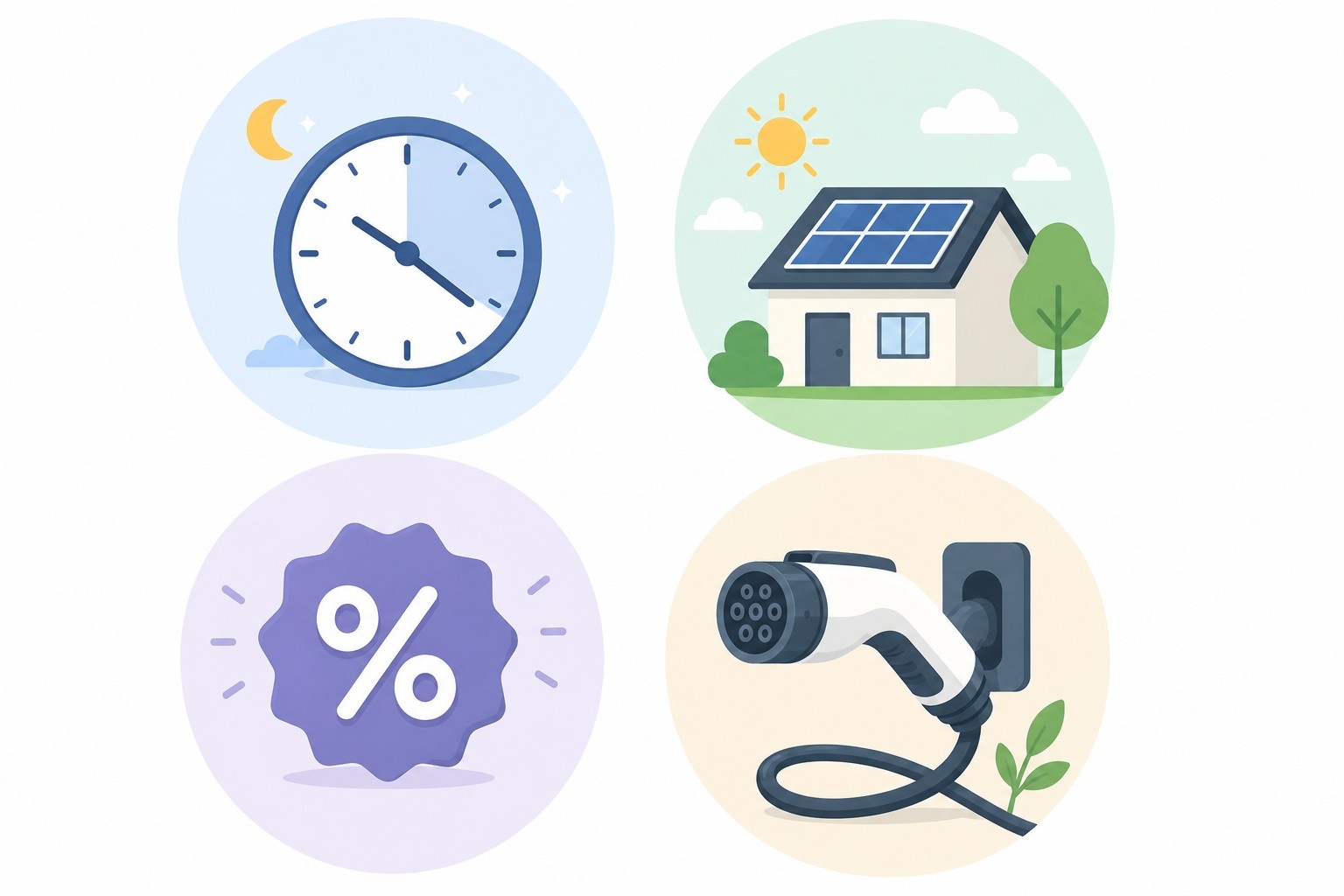
- Charge during off-peak hours. Many utilities offer time-of-use (TOU) rates that are significantly cheaper overnight.
- Install a Level 2 home charger. Faster charging plus access to off-peak scheduling usually pays for itself.
- Look into utility rebates. Many utilities offer rebates for EV charger installation or discounted EV charging plans.
- Find free public chargers. Some retailers, hotels, and municipal lots still offer complimentary Level 2 charging.
- Add solar panels. Pairing solar with home charging can push your effective charging cost close to zero over time.
- Use workplace charging if your employer offers it.
Common EV Charging Myths

- “Fast charging always damages the battery.” Occasional fast charging has a minimal long-term effect on modern battery management systems; it’s constant, exclusive fast charging that accelerates degradation.
- “Charging every night is bad for the battery.” Daily charging is fine, especially if you keep the battery between roughly 20–80% for routine use.
- “EV charging is always expensive.” Home charging is usually cheaper than gasoline; only frequent DC fast charging narrows or erases the savings.
- “Free charging is everywhere.” Free stations exist but are increasingly rare as networks shift to paid models.
Safety Tips While Charging
- Inspect charging cables for cracks or exposed wiring before each use
- Avoid using damaged connectors or extension cords
- Use certified chargers and cables designed for your vehicle
- Keep connectors and outlets dry, especially outdoors
- Don’t overload a circuit shared with other high-draw appliances
- Have Level 2 chargers installed by a licensed electrician
Expert Recommendations
- Apartment residents: Rely on public Level 2 or workplace charging; consider portable Level 1 equipment if you have outlet access.
- Daily commuters: A home Level 2 charger paired with off-peak rates offers the best long-term value.
- Road trippers: Plan routes around DC fast chargers or Superchargers and budget for higher per-kWh costs.
- Fleet owners: Negotiate commercial charging rates and consider demand-charge management software to avoid billing spikes.
Final Verdict
Home charging remains the cheapest and most convenient way to power an EV, particularly if you can take advantage of off-peak electricity rates. Your actual cost ultimately comes down to three things: your local electricity rate, your battery’s size, and how often you rely on public fast charging versus charging overnight at home. Even accounting for public charging trips, most EV owners still spend meaningfully less to “fuel” their car than they would on gasoline at today’s prices.
Next step: Check your utility bill for your actual per-kWh rate, multiply it by your EV’s battery capacity, and compare that number to what you’re currently spending on gas. That simple calculation is the clearest way to see what charging will really cost you.
Frequently Asked Questions
Overnight home charging typically costs $8–$20 for a full charge, depending on battery size and your local rate, often less if you’re on a time-of-use plan.
Yes. A standard 120V outlet supports Level 1 charging, though it’s slow, expect roughly 3–5 miles of range per hour.
Yes. Cold temperatures reduce battery efficiency, meaning your car may draw slightly more energy to reach the same range in winter.
Some retailers, hotels, and municipalities still offer free Level 2 charging, but availability is shrinking as networks move to paid models.
Directly: a full charge costs proportionally more for a 100 kWh battery than for a 40 kWh battery at the same electricity rate.
It’s worth it for road trips or when you’re in a hurry, but it costs more per kWh than home charging, so it’s not ideal for routine daily use.
A Level 2 home charger plus installation typically runs $500–$2,000, depending on your home’s electrical setup.
Yes. Pairing home solar with a Level 2 charger can substantially cut or even eliminate your charging costs over time.
Level 1: 24–40+ hours. Level 2: 4–10 hours. DC fast charging: 20–45 minutes for a 10–80% charge.
References
- U.S. Energy Information Administration, Electricity: National and state-level retail electricity price data
- AAA Gas Prices, National Average: Daily national and state gasoline price averages
- AAA, EV Charging Prices: National average public EV charging cost per kWh
- U.S. Department of Energy, Alternative Fuels Data Center Charging Electric Vehicles at Home: home charging cost methodology and equipment guidance
- Tesla, Supercharger Support: Supercharger pricing and membership details