
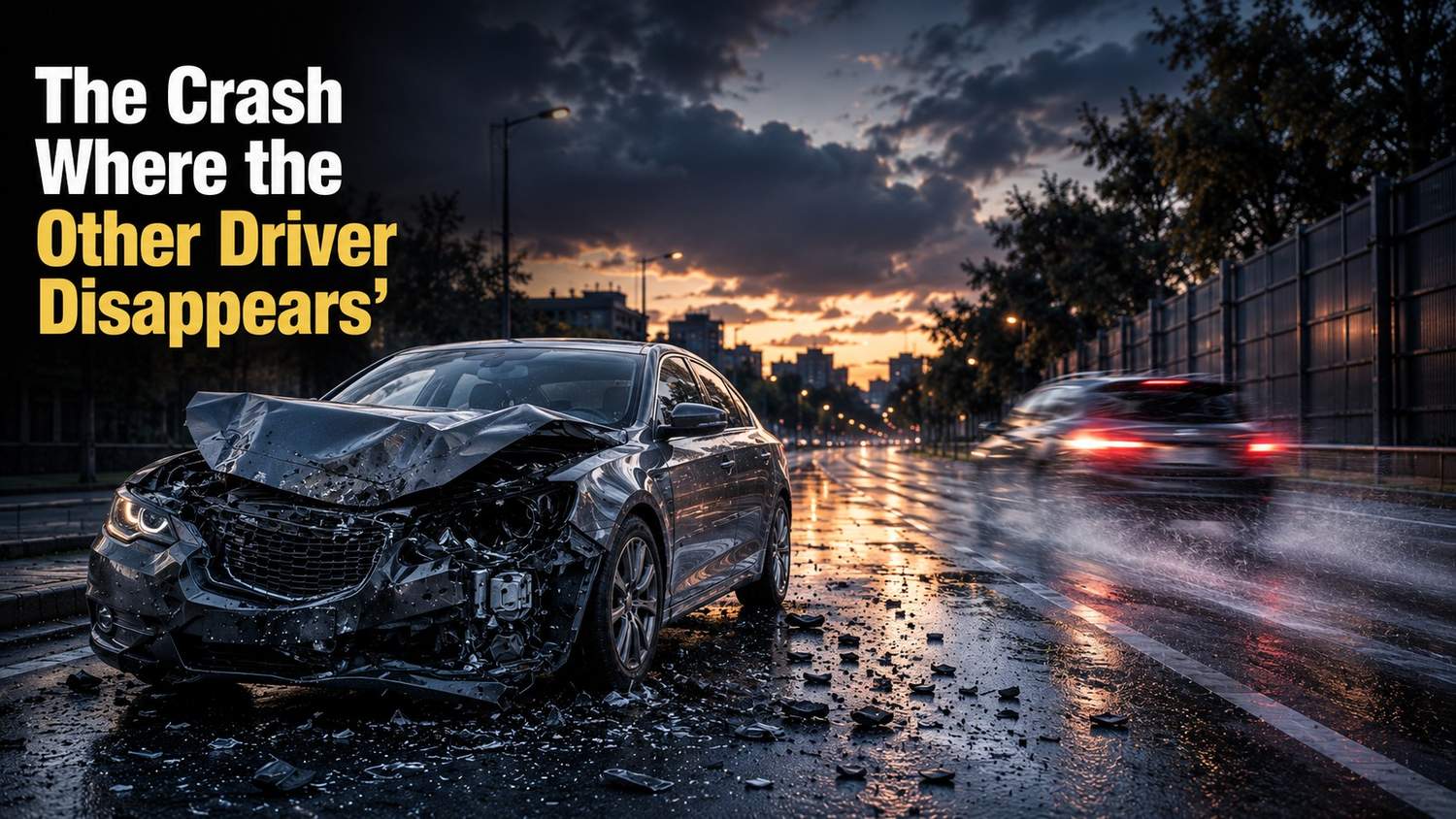
Few accidents are more frustrating than one where the driver responsible simply leaves. In the moments after a collision, most people expect to exchange information, contact the police, and begin sorting out what happened. When the other vehicle disappears instead, confusion quickly replaces any sense of order.
A fleeing driver creates immediate uncertainty. Victims are often left wondering who caused the crash, whether the person will ever be identified, and how they will pay for vehicle repairs or medical treatment without knowing who was involved.
A hit-and-run accident requires quick, organized action. Although the responsible driver may initially be unknown, preserving evidence from the very beginning can significantly improve the chances of identifying what happened and protecting your future insurance claim.
What to Do Before Leaving the Scene
The first priority after any collision is personal safety. Anyone who may be injured should receive medical attention as soon as possible, and emergency services should be contacted if there are injuries, significant vehicle damage, or hazardous road conditions.
Once everyone is safe, the accident should be reported to law enforcement. A police report creates an official record of the incident and may include observations, witness information, and other details that become valuable during the investigation.
It is also important to resist the urge to chase the fleeing driver. Pursuing another vehicle can create additional dangers and may complicate an already stressful situation. Remaining at the scene is usually the safest course of action.
The Details That May Help Identify the Driver
Even when a driver escapes, small details can become valuable later. A partial license plate number, the make or color of the vehicle, unique damage, bumper stickers, or other distinguishing features may help investigators narrow their search.
Witnesses often notice details that those directly involved may miss. Speaking with nearby drivers, pedestrians, or business owners may uncover information about the fleeing vehicle or the direction in which it traveled after the collision.
Physical evidence can also play an important role. Broken vehicle parts, paint transfer, surveillance cameras, nearby security systems, and traffic cameras sometimes provide information that helps investigators reconstruct the events.
How Insurance May Respond
Insurance coverage for a hit-and-run collision depends largely on the terms of the driver’s own policy. In many situations, uninsured motorist coverage may provide protection when the responsible driver cannot be identified or located.
Collision coverage may also help pay for vehicle repairs, although deductibles and policy conditions often apply. Every insurance policy is different, making it important to review the available coverages carefully after an accident.
Reporting the collision promptly is generally beneficial. Insurance companies often request documentation, police reports, photographs, and other evidence while evaluating what benefits may be available under the policy.
Why Early Evidence Preservation Matters
Evidence is often easiest to collect immediately after an accident. Photographs of the vehicles, roadway, debris, skid marks, weather conditions, and visible injuries help preserve details that may disappear within hours.
Medical records also become an important part of documenting the effects of the collision. Seeking appropriate medical evaluation creates a timeline connecting the accident to any injuries that later require treatment.
Witnesses should be identified as quickly as possible whenever possible. Memories naturally fade over time, and surveillance footage may only be retained for a limited period before it is automatically overwritten.
Conclusion
A driver leaving the scene creates additional challenges, but it does not eliminate the importance of responding carefully after a collision. Quick action can preserve valuable evidence even when the person responsible has not yet been identified.
Reporting the accident, documenting the scene, seeking medical care, and gathering witness information all strengthen the factual record while investigators and insurance companies begin reviewing what occurred.
Although a hit-and-run accident often begins with uncertainty, organized documentation can make a meaningful difference. The sooner important evidence is preserved, the greater the opportunity to protect both the investigation and any insurance claim that follows.