
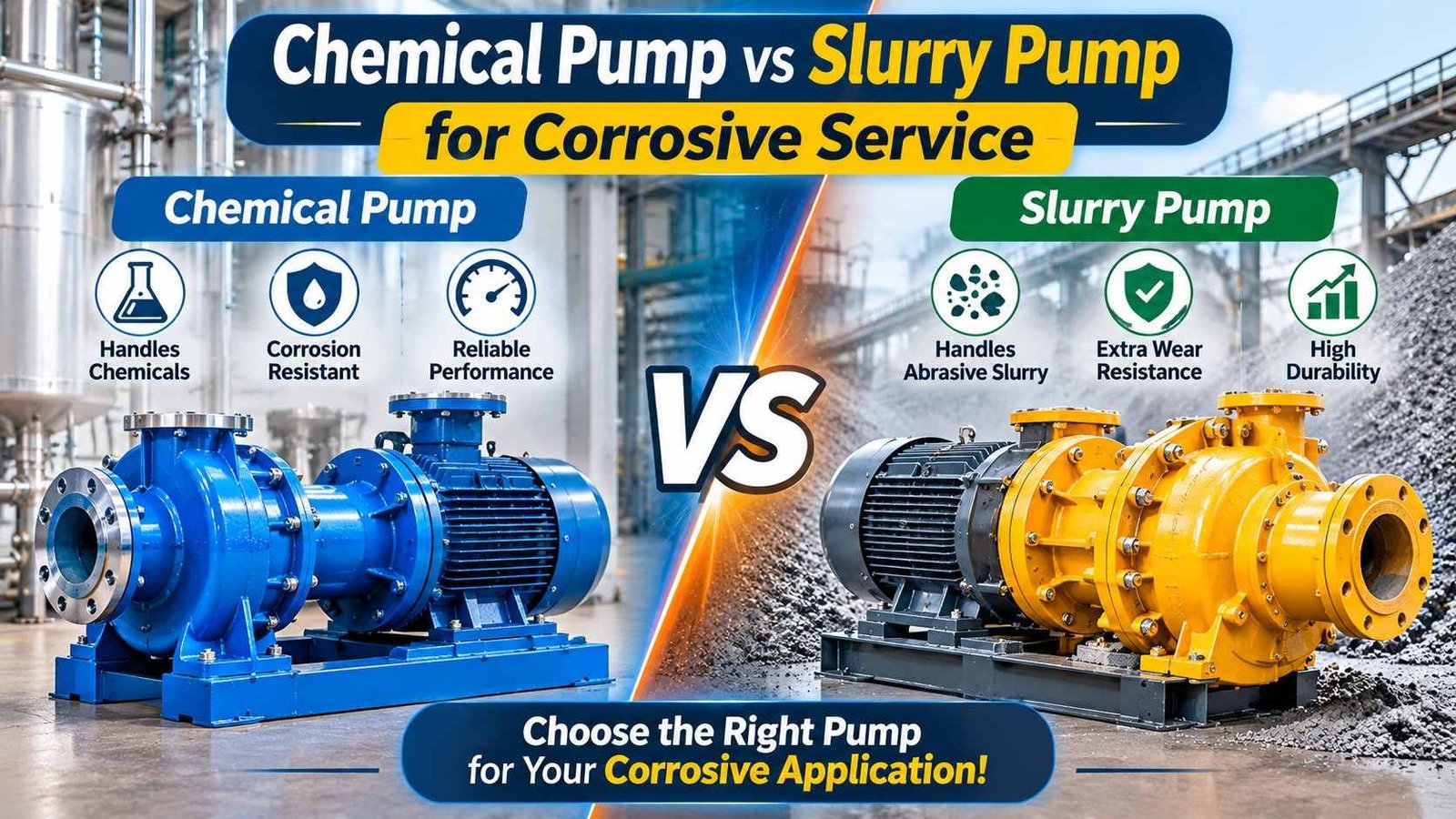
Start a chemical pump vs slurry pump comparison with what actually reaches the suction nozzle. Choose a chemical centrifugal pump for a clear acid or alkali once its wetted parts are confirmed compatible. Choose a chemical slurry pump when the corrosive liquid carries abrasive particles, crystals, or precipitates and the model can handle them. A tank sample taken near the surface can look clear while the low outlet draws settled crystals on restart.
Chemical Pump vs Slurry Pump Selection at Batch Extremes
Check each wetted material against the full range of exposure. A pH reading gives an indication of acidity or alkalinity, but it cannot specify an alloy or a seal. Chemical identity, concentration, temperature, and contaminants such as chlorides can change how an alloy corrodes. A hot cleaning solution may attack a gasket that holds up in normal service. Review the casing, impeller, exposed shaft sleeve, mechanical seal faces, elastomers, and any lining individually. Include startup, shutdown, and cleaning conditions in that review.
Calculate total dynamic head across the batch. As the supply tank drains, the falling liquid level increases the static lift to a fixed discharge point and reduces the suction head available to the pump. A filter press can require higher discharge pressure as its cake builds, while piping losses change with flow and fluid properties. A single flow and head figure can miss both the highest head requirement and the lowest suction margin. Check available net positive suction head at low tank level and at the hottest credible liquid temperature, using operating conditions that can occur together.
For slurry, check whether solids will stay suspended at the lowest sustained flow and what settles during a stop. Coarse particles or agglomerates can restrict an impeller passage. Fine, hard particles can still abrade the impeller and seal faces. A rise in solids loading can increase power demand and change line losses. At the seal, check for abrasive wear, deposits during idle periods, and whether the process can accept dilution from an external flush.
Matching the Changyu CYH and UHB to the Duty
Consider the CYH stainless steel chemical pump as a mechanically sealed metal option for confirmed compatible, low-solids acid or alkali transfer. Changyu lists several stainless alloys and single or double mechanical seals. Ask for the casing and impeller alloys, the selected impeller diameter and speed, and the proposed seal face pair and elastomers. Check the operating points against the selected curve. For example, a filtered alkali transfer is a CYH candidate if the liquid stays clear through cooldown and the proposed materials also tolerate the cleaning cycle.
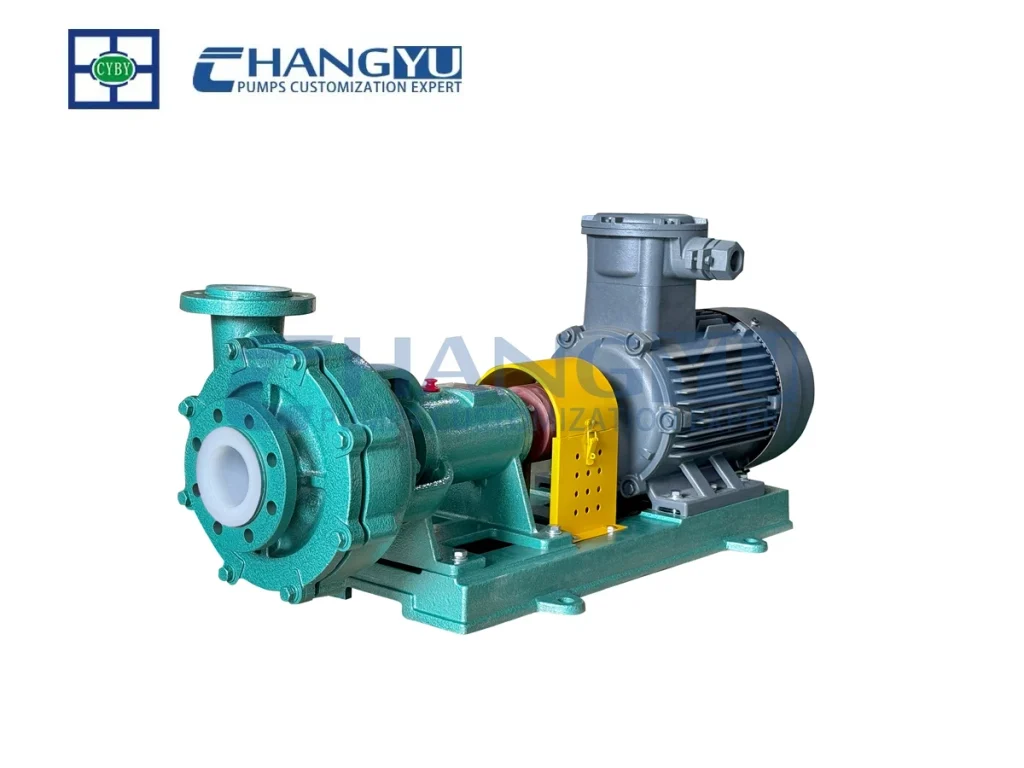
CYH stainless steel centrifugal pump. Photo credit Changyu Pump.
In a chemical pump vs slurry pump comparison, report the largest particles expected at the inlet as well as the typical size. A small share of oversized crystals can determine whether the selected impeller passage is adequate.
Consider the UHB horizontal chemical slurry pump for compatible corrosive liquids carrying fine particles. Changyu describes a steel casing lined with ultra-high molecular weight polyethylene (UHMWPE) and a semi-open impeller that provides a path for solids through the pump. Ask for the quoted model’s exact wetted materials, liquid temperature range, maximum particle passage, allowable solids loading, and seal limits, including pressure at shutdown. For example, if an acidic wash liquor carries fine precipitate from a scrubber sump, check the restart sample for agglomerates and confirm the liner and seal can handle that liquor at its hottest.
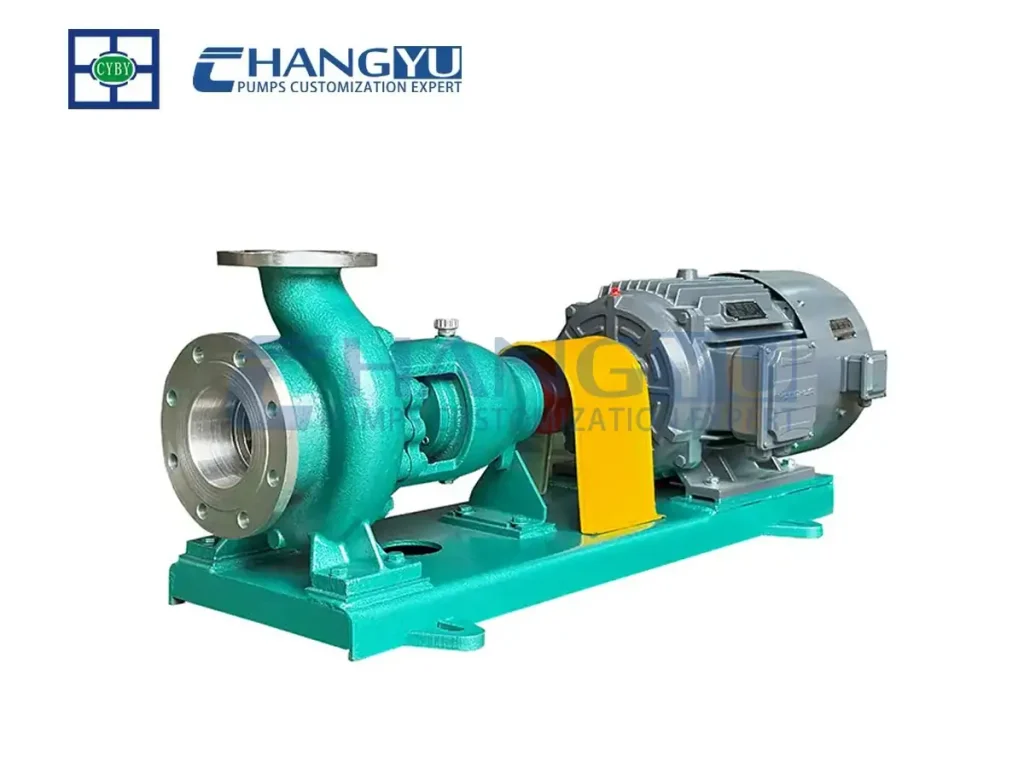
UHB horizontal chemical slurry pump. Photo credit Changyu Pump.
What to Put in the Pump Specification
Send a duty sheet that covers the batch extremes. For clear liquid, give the chemical identity, concentration range, temperature limits, density, viscosity, contaminants, cleaning chemicals, and minimum, normal, and maximum flow. Include suction and discharge elevations, tank level and pressure ranges, and pipe sizes, lengths, valves, and fittings. State the required discharge pressure and where it applies.
For slurry, add the carrier liquid and solids composition, typical and peak solids loading with the weight or volume basis identified, and the particle size distribution, maximum size, and hardness. Supply a representative slurry sample taken from the stream feeding the pump. If startup pulls a heavier solids load, characterize that condition separately.
Before closing out a chemical pump vs slurry pump comparison, ask the supplier to mark the operating points on the selected pump curve and explain any slurry corrections. Request the wetted material list, allowable operating range, power and suction requirements, and seal arrangement. If the seal needs a flush, ask for its fluid, pressure, and flow requirements.
About Changyu Pump
Anhui Changyu Pump and Valve Manufacturing Co., Ltd. manufactures pumps for corrosive service. Its product range includes metal chemical pumps, acid and alkali transfer pumps, and chemical slurry pumps.
Contact Changyu Pump
For a selection review, send the medium, concentration, temperature, solids content and particle size, required flow, and total dynamic head.
- Jingxian Development Zone, Xuancheng, Anhui, China
- jade@changyupump.com
- Phone, WhatsApp and WeChat: +86 136 5191 3727
FAQs
Do Trace Crystals Change the Chemical Pump vs Slurry Pump Choice?
Keep the chemical centrifugal pump on the shortlist if the supplier confirms that the quantity, size, and abrasiveness of the crystals are acceptable for the impeller and seal. Reassess the choice if crystals accumulate during idle periods or arrive in a slug on restart.
Can One Pump Transfer Two Different Chemicals?
Use one pump only after confirming every wetted part against both chemicals, the cleaning fluid, and any residual mixture during changeover. Check whether the carryover can form precipitates that change the solids duty.
Can a Published Water Curve Size a Pump for Slurry?
Use the water curve as the starting point for a supplier-reviewed slurry selection. Solids and viscosity can change pump head and efficiency, while mixture density affects power. Ask the supplier to check the corrected pump curve against the slurry system curve and verify motor load at peak solids loading.