
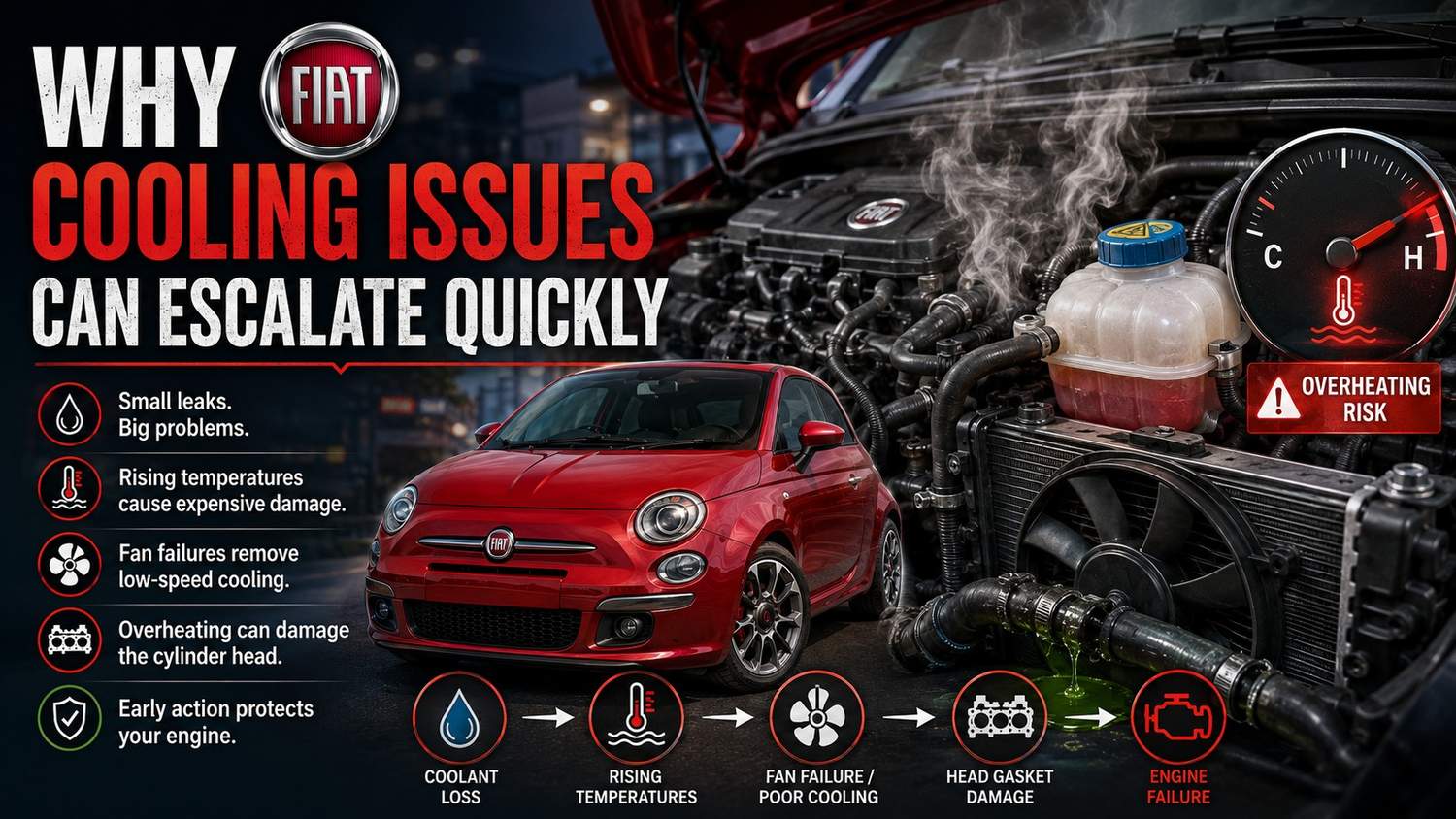
Fiat engines rely on a carefully balanced cooling system to maintain a safe operating temperature. A small leak, weak component or circulation problem can disturb that balance surprisingly quickly. Once temperatures begin rising, continued driving may turn a relatively manageable repair into cylinder-head damage, internal engine wear or complete breakdown.
Small Coolant Losses Reduce Heat Control
Even a minor coolant leak can gradually lower the system’s ability to absorb and transfer engine heat. Common escape points include ageing hoses, loose connections, radiator seams, the expansion tank and the water pump. Some leaks only appear when the cooling system is hot and pressurised, making them difficult to notice during a basic visual inspection.
A Trusted Fiat auto repair service can pressure-test the system and inspect model-specific failure points before coolant loss results in overheating. Early investigation is particularly important when the coolant level repeatedly falls without leaving an obvious puddle beneath the vehicle.
Compact Engines Concentrate Heat
Many Fiat models use compact engine bays and relatively small-capacity engines designed to deliver efficient performance. These configurations can generate considerable heat within a confined area, leaving little room for the cooling system to operate below its intended limit when a component starts failing.
Turbocharged models face additional thermal demands because the turbocharger is exposed to extremely hot exhaust gases. If coolant circulation becomes restricted or fluid levels fall, temperatures can climb rapidly around the engine and turbo assembly. Heat may then affect nearby seals, hoses, wiring and plastic fittings as well as internal engine parts.
Trapped Air Disrupts Coolant Circulation
Air can enter the cooling system following a leak, component replacement or incorrect coolant refill procedure. These pockets may interrupt circulation and prevent coolant from reaching critical areas. This condition, commonly called an airlock, can also produce misleading symptoms because the temperature gauge may fluctuate rather than rise steadily.
Correctly bleeding the system is therefore essential after cooling-system work. Simply topping up the expansion tank may not remove trapped air. If circulation remains inconsistent, localised hot spots can develop around the cylinder head even when the displayed temperature does not initially appear severe.
Thermostat Faults Cause Rapid Temperature Changes
The thermostat controls coolant flow between the engine and radiator. When it remains closed or opens only partially, hot coolant cannot reach the radiator efficiently. Engine temperature may then increase sharply, especially in traffic, during warm weather or under sustained load.
A thermostat that sticks open creates a different problem by preventing the engine from reaching its correct operating temperature. Although this does not normally cause immediate overheating, it can reduce fuel efficiency, weaken cabin heating and affect engine-management calculations. Irregular temperature behaviour should therefore be diagnosed rather than treated as a harmless gauge fault.
Fan Failures Remove Low-Speed Cooling
Air moving through the radiator removes heat while a vehicle is travelling at speed. In slow traffic or while idling, the electric radiator fan must provide that airflow. A failed fan motor, relay, fuse, temperature sensor or electrical connection can allow temperatures to rise quickly when the vehicle stops moving.
This explains why some Fiats appear to operate normally on an open road but overheat in urban traffic. The pattern can lead drivers to underestimate the fault because the temperature falls once the speed increases. Repeated heat cycles, however, continue placing stress on gaskets, seals and cooling-system components.
Overheating Can Damage the Cylinder Head
Excessive heat can distort an aluminium cylinder head and compromise the head gasket, which seals the combustion chambers and separates oil and coolant passages. Once that seal fails, coolant may enter the cylinders or mix with engine oil, while combustion gases may pressurise the cooling system.
Warning signs can include persistent coolant loss, white exhaust vapour, bubbling in the expansion tank, contaminated oil or unusually firm coolant hoses. Continuing to drive after an overheating warning significantly increases the likelihood of expensive internal damage.
Early Action Protects the Entire Engine
Fiat cooling problems escalate because each component depends on stable pressure, unobstructed circulation and effective heat transfer. A minor leak or intermittent fan fault can quickly affect several connected systems. Checking unusual smells, coolant loss, fluctuating temperatures and warning lights promptly gives owners the best chance of correcting the original fault before heat causes wider engine damage.