
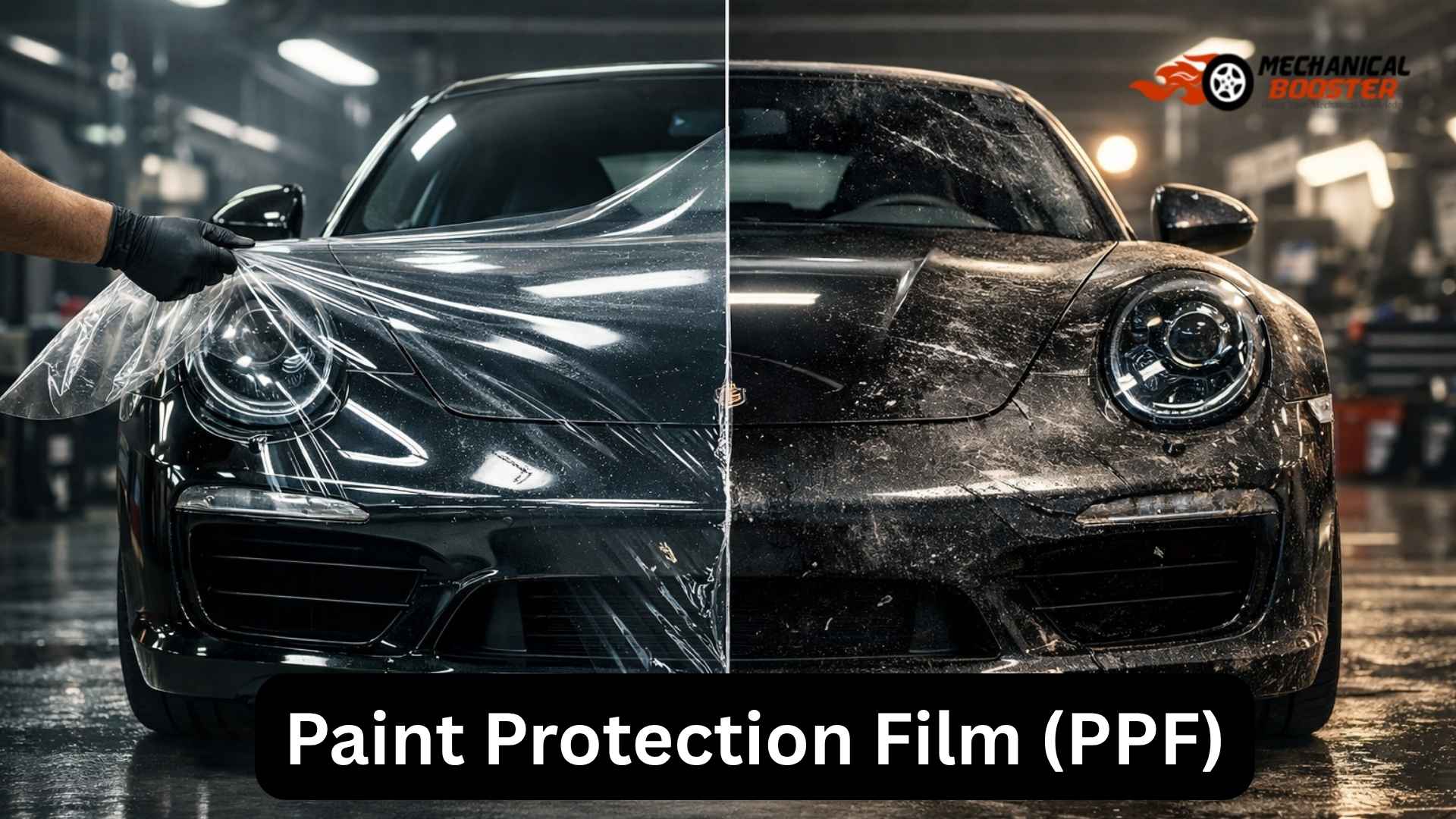
Paint Protection Film (PPF) is a transparent, durable, and self-healing polyurethane film applied to the painted surfaces of a vehicle to protect it from scratches, stone chips, UV damage, and environmental contaminants. Originally developed for military use to protect helicopter blades, PPF has become a popular solution in the automotive industry for maintaining a car’s showroom finish.
Today, PPF is widely used on cars, bikes, luxury vehicles, and even commercial fleets. Whether you’re driving in urban traffic or on highways with flying debris, PPF acts as an invisible shield that preserves your vehicle’s appearance and resale value.
How Paint Protection Film Works
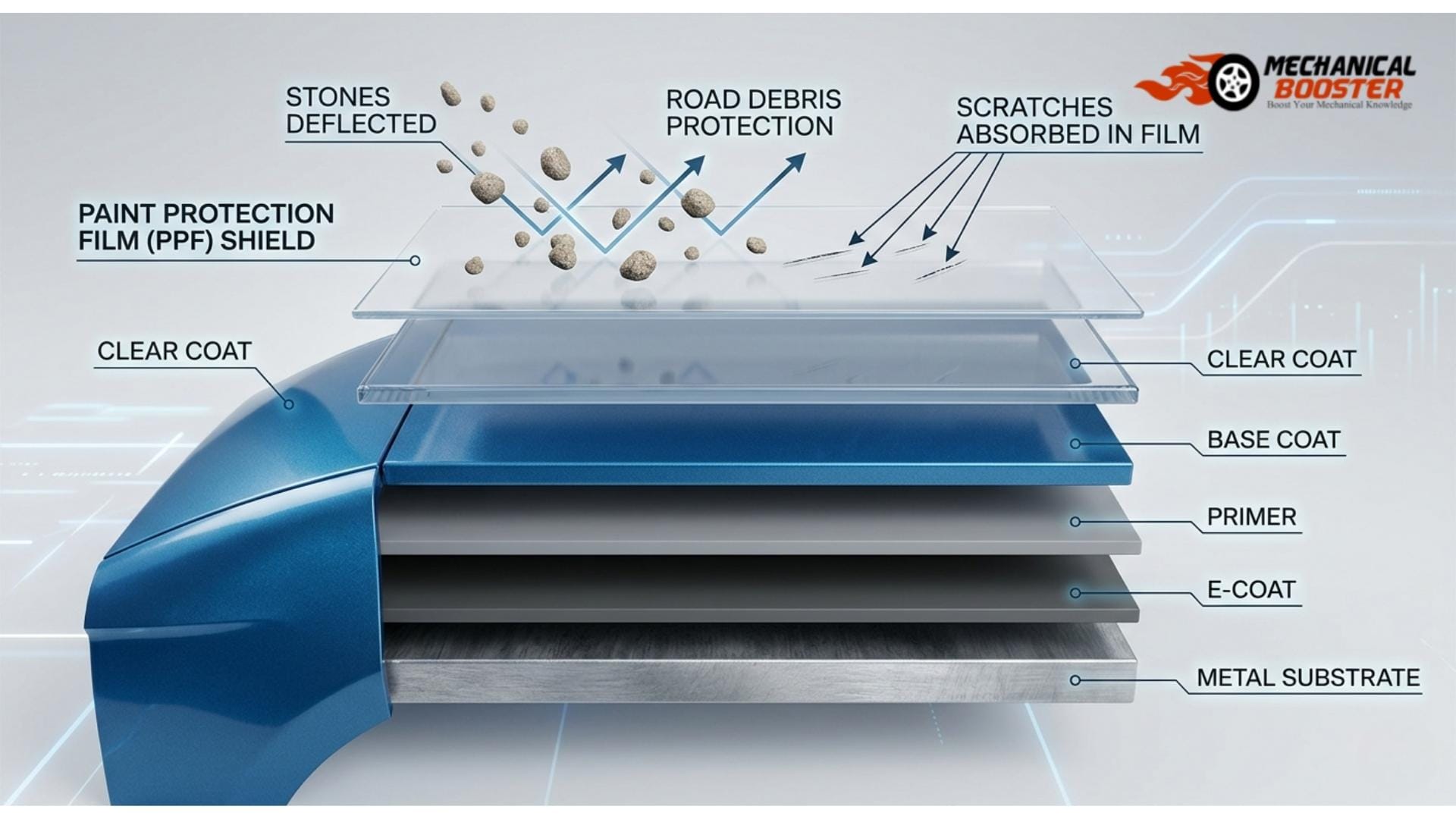
PPF works by forming a protective barrier between your vehicle’s paint and external damage.
Key Working Principles
- Impact Resistance: Absorbs minor impacts from stones and road debris
- Self-Healing Layer: Minor scratches disappear with heat (sunlight or warm water)
- UV Protection: Prevents paint fading and oxidation
- Hydrophobic Surface: Repels water, dirt, and stains
1. Impact Resistance
PPF is made from flexible polyurethane that can absorb small impacts from stones, gravel, and road debris. Instead of chipping the paint, the film takes the hit and disperses the energy. This significantly reduces visible damage on high-impact areas like the bumper and hood.
2. Self-Healing Layer
The top layer of PPF has elastic polymers that can return to their original shape when exposed to heat. Minor scratches and swirl marks disappear automatically when the film is warmed by sunlight or hot water. This keeps the surface looking smooth without manual polishing.
3. UV Protection
PPF blocks harmful ultraviolet (UV) rays from reaching the car’s paint. Continuous UV exposure can cause fading, discoloration, and oxidation over time. By preventing this, PPF helps maintain the original color and shine of the vehicle.
4. Hydrophobic Surface
The surface of PPF is designed to repel water, dust, and contaminants. Water forms beads and rolls off easily, carrying dirt along with it. This makes cleaning easier and reduces the chances of stains from bird droppings, mud, or chemicals.
Types of Paint Protection Film
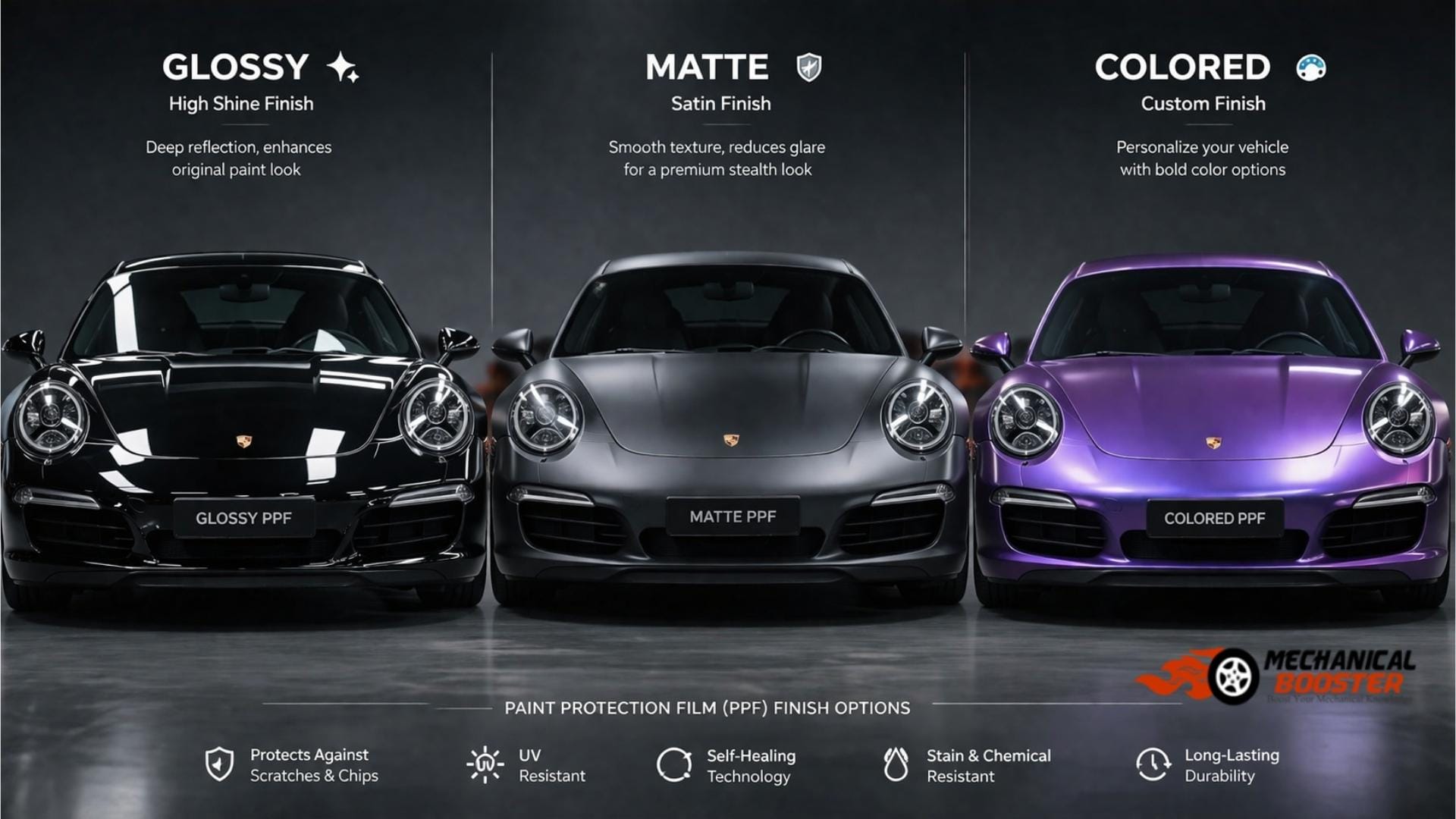
1. Gloss PPF
Gloss PPF enhances the natural shine of your car while preserving its original paint finish. It creates a smooth, reflective surface that keeps the vehicle looking new and well-maintained.
Key Characteristics:
- High-gloss, mirror-like finish
- Maintains original paint appearance
- Ideal for new and premium cars
- Easy to clean and maintain
2. Matte PPF
Matte PPF provides a satin or matte finish without repainting the vehicle. It not only protects the surface but also gives a unique, premium, non-reflective look.
Key Characteristics:
- Non-glossy, satin appearance
- Hides minor surface imperfections
- Popular for stylish customization
- Offers same protection as gloss PPF
3. Colored PPF
Colored PPF combines paint protection with a color transformation, allowing you to change your car’s look while protecting the original paint underneath.
Key Characteristics:
- Available in multiple colors and finishes
- Dual benefit: styling + protection
- More durable than vinyl wraps
- Can be removed without damaging paint
PPF Types Comparison Chart
| Feature | Gloss PPF | Matte PPF | Colored PPF |
| Finish | Shiny, reflective | Satin / non-glossy | Custom colors (gloss/matte) |
| Appearance | Original paint look | Premium matte look | Completely new look |
| Customization Level | Low | Medium | High |
| Protection Level | High | High | High |
| Maintenance | Easy | Slightly careful (no polishing) | Moderate |
| Popular Use | New cars | Style upgrade | Full transformation |
| Cost | Medium | Medium–High | High |
Which One Should You Choose?
Choose Gloss PPF if:
- You want to maintain factory finish
- Your car is new or premium
- You prefer low maintenance + high shine
Choose Matte PPF if:
- You want a luxury matte/satin look
- You like unique styling without repainting
- You don’t want reflections or glare
Choose Colored PPF if:
- You want a complete color change
- You like custom designs or standout looks
- You want better durability than vinyl wraps
Key Components of PPF
1. Top Coat
The top coat is the outermost layer that provides self-healing and stain resistance. It helps the film recover from minor scratches when exposed to heat and protects against contaminants like dirt, bird droppings, and chemicals.
Key Points:
- Self-healing surface
- Stain and chemical resistant
- Enhances gloss and smoothness
- First line of surface protection
2. Polyurethane Layer
This is the core layer of the PPF and acts as the main protective barrier. It absorbs impacts from stones, scratches, and road debris, preventing damage from reaching the actual paint.
Key Points:
- Main impact-absorbing layer
- Highly flexible and durable
- Protects against chips and scratches
- Provides thickness to the film
3. Adhesive Layer
The adhesive layer ensures the film sticks securely to the car’s paint surface. It is designed to provide strong bonding while still allowing safe removal without damaging the original paint.
Key Points:
- Strong and uniform bonding
- Paint-safe and removable
- Prevents peeling or lifting
- Ensures long-term durability
4. Release Liner
The release liner is a protective backing layer that covers the adhesive before installation. It is removed during application to expose the adhesive for proper placement on the vehicle.
Key Points:
- Protects adhesive before use
- Removed during installation
- Ensures clean application
- Not part of final film layers
Benefits of Paint Protection Film
1. Scratch and Chip Protection
PPF protects the vehicle surface from minor scratches, stone chips, and road debris by acting as a physical barrier that prevents direct damage to the original paint.
2. Self-Healing Technology
The film has self-healing properties that allow light scratches and swirl marks to disappear when exposed to heat, keeping the surface smooth and visually appealing over time.
3. Long-Term Paint Preservation
PPF helps maintain the original paint condition by shielding it from everyday wear and tear, ensuring the car looks newer for a longer period.
4. UV and Chemical Resistance
It protects the paint from harmful UV rays, preventing fading and oxidation, while also resisting stains from bird droppings, tree sap, and other chemicals.
5. Enhanced Resale Value
By preserving the car’s exterior condition and appearance, PPF helps maintain its visual appeal, which can significantly increase the vehicle’s resale value in the long run.
Where is PPF Applied on a Vehicle?
Paint Protection Film (PPF) can be applied either partially or on the entire vehicle depending on your budget, driving conditions, and protection needs. Most people choose high-impact areas first, while premium users often go for full-body coverage for maximum protection.
Common Application Areas:
- Front Bumper
This is the most exposed part of the vehicle and takes the maximum impact from stones, insects, and road debris. Applying PPF here prevents chips and scratches caused by highway driving. - Hood (Bonnet)
The hood is highly prone to stone chips and environmental damage. PPF helps maintain a smooth, damage-free surface, especially for long-distance or high-speed driving. - Side Mirrors
Side mirrors are vulnerable to scratches from tight spaces, parking, and debris. PPF protects these small but noticeable parts from wear and tear. - Door Edges
Door edges often get chipped when opening in tight parking areas or accidental contact. PPF acts as a protective strip to prevent paint damage in these sensitive zones. - Headlights
Headlights can become dull or scratched over time due to debris and UV exposure. PPF protects them from yellowing, minor scratches, and maintains clear visibility. - Full Body (Premium Option)
Full-body PPF covers the entire vehicle, offering complete protection from all external factors. It is ideal for luxury cars or owners who want maximum long-term preservation and peace of mind.
PPF vs Ceramic Coating
| Feature | Paint Protection Film | Ceramic Coating |
| Protection Level | High (physical barrier) | Moderate |
| Scratch Resistance | Yes | Limited |
| Self-Healing | Yes | No |
| Cost | Higher | Lower |
| Thickness | Thick | Thin |
Conclusion: PPF provides superior protection, while ceramic coating mainly enhances shine and water repellency.
Installation Process of PPF
Installing Paint Protection Film (PPF) is a precise process that requires proper surface preparation and careful handling. Each step ensures strong bonding, a smooth finish, and long-lasting protection without affecting the original paint.
Step-by-Step Overview:
- Surface Cleaning
The vehicle is thoroughly washed and cleaned to remove dust, dirt, oil, and contaminants. This step ensures that no particles get trapped under the film during installation. - Paint Correction
Minor scratches, swirl marks, and imperfections are corrected before applying PPF. This is important because the film locks in the paint condition, so the surface must be flawless. - Film Cutting
The PPF is either pre-cut using machine templates or custom-cut manually to fit specific parts of the vehicle. Accurate cutting ensures proper coverage and clean edges. - Application
The film is carefully applied using a special solution that allows repositioning during installation. Technicians use tools like squeegees to remove air bubbles and ensure a smooth, tight fit. - Curing
After application, the film is left to cure and bond properly with the paint surface. This process may take a few hours to a couple of days, depending on conditions, ensuring durability and adhesion.
Maintenance Tips for PPF
Proper maintenance helps extend the life and performance of Paint Protection Film (PPF). With the right care, the film remains clear, effective, and visually appealing for years.
- Wash regularly using mild shampoo
Clean your vehicle frequently with a pH-neutral car shampoo to remove dirt and contaminants. Regular washing prevents buildup that could affect the film’s clarity and performance. - Avoid harsh chemicals
Strong cleaning agents and solvents can damage the top coat of the PPF. Always use PPF-safe or gentle cleaning products to maintain its protective properties. - Do not pressure wash edges directly
High-pressure water aimed at the edges can cause the film to lift or peel. Always maintain a safe distance and avoid direct pressure on corners and seams. - Use microfiber cloths
Soft microfiber cloths help prevent scratches while cleaning or drying the surface. They are gentle on the film and maintain its smooth finish. - Avoid waxing unless recommended
Not all waxes are suitable for PPF, especially matte films. Use only manufacturer-approved products to avoid affecting the film’s appearance or performance.
Disadvantages of Paint Protection Film
While PPF offers excellent protection, it also has some limitations that should be considered before installation.
- High initial cost
PPF installation can be expensive, especially for full-body coverage. However, it is often seen as a long-term investment in paint protection. - Requires professional installation
Proper application needs skilled technicians and specialized tools. Poor installation can lead to bubbles, wrinkles, or reduced effectiveness. - May yellow over time (low-quality films)
Lower-quality PPF can discolor due to UV exposure and aging. Choosing high-quality brands helps minimize this issue. - Edges can lift if poorly installed
Improper fitting or cutting may cause edges to peel over time. This not only affects appearance but can also reduce protection.
How Long Does PPF Last?
High-quality Paint Protection Film typically lasts 5 to 10 years, depending on several factors that influence its durability and performance.
- Driving conditions
Frequent highway driving or harsh environments expose the film to more debris and wear, which can affect its lifespan. - Maintenance
Proper cleaning and care significantly extend the life of the film. Neglect or improper maintenance can reduce its effectiveness. - Film quality
Premium PPF brands offer better durability, resistance to yellowing, and longer warranties compared to cheaper alternatives. - Installation expertise
Professional installation ensures proper bonding and longevity. Poor installation can lead to early failure or peeling.
Conclusion
Paint Protection Film is one of the most effective solutions for preserving your vehicle’s exterior against daily wear and environmental damage. With its self-healing properties, durability, and nearly invisible finish, PPF offers long-term protection without compromising aesthetics. Whether you choose partial coverage or full-body protection, investing in high-quality PPF ensures your vehicle maintains its original shine and value over time. For car owners who prioritize appearance and durability, PPF is a practical and future-proof solution.