
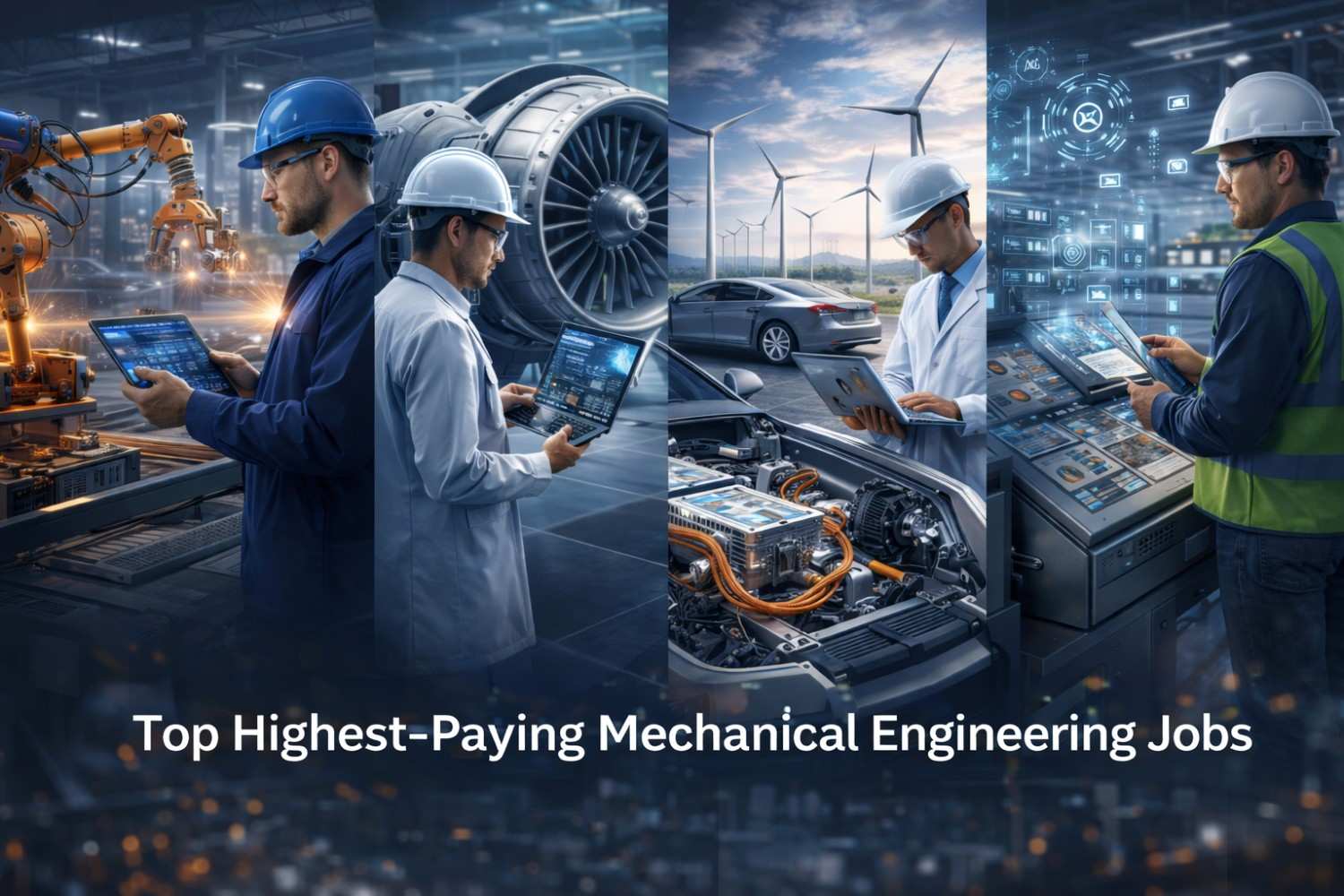
Mechanical engineering continues to evolve rapidly with AI, electrification, automation, and sustainability driving salaries upward. In 2026, the highest-paying mechanical engineering jobs are concentrated in advanced manufacturing, energy, aerospace, robotics, and tech-driven industries.
1. Robotics & Automation Engineer
Average Salary (2026): $105,000 – $160,000+
Why it Pays High:
- Heavy adoption of Industry 4.0
- Automation in automotive, electronics, logistics, and healthcare
- Shortage of robotics-specialized engineers
Key Skills:
- Robotics kinematics & dynamics
- PLC, SCADA, ROS
- AI-based automation
- Mechatronics & control systems
Top Employers: Tesla, ABB, Siemens, Amazon Robotics
2. Aerospace Mechanical Engineer
Average Salary (2026): $110,000 – $170,000+
Why it Pays High:
- Growth in space exploration, defense, and commercial aviation
- High safety, precision, and regulatory requirements
Key Skills:
- Aircraft & spacecraft design
- CFD & FEA
- Propulsion systems
- ASME & aerospace standards
High-Paying Areas:
Defense projects, space launch systems, hypersonic vehicles
3. Electric Vehicle (EV) Powertrain Engineer
Average Salary (2026): $115,000 – $180,000+
Why it Pays High:
- Global EV transition
- Battery thermal safety & efficiency challenges
- Limited talent with EV-specific expertise
Key Skills:
- Electric motors & drives
- Battery thermal management
- Power electronics
- Vehicle integration
Industries: EV startups, automotive OEMs, battery manufacturers
4. AI & Machine Learning Mechanical Engineer
Average Salary (2026): $120,000 – $190,000+
Why it Pays High:
- Mechanical engineers who understand AI + physics are rare
- Used in predictive maintenance, digital twins, and optimization
Key Skills:
- Python, MATLAB
- Machine learning models
- Digital twin technology
- Data-driven design
Common Roles:
Simulation engineer, optimization engineer, smart manufacturing specialist
5. Renewable Energy Mechanical Engineer
Average Salary (2026): $100,000 – $160,000+
Why it Pays High:
- Government-backed clean energy projects
- Long-term infrastructure investments
Key Skills:
- Wind turbine design
- Solar thermal systems
- Energy storage mechanics
- Structural & fatigue analysis
Growth Areas:
Offshore wind, hydrogen energy, large-scale solar plants
6. Oil & Gas / Energy Systems Engineer
Average Salary (2026): $120,000 – $200,000+
Why it Pays High:
- High-risk environments
- Complex mechanical systems
- Remote and offshore work premiums
Key Skills:
- Pressure vessel design
- Pipeline engineering
- ASME & API codes
- Reliability engineering
Note: Salaries remain high despite industry fluctuations.
7. Mechatronics Engineer
Average Salary (2026): $95,000 – $150,000+
Why it Pays High:
- Combines mechanical, electrical, and software engineering
- Core role in smart products and automation
Key Skills:
- Sensors & actuators
- Embedded systems
- Control theory
- CAD + electronics integration
8. Manufacturing & Smart Factory Engineer
Average Salary (2026): $90,000 – $145,000+
Why it Pays High:
- Lean manufacturing + automation expertise
- Digital transformation of factories
Key Skills:
- CNC & CAM
- Six Sigma
- Additive manufacturing
- Process optimization
Salary Comparison Table (2026 Projection)
| Job Role | Average Salary Range |
| Oil & Gas Engineer | $120k – $200k |
| AI Mechanical Engineer | $120k – $190k |
| EV Powertrain Engineer | $115k – $180k |
| Aerospace Engineer | $110k – $170k |
| Robotics Engineer | $105k – $160k |
| Renewable Energy Engineer | $100k – $160k |
| Mechatronics Engineer | $95k – $150k |
| Manufacturing Engineer | $90k – $145k |
Key Factors That Increase Mechanical Engineering Salary in 2026
- Specialized domain knowledge
- AI, automation, or EV experience
- Advanced degrees or certifications
- International or offshore projects
- Leadership & project management roles
Final Thoughts
In 2026, the highest-paying mechanical engineering jobs will favor engineers who blend core mechanical fundamentals with automation, AI, EVs, and energy systems. Upskilling in software, data, and sustainability is no longer optional, it’s the salary multiplier.