
There are more than 30 distinct types of screws, grouped into construction screws, machine and metal screws, specialty screws, and woodworking screws. The most common are wood screws, drywall screws, machine screws, lag screws, deck screws, sheet metal screws, self-tapping screws, self-drilling screws, concrete screws, and structural screws. Each is engineered for a specific material, load, and environment.
Introduction
Walk into any hardware store and you will find hundreds of bins labeled with names that mean nothing without context – bugle head, Torx drive, ACQ-rated, self-drilling TEK, Type 17. Most people grab whatever looks right, drive it in, and hope for the best.
That approach costs money, damages materials, and occasionally causes structural failure.
This guide covers all 33 major types of screws used in construction, woodworking, manufacturing, and everyday repairs. For each one you will learn what it is, what it is made for, what it is not suited for, and how to identify it at a glance.
You will also get comparison tables for head types and drive styles, a material and coating guide, a myth vs. fact table, an expert tips section, and a step-by-step screw selection process – everything needed to choose the right fastener every time.
What Defines a Screw? The Four Key Variables
Every screw is defined by four characteristics. Understanding these makes the rest of the guide much easier to follow.
1. Head Shape
How the screw sits against the surface after driving. Flat heads countersink flush; pan heads sit proud; bugle heads are tapered to seat without tearing.
2. Drive Type
The recess that accepts a bit. Phillips, Torx, Robertson, slotted, hex, and others transfer different amounts of torque and resist cam-out to varying degrees.
3. Thread Pattern
Coarse threads grip soft materials (wood, plastic); fine threads suit hard materials (metal). Thread depth, pitch, and whether threads are full or partial all matter.
4. Material and Coating
Steel, stainless steel, brass, or aluminum, with coatings ranging from bare zinc plate to hot-dip galvanizing and ceramic finishes that determine corrosion resistance.
Category 1: Wood and Construction Screws
1. Wood Screws

The most fundamental fastener in woodworking and general construction. Wood screws have a tapered shaft, coarse sharp threads, and a smooth unthreaded shank near the head. The partial thread allows the screw to clamp two pieces together as the threads bite only into the lower member.
Best for: Furniture, cabinets, general woodworking, attaching hinges and hardware to wood.
Head types: Flat (countersunk), round, oval.
Sizes: #4 through #14; lengths from ½ inch to 4 inches.
Pro tip: Pre-drill in hardwoods like oak or maple to prevent splitting and reduce torque.
2. Drywall Screws

Arguably the most used screw in residential construction. Drywall screws have a bugle head (tapered like a musical bugle) that seats flush without tearing the paper face of drywall. They are made from hardened but brittle steel and coated black with phosphate.
Two types:
- W-type (coarse thread): For wood studs – the most common version.
- S-type (fine thread): For metal studs.
Best for: Hanging drywall to wood or metal studs.
Do not use for: Structural connections, outdoor work, or load-bearing wood joints. The hardened steel snaps under shear loads.
Standard sizes: 1¼ inch for ½-inch drywall to wood studs; 1⅝ inch for ⅝-inch drywall.
3. Deck Screws

Exterior-grade fasteners purpose-built for outdoor decking. Deck screws have corrosion-resistant coatings compatible with ACQ pressure-treated lumber and serrated or reverse-threaded shanks that reduce “mushrooming” of wood fibers around the head.
Best for: Decking boards, outdoor railings, fence boards, treated and composite lumber. Coating note: Standard zinc-plated screws corrode rapidly with ACQ lumber. Use hot-dip galvanized, ceramic-coated, or stainless steel deck screws outdoors.
Drive: Torx (star) drive is standard – it resists cam-out under the high torque of impact drivers.
4. Lag Screws (Lag Bolts)

Lag screws are the heavy lifters of wood construction. With their large hex or square head driven by a wrench or impact driver, they handle the high-load connections that smaller screws cannot.
Best for: Deck ledger boards, timber framing, pergola and shed anchoring, structural wood-to-wood connections.
Sizes: ¼ inch to 1 inch diameter; 1 inch to 6+ inches long.
Installation: Always pre-drill a shank clearance hole (full diameter) and a lead hole (smaller) in the receiving member to prevent splitting.
Load example: A single ½-inch lag in Southern yellow pine can carry over 1,000 lbs lateral load when installed per American Wood Council specifications.
5. Structural Screws
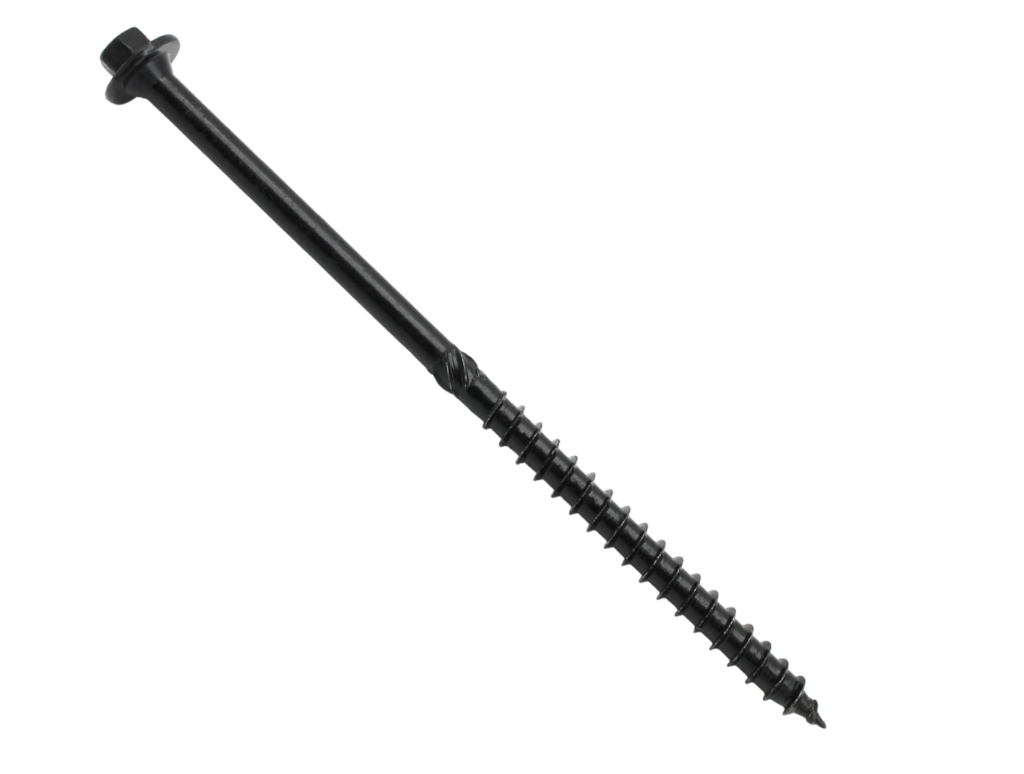
Engineered replacements for lag screws in many code-governed framing applications. Structural screws are made from hardened alloy steel with published ICC-ES load ratings, allowing them to be used in permit-required structural connections.
Best for: Ledger boards, post-to-beam connections, deck framing, stair stringers, joist connections.
Advantage over lag screws: Slimmer shaft reduces splitting; often no pre-drilling required; faster installation with an impact driver.
Common brands: LedgerLOK, GRK RSS, FastenMaster ThruLOK.
6. Floorboard Screws
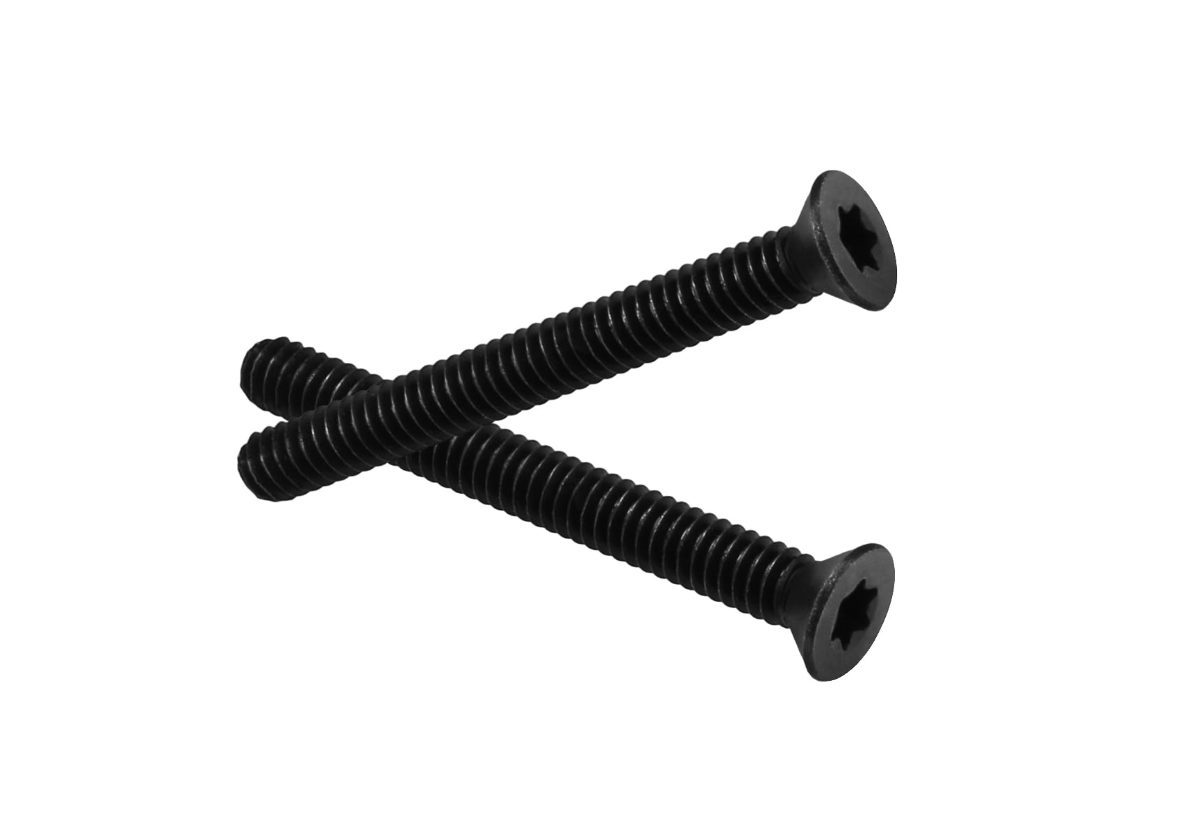
Floorboard screws are long, thin, and designed specifically for securing hardwood and engineered flooring. They have a very fine thread near the head and a coarser thread lower on the shaft – a “twin-lead” design that helps pull the board tight without splitting.
Best for: Solid hardwood flooring, engineered flooring, subfloor attachment.
Drive: Torx or square (Robertson).
Key feature: Countersinking head designed to sit below the surface without pre-drilling in most softwood subfloors.
7. Pocket Hole Screws
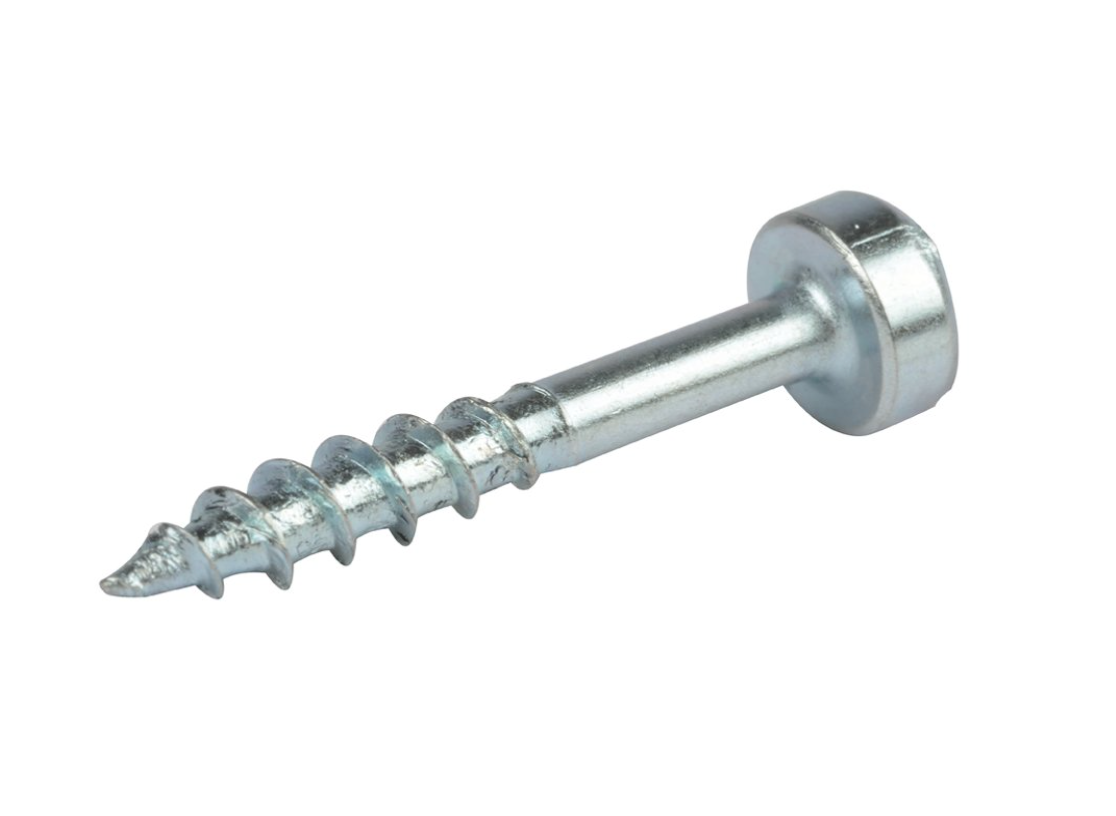
Pocket hole screws are paired with a pocket hole jig (such as a Kreg jig) to create fast, strong, hidden wood joints. They have a washer head, a self-tapping tip, and a coarse thread. The joint is created by drilling an angled pocket into one board and driving the screw through the pocket into the adjacent board.
Best for: Cabinet face frames, furniture joinery, box construction, toe-kick installation.
Do not use without: A matched pocket hole jig and proper setup dimensions.
Coarse thread: For softwood, plywood, MDF.
Fine thread: For hardwood.
8. Subfloor Screws
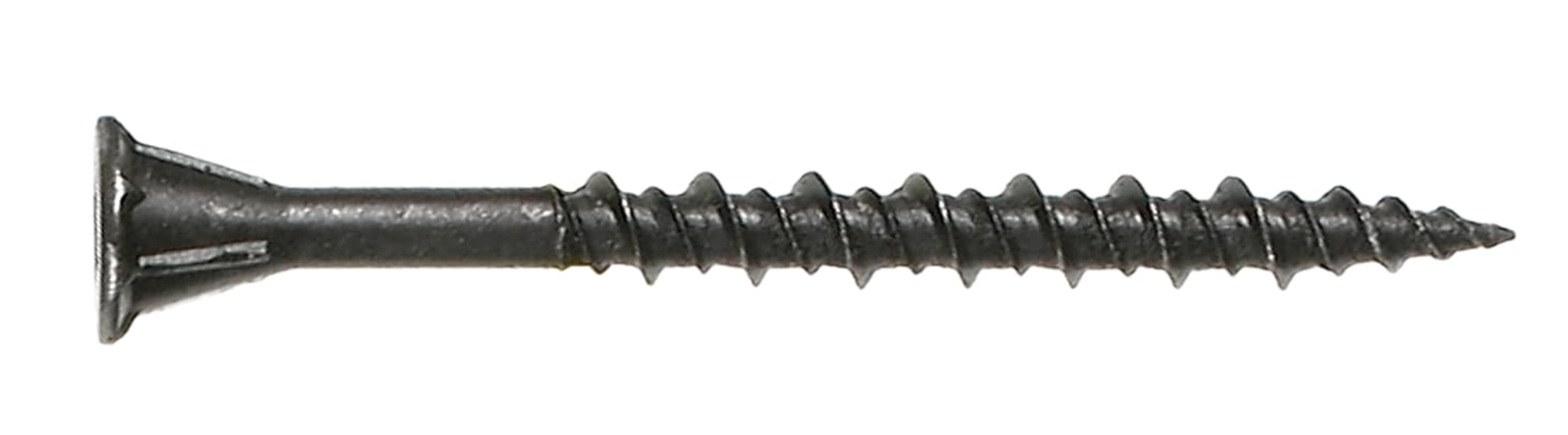
Similar to construction screws but engineered specifically for securing subfloor panels to joists. They have a serrated thread to reduce noise from squeaking and a self-countersinking head.
Best for: OSB and plywood subfloor panels over wood joists.
Key benefit: Eliminates subfloor squeaking far better than nails in both new construction and renovation.
Category 2: Metal and Machine Screws
9. Machine Screws
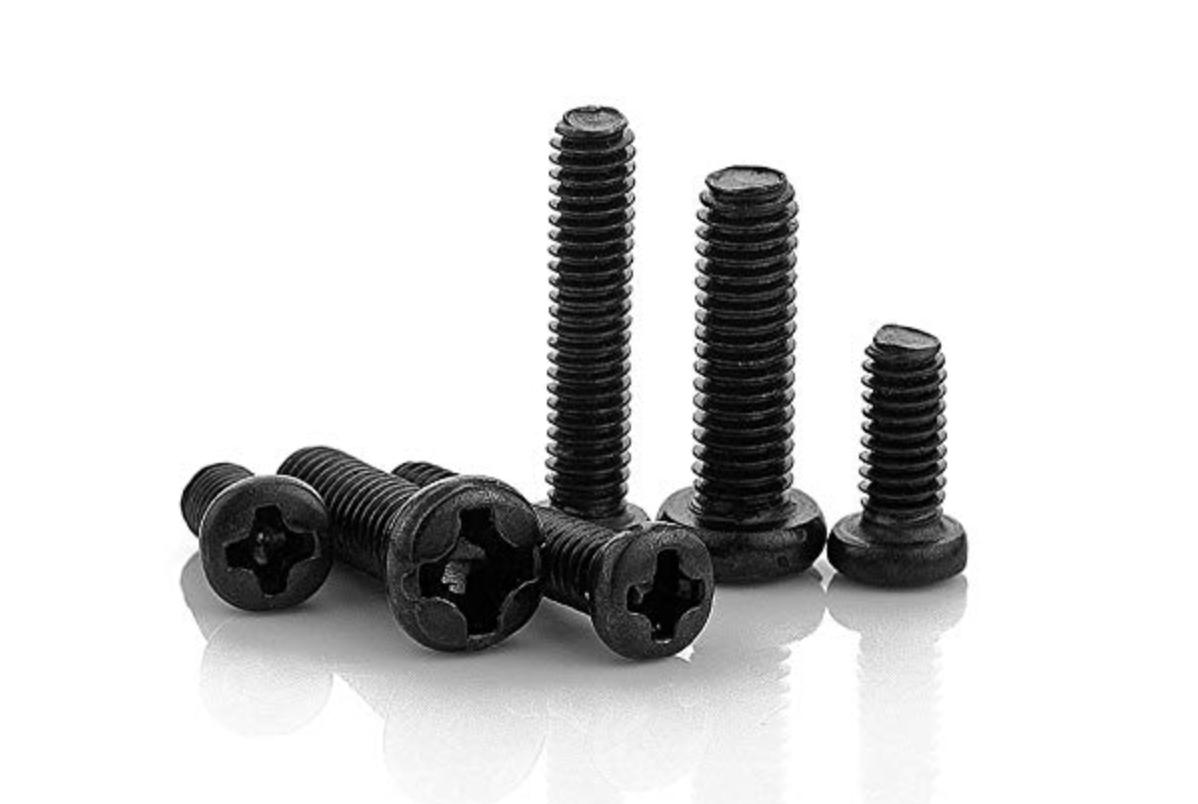
Machine screws are the precision fasteners of the metalworking world. They have a uniform diameter, blunt tip, and fully threaded shaft – and they always require either a pre-tapped hole or a mating nut.
Best for: Electronics, appliances, machinery, HVAC equipment, vehicle assembly.
Sizing: Measured in fractional inches (#4-40, #8-32) or metric (M3, M4, M6).
Head types: Pan, flat, round, truss, hex.
Drive types: Phillips, slotted, hex (Allen), Torx.
10. Sheet Metal Screws
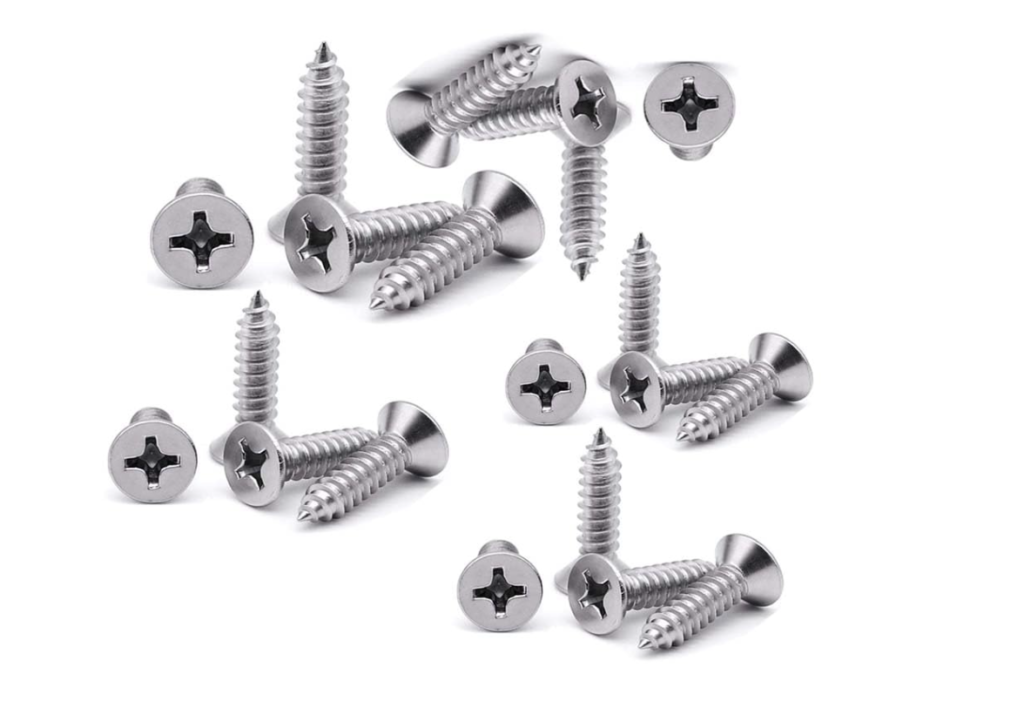
Sheet metal screws are self-tapping fasteners hardened to cut through thin metal without a pre-tapped hole. They are fully threaded to the tip and available in multiple head styles.
Best for: HVAC ductwork, electrical boxes, metal roofing panels, metal studs, automotive bodywork.
Types by tip:
- Type A: Coarse thread, pointed tip, for light gauge metal.
- Type B: Finer thread, blunt tip, for heavier gauge.
- Type AB: Most versatile – pointed tip, B-thread pitch.
11. Self-Tapping Screws
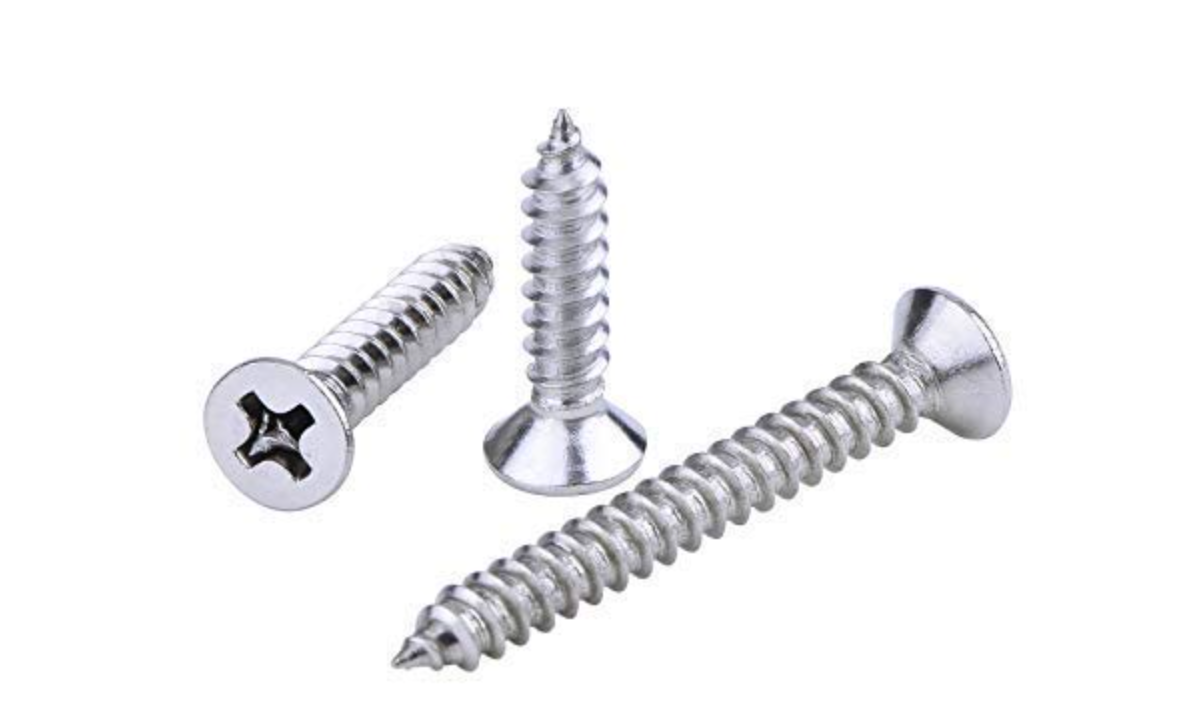
A broader category that includes any screw that forms its own threads. Two major subtypes:
- Thread-forming: Displaces material without cutting. Best for plastics and softer metals.
- Thread-cutting: Removes material as it advances. Best for harder metals and thermosets.
Best for: Thin metal, PVC, plastic enclosures, light assemblies.
Note: A pilot hole slightly smaller than the outer thread diameter is still required to prevent cracking in thin or brittle materials.
12. Self-Drilling Screws (TEK Screws)
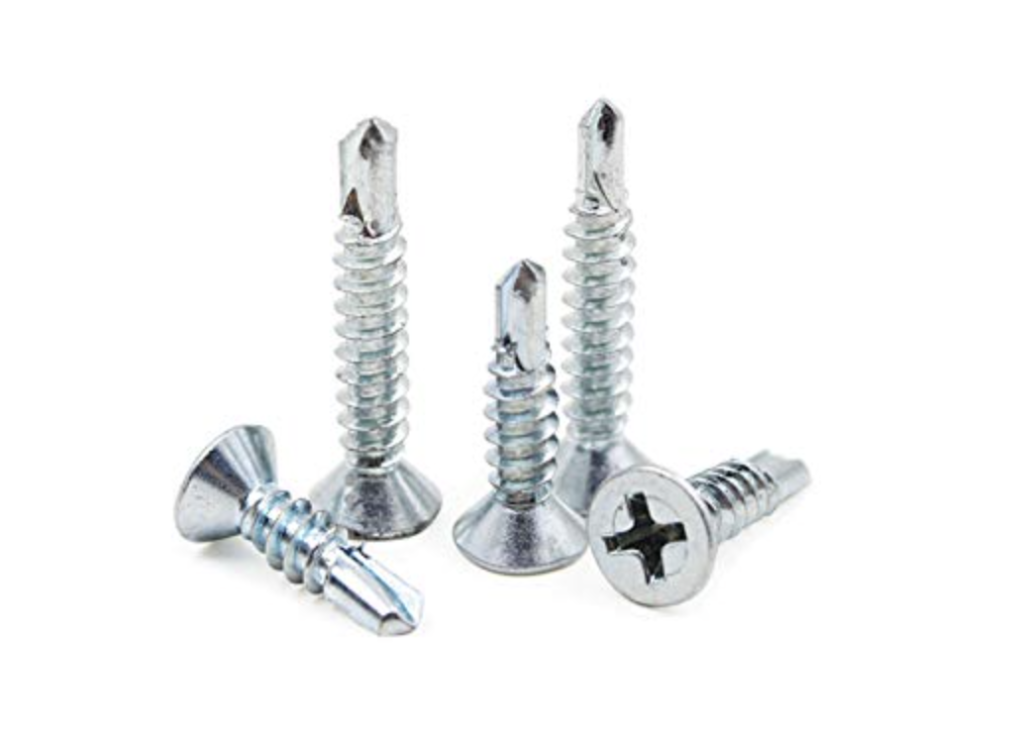
Self-drilling screws combine a drill bit tip with screw threads in a single fastener. Unlike self-tapping screws, they require no pilot hole at all – the drill-point tip creates the hole and the threads follow.
Best for: Metal-to-metal connections, HVAC ductwork, metal roofing, light gauge steel framing, electrical boxes.
Identification: Look for the drill-point tip and the “TEK” designation (a registered brand name now used generically).
Point sizes: TEK 1 through TEK 5, indicating increasing drill capacity from light to heavy gauge.
13. SEMS Screws (Pre-Assembled Screw and Washer)
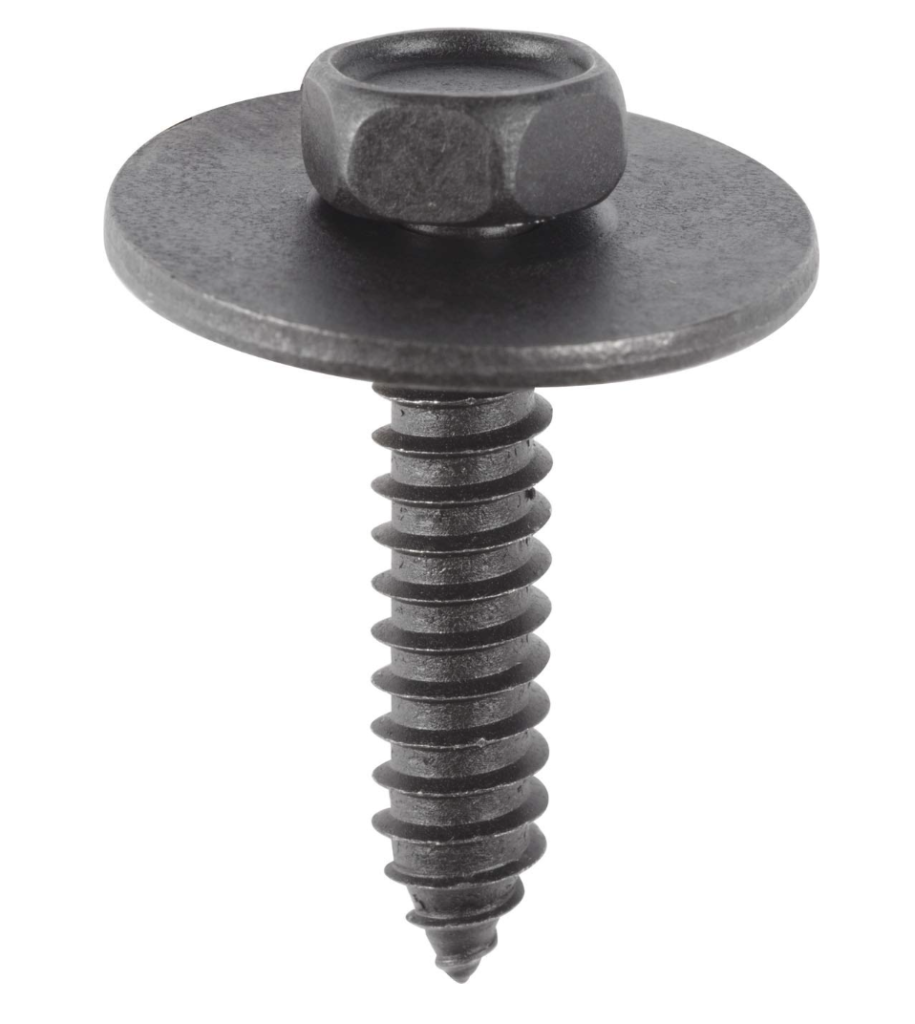
SEMS screws come factory-assembled with a captive washer under the head. The washer is permanently attached – it cannot fall off during installation, which is critical in automated manufacturing lines.
Best for: Automotive assembly, HVAC unit manufacturing, electrical panel fabrication, high-speed production.
Key benefit: Eliminates dropped washers, speeds up installation, ensures consistent torque loading.
14. Flange Screws
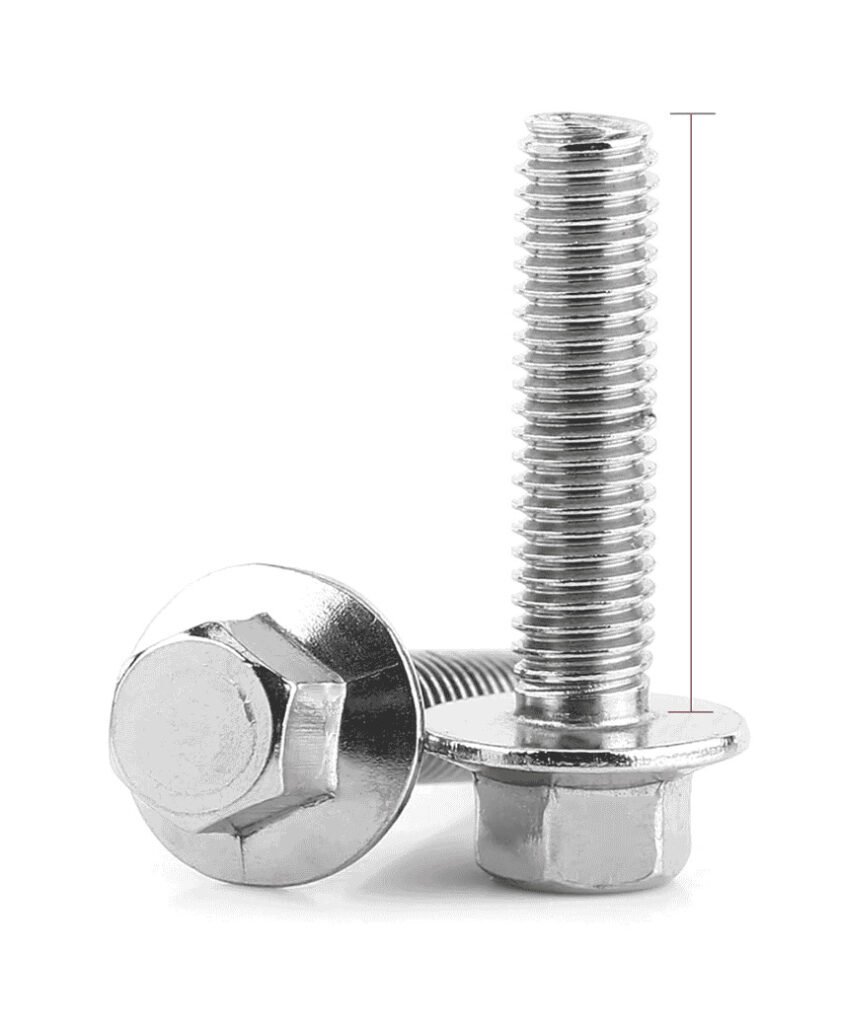
A flange screw has a built-in circular washer-like flange under the head. The wide bearing surface distributes clamping load across a larger area, reducing the chance of the head pulling through thin or soft materials.
Best for: Automotive panels, thin-walled plastics, electrical enclosures, HVAC equipment. Available as: Hex flange, serrated flange (adds locking action), and pan flange.
15. Needlepoint Screws
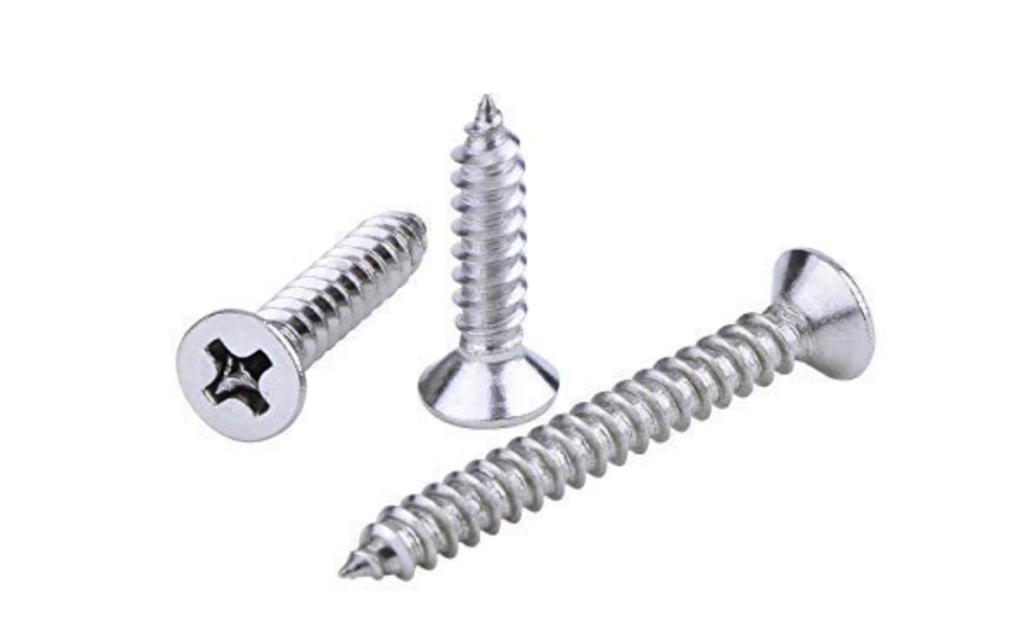
Needlepoint screws have an extremely sharp, fine point that can pierce thin-gauge metal, vinyl siding, and light plastics without any pre-drilling. The sharp tip reduces the force required for installation and minimizes distortion of thin sheet materials.
Best for: Light-gauge metal framing, plastic trim, vinyl siding installation, thin aluminum.
Category 3: Concrete and Masonry Screws
16. Concrete Screws (Masonry Screws)
Concrete screws (commonly sold as Tapcon, the dominant brand name) anchor directly into concrete, brick, or block without a plastic insert. They are made from hardened high-carbon steel with hi-low threads that bite into hammer-drilled masonry.
Best for: Attaching sill plates to concrete floors, mounting brackets to masonry, securing electrical conduit.
Installation: Requires a hammer drill with a carbide-tipped bit matching the screw’s specific pilot hole diameter.
Head types: Hex washer head (most common), flat countersunk head.
Caution: Concrete screws cannot be reused after removal – the threads are destroyed when pulled out.
17. Masonry Anchoring Screws (Heavy Duty)
Beyond standard concrete screws, heavy-duty masonry applications use larger, higher-rated anchoring systems. These include large-diameter concrete screws, wedge anchors, and sleeve anchors that pass through a fixture into concrete and expand for greater pullout resistance.
Best for: Structural attachments to concrete – equipment anchoring, post bases, heavy shelving.
Category 4: Specialty and Mechanical Screws
18. Set Screws
Set screws are entirely headless – they thread their full length into a part and sit below the surface to secure two components together. The most common use is locking a gear, pulley, or collar onto a shaft.
Drive types: Hex socket (Allen), slotted, Torx.
Tip styles: Cup point (most common, bites into shaft), flat point, cone point, dog point (acts as a locating pin), oval point.
Best for: Machinery, motors, conveyor systems, shaft-mounted components.
19. Shoulder Screws (Stripper Bolts)
Shoulder screws have a smooth, precision-ground cylindrical section – the shoulder – between the head and the threads. One part clamps to the shoulder while another rotates or slides on it freely.
Best for: Jigs and fixtures, pulleys, linkages, cam followers, printer mechanisms, rotating pivot points in machinery.
Key spec: The shoulder diameter and shoulder length (not thread size) are the critical dimensions.
20. Captive Screws
Captive screws are mechanically retained to a panel so they cannot fall out when unfastened. A retaining ring or clip keeps the screw attached to the panel at all times, which prevents hardware loss in electronics and equipment enclosures.
Best for: Server panels, avionics, military electronics, any application where losing a fastener is unacceptable.
21. Thumb Screws and Wing Screws
Both are designed for tool-free manual installation and removal.
- Thumb screws: Have a knurled cylindrical or domed head gripped between thumb and forefinger.
- Wing screws: Have two flat “wings” extending from the head for a larger grip surface.
Best for: Instrument panels, display fixtures, computer hardware covers, test equipment, any panel requiring frequent access.
22. Weld Screws
Weld screws are designed to be welded to a metal component, creating a permanent threaded stud. They have a pilot projection (nib) under the head that positions and centers the screw for resistance welding.
Best for: Automotive assembly, sheet metal fabrication, HVAC manufacturing, any application requiring a permanent threaded attachment point on metal.
23. Thread-Rolling Screws for Plastic
Thread-rolling screws for thermoplastics (such as Plastite or PT screws) use a special thread form – often a trilobe cross-section – that displaces plastic rather than cutting it, forming a tighter thread with less stress cracking.
Best for: Thermoplastic assemblies, electronic housings, automotive interior trim, any plastic that would crack under standard thread-cutting screws.
Advantage: Creates stronger plastic threads; hole is reusable multiple times.
24. Socket Cap Screws (Allen Screws)
Socket cap screws have a cylindrical head with a hexagonal socket (Allen key) recess. The small-diameter head sits in a counterbore, allowing flush or recessed mounting in tight spaces.
Best for: Machine components, jigs, tooling fixtures, CNC equipment, anywhere a wrench-driven fastener needs to sit below the surface.
Material options: Alloy steel (high strength), stainless steel (corrosion resistant), titanium (lightweight).
25. Button Head Cap Screws
A variant of socket cap screws with a low, domed button head that provides a large bearing surface and a finished, decorative appearance. Driven with a hex (Allen) key.
Best for: Bicycle components, consumer electronics, motorcycle parts, anywhere aesthetics and flush-ish profile both matter.
26. Hex Cap Screws
Hex cap screws (often called hex bolts) have a hexagonal head driven by a wrench or socket. Unlike lag screws (which taper to a point), hex cap screws have a uniform diameter and blunt end – they require a through-hole and nut or a pre-tapped hole.
Best for: Structural steel connections, machine assembly, any high-load application where wrench access is available.
Standards: SAE Grade 2, 5, 8 (in the U.S.) and metric Class 8.8, 10.9, 12.9 define tensile strength.
Category 5: Woodworking and Cabinetry Specialty Screws
27. Euro Screws (Cabinet Connector Screws)
Euro screws (also called confirmat screws) are designed specifically for flat-pack (RTA) furniture and European-style cabinetry. They have a large smooth shank, a wide shallow thread, and a hex socket drive. They pull together edge-to-face butt joints – the type found in nearly all IKEA and flat-pack furniture.
Best for: Flat-pack furniture assembly, cabinet carcass construction, MDF and particleboard joinery.
Requires: A confirmat drill bit that creates the stepped pilot hole in one pass.
28. Dowel Screws (Hanger Bolts)
Dowel screws are threaded at both ends with no head – one end has a wood-screw thread, the other a machine-thread. They are driven into wood using a locking nut or two nuts jammed together on the machine-thread end.
Best for: Leg-to-apron connections in furniture, knob and pull attachment, screw-together wooden joints where neither end can be accessed with a standard driver.
29. Mirror Screws (Decorative Cap Screws)
Mirror screws pass through a hole in glass or mirror and are secured with a nut from the back. The front-facing head accepts a decorative chrome or colored cap that threads onto the protruding machine screw stub, hiding the hardware.
Best for: Bathroom mirrors, glass shower panels, decorative glass wall panels, retail display installations.
Category 6: Outdoor and Structural Specialty
30. Roofing Screws
Roofing screws are self-drilling or self-tapping fasteners with a bonded rubber or EPDM washer under the head that compresses against the roofing panel surface to create a weatherproof seal.
Best for: Metal roofing panels, polycarbonate roofing, corrugated panels.
Critical: The rubber washer must compress evenly – neither under-driven (leaks) nor over-driven (washer crushed and fails).
Coating: Typically hot-dip galvanized or stainless for long-term corrosion resistance.
31. Timber Screws
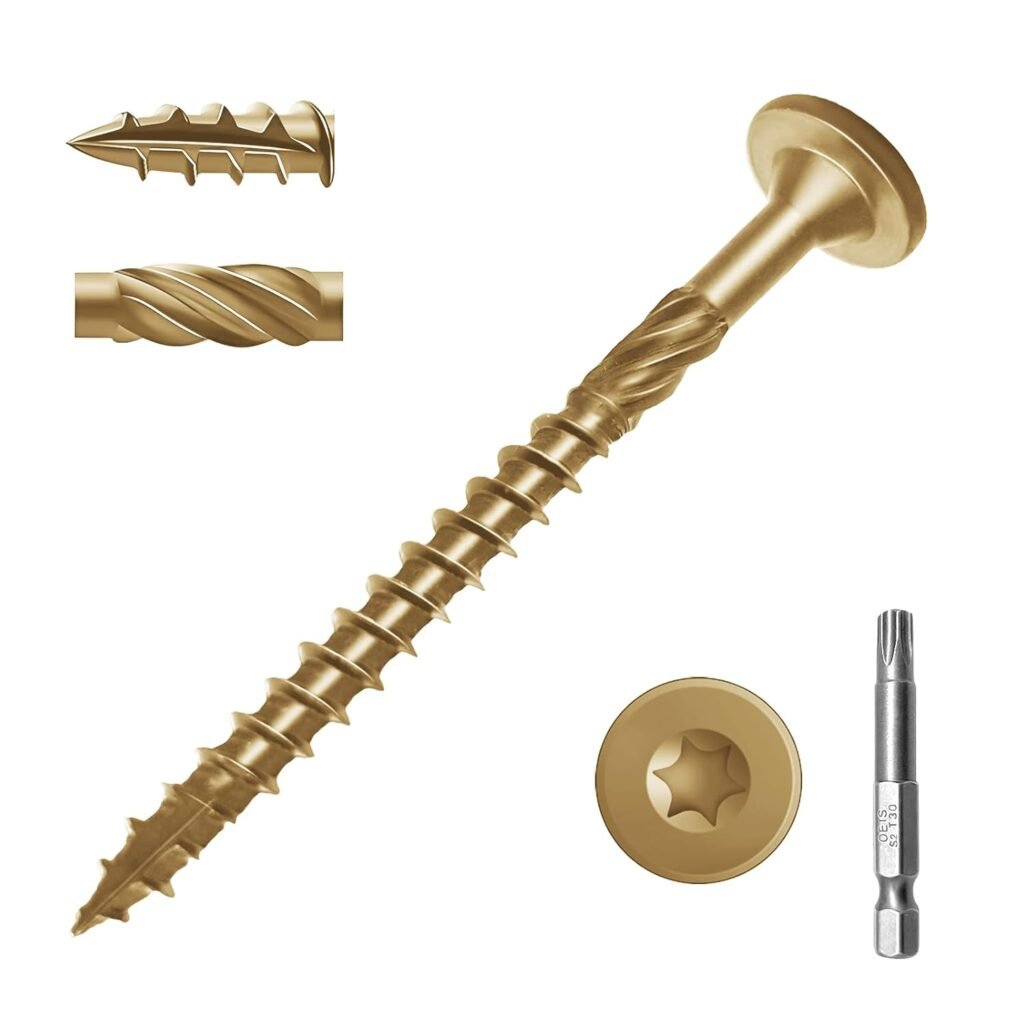
Timber screws are large-diameter, structural-grade screws designed for mass timber (glulam, LVL, cross-laminated timber) and heavy post-and-beam construction. Many are designed for full-thread engagement with printed load tables for code compliance.
Best for: Mass timber framing, heavy timber connections, landscape timbers.
Common brands: SDS MAX, GRK Timber, Spax Timber.
32. Exterior Composite Deck Screws
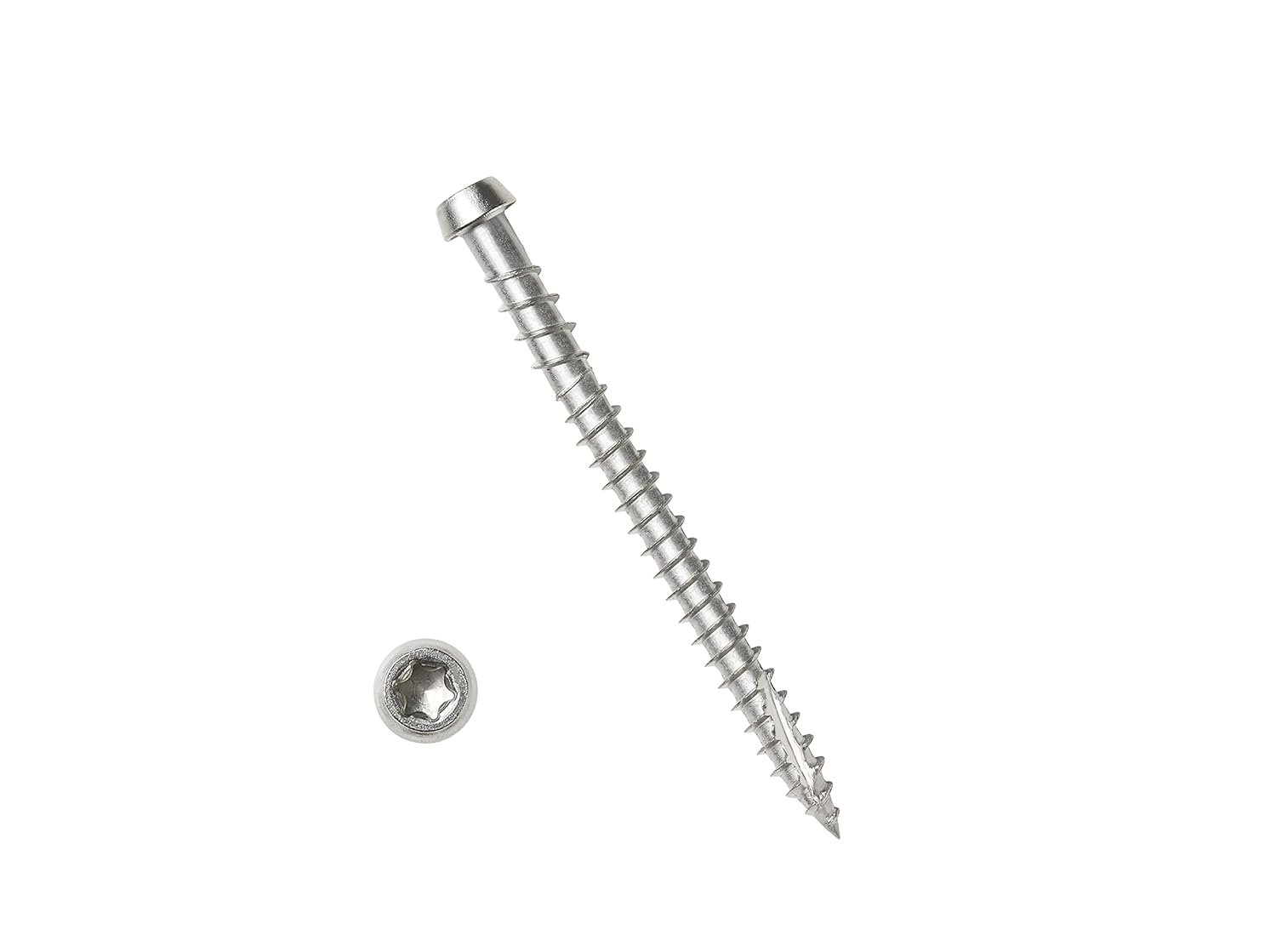
Composite-specific deck screws are engineered for composite, PVC, and capped wood decking materials. They have a reverse-thread zone under the head to prevent mushrooming of composite material and a type 17 cutting tip for clean penetration without pre-drilling.
Best for: Trex, TimberTech, Fiberon, Azek, and other composite or PVC decking products.
Do not substitute: Standard wood deck screws leave raised material “mushrooms” in composite decking that are visible and can trap moisture.
33. Eye Screws and Hook Screws
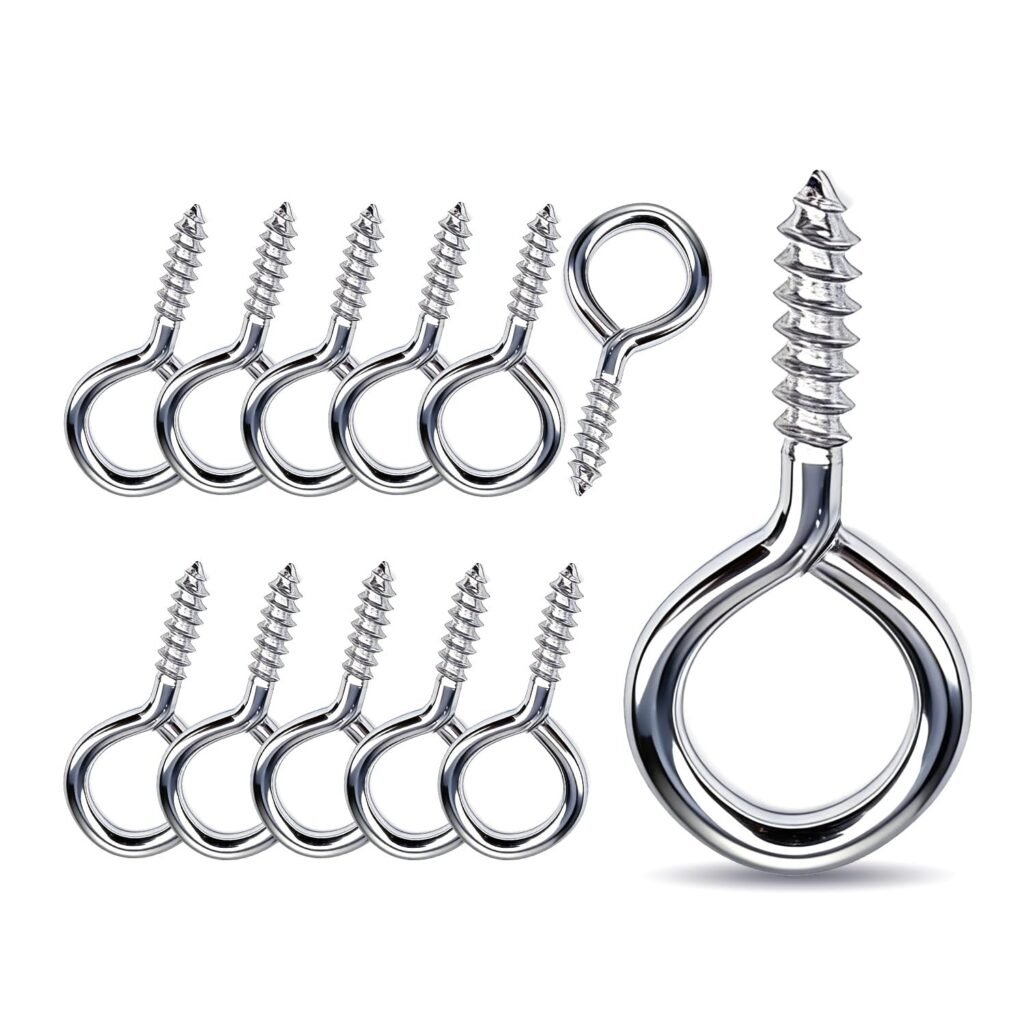
Eye screws have a looped head forming a complete circle; hook screws have an open, curved hook. Both are driven by hand or with a bar through the eye.
Best for: Picture hanging, plant hangers, curtain rod supports, wire rope attachment, closet hardware. Load warning: Standard eye screws are not rated for heavy dynamic loads. For swings, hammocks, or structural hanging, use forged eye bolts with published load ratings.
Complete Comparison: All 33 Screw Types at a Glance
| # | Screw Type | Primary Material | Drive Type | Head Type | Key Feature |
| 1 | Wood Screw | Wood | Phillips, Torx | Flat, Oval, Round | Partial thread, tapered shaft |
| 2 | Drywall Screw | Drywall to studs | Phillips | Bugle | Brittle, phosphate coated |
| 3 | Deck Screw | Treated lumber | Torx | Flat/Bugle | ACQ-compatible coating |
| 4 | Lag Screw | Heavy timber | Hex wrench | Hex | High load, wrench-driven |
| 5 | Structural Screw | Structural framing | Torx | Hex/Flat | ICC-ES load rated |
| 6 | Floorboard Screw | Wood flooring | Torx, Square | Countersunk | Twin-lead thread |
| 7 | Pocket Hole Screw | Wood joinery | Square | Washer head | Requires pocket jig |
| 8 | Subfloor Screw | OSB/plywood subfloor | Torx | Flat | Anti-squeak serrated thread |
| 9 | Machine Screw | Metal (tapped) | Phillips, Hex | Pan, Flat, Hex | Needs nut or tapped hole |
| 10 | Sheet Metal Screw | Thin metal | Phillips, Hex | Pan, Hex Washer | Self-tapping, fully threaded |
| 11 | Self-Tapping Screw | Metal, plastic | Phillips, Torx | Pan, Flat | Cuts own threads |
| 12 | Self-Drilling (TEK) | Metal-to-metal | Phillips, Hex | Hex Washer | Built-in drill tip |
| 13 | SEMS Screw | Metal assemblies | Phillips, Hex | Pan, Hex | Captive washer |
| 14 | Flange Screw | Thin panels | Hex | Hex Flange | Wide bearing surface |
| 15 | Needlepoint Screw | Light metal, vinyl | Phillips | Pan | Ultra-sharp piercing tip |
| 16 | Concrete Screw | Masonry | Hex, Phillips | Hex Washer, Flat | No anchor needed |
| 17 | Heavy Masonry Screw | Structural masonry | Hex | Hex | High pullout rating |
| 18 | Set Screw | Shaft locking | Hex socket | Headless | Multiple tip styles |
| 19 | Shoulder Screw | Pivot/bearing | Hex socket | Cylindrical shoulder | Precision ground shoulder |
| 20 | Captive Screw | Electronic panels | Torx, Hex | Various | Cannot fall out |
| 21 | Thumb/Wing Screw | Tool-free panels | Hand | Thumb/Wing | No tool required |
| 22 | Weld Screw | Sheet metal | Welded | Flat | Creates permanent stud |
| 23 | Thread-Rolling Plastic | Thermoplastics | Torx | Pan | No stress cracking |
| 24 | Socket Cap Screw | Machinery | Hex socket | Cylindrical | Counterbore-flush |
| 25 | Button Head Cap | Consumer/decorative | Hex socket | Low dome | Aesthetic finish |
| 26 | Hex Cap Screw | Structural steel | Hex wrench | Hex | Grade-rated strength |
| 27 | Euro (Confirmat) Screw | Flat-pack furniture | Hex | Wide flat | RTA furniture standard |
| 28 | Dowel/Hanger Bolt | Hidden wood joints | Locked nut | Headless | Threaded both ends |
| 29 | Mirror Screw | Glass/mirror | Machine thread | Decorative cap | Accepts decorative cap |
| 30 | Roofing Screw | Metal roofing | Hex | Hex + EPDM washer | Weatherproof seal |
| 31 | Timber Screw | Mass timber | Torx | Hex/Flat | Full-thread structural |
| 32 | Composite Deck Screw | Composite decking | Torx | Flat | Reverse thread zone |
| 33 | Eye/Hook Screw | Hanging hardware | Hand | Loop/Hook | Attachment point |
Types of Screw Heads
| Head Type | Profile | Common Use |
| Flat (Countersunk) | Flush or below surface | Wood, cabinetry, flooring |
| Pan | Slightly rounded, wide | Machine screws, electronics |
| Bugle | Tapered like a bugle | Drywall, decking |
| Oval | Decorative raised dome | Exposed hardware, trim |
| Round | Dome above surface | Sheet metal, general |
| Hex | Six-sided | Lag screws, structural |
| Truss | Wide, low dome | Sheet metal, automotive |
| Hex Washer | Hex with integral washer | Sheet metal, roofing |
| Cylindrical (Cap) | Tall cylinder | Socket/cap screws in machinery |
| Button | Low dome | Aesthetics, bicycles, electronics |
| Eye/Loop | Complete circle | Hanging, wire attachment |
| Hook | Open curve | Curtain rods, plant hangers |
Types of Screw Drive Styles
| Drive Type | Shape | Cam-Out Risk | Best Application |
| Phillips (+) | Cross | Moderate | General construction, appliances |
| Slotted (flat) | Single slot | High | Legacy hardware, electrical |
| Torx (star) | 6-point star | Very low | Outdoor, structural, automotive |
| Robertson (square) | Square | Low | Cabinetry, woodworking (popular in Canada) |
| Hex (Allen) | Hex socket | Low | Machinery, furniture, cap screws |
| Pozidriv | Modified Phillips | Low | European woodworking hardware |
| Tri-Wing | 3-wing Y-shape | N/A | Tamper resistance, electronics |
| Pentalobe | 5-lobe oval | N/A | Apple products (tamper) |
| Torq-Set | Offset cross | N/A | Aerospace and military applications |
| Spanner (Snake Eyes) | Two holes | N/A | Security fasteners, elevators |
Screw Materials and Coatings: Full Comparison
| Material / Coating | Corrosion Resistance | Best Environment | Notes |
| Plain steel (uncoated) | Very low | Dry indoor only | Rusts quickly; avoid outdoors |
| Zinc-plated (electroplated) | Low–moderate | Dry interior | Not for treated lumber |
| Hot-dip galvanized | High | Outdoor, treated lumber | Thick zinc; best for ACQ lumber |
| Stainless steel 304 | High | Outdoor, general exterior | Avoid mixing with aluminum |
| Stainless steel 316 | Very high | Marine/coastal | Best for salt-spray environments |
| Ceramic-coated | High | Treated lumber, outdoor | ACQ-compatible; thinner than galvanized |
| Brass | Moderate | Decorative, marine, electrical | Non-magnetic |
| Polymer-coated | High | ACQ lumber, coastal | Lighter than galvanized; increasingly common |
| Black phosphate | Low (interior) | Indoor drywall, cabinetry | Cosmetic, minimal rust protection |
| Mechanically galvanized | High | Outdoor, treated lumber | More uniform than hot-dip for small screws |
Pros and Cons of the Most Common Screw Types
| Screw Type | Pros | Cons |
| Wood Screw | Strong grip, widely available | Not for metal or masonry |
| Machine Screw | Precise, removable, rated | Needs tapped hole or nut |
| Self-Tapping | No pre-tapping, fast | Limited reuse; can crack plastics |
| Self-Drilling (TEK) | No pilot hole needed | Over-drills thin metal if wrong TEK # |
| Drywall Screw | Fast, cheap, sharp | Brittle, not structural or weatherproof |
| Lag Screw | Very high load capacity | Slow, requires pre-drilling |
| Structural Screw | Code-rated, fast, strong | Higher cost than standard screws |
| Deck Screw | Weather-resistant, reduces splitting | More expensive than basic screws |
| Concrete Screw | No anchor insert needed | Not reusable; requires hammer drill |
| SEMS Screw | Washer can’t be lost, fast assembly | Higher unit cost |
| Pocket Hole Screw | Fast, strong hidden joint | Requires dedicated jig |
How to Choose the Right Screw: Step-by-Step
- Identify the base material – wood, metal, masonry, drywall, plastic, composite.
- Identify what you are attaching – hardware, another board, a bracket, an appliance.
- Assess the load – light duty (a picture hook) or structural (a ledger board).
- Select screw type using the 33-type guide above.
- Choose the correct length – penetrate the receiving member at least 1 inch for wood; match screw diameter specifications for masonry.
- Choose drive type – Torx for high-torque outdoor use; Phillips for general interior; hex for machinery.
- Select the right coating – see the coating table above; match to environment and lumber type.
- Determine pilot hole need – always for hardwood, masonry, and lag screws; check manufacturer guidance for composites and plastic.
- Check code compliance – for structural connections, verify manufacturer load ratings and AWC span tables.
Screw Selection Checklist
- Have I identified the base material correctly?
- Is this a structural or non-structural connection?
- Is the screw type correct for that material (not drywall screws in wood framing)?
- Is the coating rated for treated lumber or outdoor exposure if needed?
- Is the length appropriate (at minimum 1× the top member thickness penetrating the base member)?
- Do I have the correct bit or wrench to drive this screw?
- Does the material require a pilot hole?
- Have I checked building code requirements for structural connections?
- Am I using ACQ-compatible fasteners for pressure-treated lumber?
- Have I avoided mixing dissimilar metals that could cause galvanic corrosion?
Common Mistakes When Using Screws
Using drywall screws for structural work. Drywall screws are brittle and snap under shear loads. They are not rated for structural connections, load-bearing joints, or outdoor use.
Using zinc-plated screws with ACQ treated lumber. The copper compounds in ACQ pressure-treated wood corrode standard zinc plating rapidly, causing joint failure within a few years. Always use ACQ-compatible fasteners outdoors.
Over-driving drywall screws. Over-driving tears the paper face and reduces holding power by up to 20%. Set the clutch on your screw gun to dimple the surface without breaking through.
Skipping pilot holes in hardwood. Large screws in oak, maple, or walnut without a pilot hole will split the wood, especially near board ends.
Using the wrong TEK number for metal thickness. A TEK 1 tip (light gauge) will spin out in heavy gauge steel. Match the TEK point number to the metal thickness.
Mixing stainless and aluminum without isolation. In wet conditions, stainless steel fasteners in contact with aluminum cause galvanic corrosion that destroys the aluminum. Use neoprene washers or choose a compatible alloy.
Using standard composite deck screws in PVC decking. PVC expands and contracts more than wood composite. Some composite-rated screws are not appropriate for 100% PVC boards – check manufacturer specifications.
Expert Tips
- Use an impact driver for lag screws and structural screws – the hammering action drives far faster than a drill driver with far less wrist fatigue.
- Lubricate wood screws in dry hardwood with beeswax or a bar of hand soap to reduce friction and prevent split grain.
- Switch from Phillips to Torx drive on any outdoor project – Torx bits hold at awkward angles without cam-out, saving stripped heads.
- Always pre-drill two diameters from a board end, regardless of wood species, to prevent splits.
- Use a countersink bit when flat-head screws need a clean flush or recessed finish – it creates the tapered seat and through-hole in one pass.
- Never use construction screws as structural hangers – joist hanger screws must be specified hangers screws (short, fat, shear-rated) not standard deck screws.
- Stagger screws along the grain in wide boards to prevent a split line forming along a row of holes.
- Store screws by type and coating in labeled containers – a zinc-plated screw used outdoors by mistake is a failure waiting to happen.
Myth vs. Fact
| Myth | Fact |
| “All screws work in concrete.” | Only hardened masonry screws designed for concrete will hold. Standard screws fail immediately in masonry. |
| “More threads = stronger screw.” | Thread engagement depth, screw diameter, and material strength matter far more than thread count alone. |
| “Drywall screws are fine for deck building.” | Drywall screws are brittle, uncorrosion-resistant, and not rated for outdoor or structural use. |
| “A bigger screw is always better.” | Oversized screws split wood, strip out holes, and may violate code load specifications. |
| “Stainless is always the safest coating.” | Wrong metal pairing causes galvanic corrosion. Stainless and aluminum in wet contact is a problem. |
| “Self-tapping screws need no pilot hole.” | Self-tapping screws in brittle plastics or thin materials still need a pilot hole to prevent cracking. |
| “You can reuse concrete screws.” | Concrete screws are destroyed when removed. The cut threads do not re-engage correctly if re-driven. |
| “TEK screws work on any metal.” | TEK point numbers correspond to metal thickness ranges. Wrong TEK number = stripped out or under-drilled hole. |
Industry Statistics
- The global fastener market was valued at approximately $95.3 billion in 2023 and is projected to exceed $130 billion by 2032, driven by construction, automotive, and electronics demand (Grand View Research).
- Stainless steel screws represent a growing share of the residential deck construction market as building codes in coastal and humid regions tighten requirements for corrosion-resistant fasteners.
- Torx (star) drive screws have substantially grown in market share over the past decade at the expense of Phillips, driven by impact driver adoption in residential construction.
- The American National Standards Institute (ANSI) and ASME B18 series govern dimensional standards for all fastener types used in U.S. commercial and structural applications.
- Self-drilling (TEK) screws are used in millions of linear feet of HVAC ductwork installed annually in the United States alone.
Real-World Example: Choosing Screws for a Coastal Deck Build
A homeowner in coastal North Carolina is building a 400 sq ft pressure-treated pine deck.
Challenges: ACQ-treated lumber is corrosive to standard zinc screws. Coastal salt air demands higher corrosion resistance. The ledger connection to the house is code-governed.
Screw selections made:
- Decking boards → 3-inch ceramic-coated Torx drive composite deck screws (ACQ-compatible, low cam-out, serrated to prevent mushrooming).
- Ledger board to house → ½-inch × 4-inch hot-dip galvanized lag screws with washers, installed per AWC fastener schedule.
- Joist hangers → specified joist hanger screws per Simpson Strong-Tie instructions – NOT standard deck screws.
- Railing posts to framing → LedgerLOK structural screws rated for post attachment, no pre-drilling required.
- Eye hook anchors for cable railing → 316 stainless eye screws rated for tension load, coastal-grade.
Result: Passed inspection, no corrosion after 3 seasons, no squeaks, no mushrooming in decking boards.