
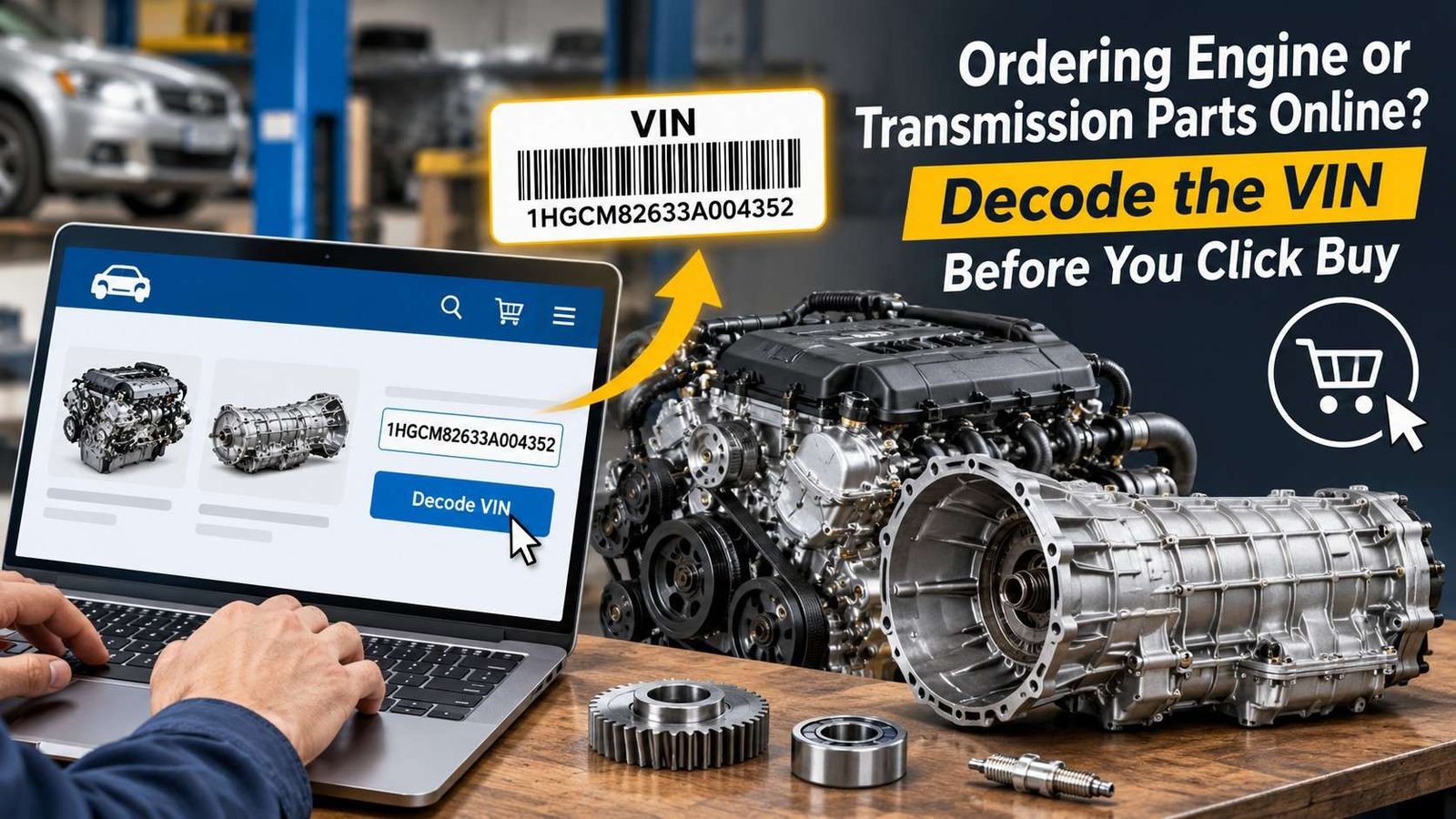
A replacement water pump, a set of brake rotors or a transmission filter can look identical in two listings and still not fit your car. Parts catalogs ask for year, make and model, but those three details often leave more than one possible match. The 17-character vehicle identification number (VIN) narrows it down to the exact build, and checking it first takes a few minutes. It can save you a return shipment, a second teardown and a weekend with the car on jack stands.
Why Year, Make and Model Are Not Enough
Automakers change parts in the middle of a model year, offer several engines in one model, and fit different brake or suspension packages by trim. A single pickup model year may come with three engine options and two transmissions, each with its own sensors, gaskets and filters. Some changes even depend on which assembly plant built the vehicle.
That is why many online parts stores show fitment notes such as “from production date 03/2017” or “with heavy-duty brakes.” Without the build details, you are guessing which note applies to your car.
What the VIN Tells You About Your Car
Every vehicle sold in the United States since the 1981 model year carries a standardized 17-character VIN. Each group of characters has a job:
- Characters 1 to 3: the manufacturer and country of origin.
- Characters 4 to 8: the model line, body style, restraint system and, for many makers, the engine code.
- Character 9: a check digit, a calculated value that catches typos and fake numbers.
- Character 10: the model year.
- Character 11: the assembly plant.
- Characters 12 to 17: the production sequence number.
For parts matching, the engine code, model year and plant matter most. NHTSA’s free VIN decoder shows the basic manufacturer data behind these characters.
How to Check Fitment With the VIN Before You Order
- Read the VIN in more than one place. Compare the plate at the base of the windshield with the door jamb sticker and the registration card. They should match exactly. The letters I, O and Q are never used, so a round character is always a zero.
- Decode the full VIN. A decoder turns the 17 characters into the engine, transmission, trim and drivetrain. You can decode the VIN online for free and keep the results open in another tab while you shop.
- Match the engine and transmission to the listing. Compare the decoded engine size and code, and the transmission type, with the fitment notes on the part page. If the listing asks for a code you cannot find, send the seller your VIN and ask them to confirm fit in writing.
- Check the production month. The door jamb sticker shows the build month and year. Use it whenever a listing splits fitment by production date.
- Look for open recalls. Search the VIN on NHTSA’s recall lookup. If the part you plan to buy is covered by a recall, a dealer will replace it at no cost.
- Confirm who is selling the part. Independent parts sites and marketplace sellers vary a lot. Before paying for an expensive module or a rebuilt transmission, confirm the seller is a registered business with an active status in its state, and read the return policy for wrong-part orders.
Parts Where a VIN Match Matters Most
Some parts fit loosely across a model range. Others depend on the exact build and are worth checking every time:
- Brake rotors, calipers and pads: rotor diameter often changes with the brake package or towing option.
- Timing belts, chains and water pumps: tied to the specific engine code.
- Oxygen and mass airflow sensors: connector shape and sensor position differ by engine and emissions package.
- Transmission filters, pans and solenoids: one model can use more than one automatic transmission.
- Engine and body control modules: many need programming to the car’s VIN after installation.
- Keys and key fobs: the immobilizer system is matched to the individual vehicle.
For electronic modules, ask whether the seller can program the part to your VIN before shipping, or whether a dealer or locksmith has to do it.
When the Decoded VIN and the Car Don’t Agree
Sometimes the decoded data lists one engine, but a different one sits under the hood. A previous owner may have swapped it, or the vehicle may have been rebuilt after major damage. In that case, order parts for what is actually installed: read the code stamped on the engine block or printed on its label, and match parts to that.
A VIN that does not match across the dashboard, door jamb and title is a different problem. It can point to a replaced panel, a paperwork error or a tampered vehicle. Sort it out with your state motor vehicle agency before putting money into repairs.
Make the VIN Part of Every Parts Order
Keep a photo of the VIN plate and the door jamb sticker on your phone. Decoding the VIN once gives you the engine, transmission and build details you need for every future order, and it turns parts shopping from guesswork into a quick match.