
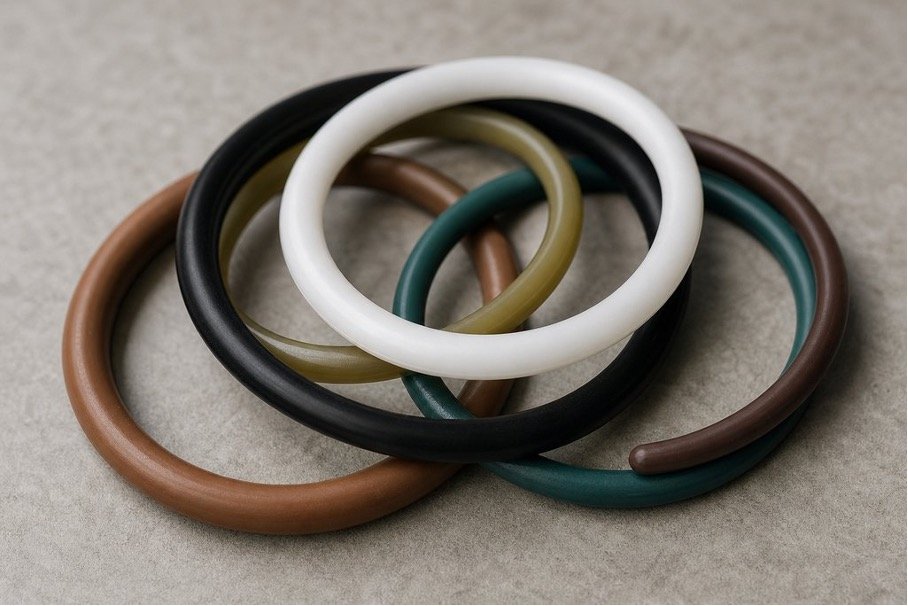
Seal failure can be expensive, involving downtime, process interruption, wasted product, etc. Whilst pressure is often the main culprit behind seal failure, chemicals, vapours, cleaning agents, and solvents can attack seals, causing them to swell, crack, soften, or simply lose their resilience.
The Chart is Only the First Filter
Chemical compatibility charts are a good starting point when selecting a seal material for a particular application, and the O-Ring chemical compatibility chart provides an initial material check before a 24-hour immersion test. Far from being definitive, they are there to aid the seal user/designer/purchaser in making a sensible choice of seal material and avoid the temptation to just specify whatever seal material they have used before, or whatever seal material the salesman recommends, or whatever seal material is the cheapest!
Compatibility charts show, in general terms, how an elastomer/polymer family will react when in contact with a particular chemical/media. The level of compatibility is usually given as excellent/good/fair/poor/not recommended.
What Changes the Answer
However, compatibility charts should never be treated as gospel. Compatibility is affected by many factors, including the temperature/pressure the seal is operating under, the concentration of the chemical, intermittent or continuous contact, liquid/gas/vapor, time of exposure, dynamic or static service, degree of compression on the seal, surface finish of the mating components, cleaning agents/washdown procedures, etc. A seal material, as discussed at https://en.wikipedia.org/wiki/Seal_(mechanical), may be compatible with a chemical at room temperature but not at elevated temperature. Compatible with a weak solution but not a strong solution. Compatible with a chemical when in intermittent contact but not when continually immersed. And so on…
Always use the chemical compatibility chart as a guide to rule out obviously unsuitable seal materials, but don’t stop there! Look at the other factors affecting the seal, including temperature/pressure ranges, dynamic or static service, surface finish of mating components, duration of service required, etc. If the chemical/media is particularly aggressive or you’re unsure of its make-up, seek advice from your seal supplier as to which specific compound would be most suitable and perhaps suggest chemical compatibility testing prior to use in production.
Read the Failed Seal
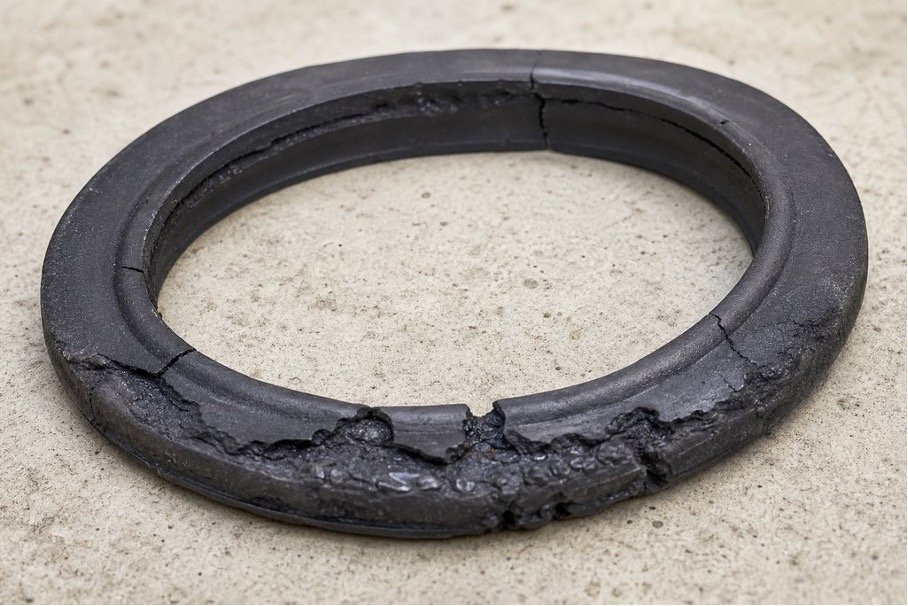
Before chucking the compatibility chart out of the bin, always keep in mind that chemicals can attack seals, causing them to swell up and sit loosely in the seal groove, harden/crack/craze, soften and leave a residue on the mating surface, lose their resiliency (permanently flatten), and in some cases change color and/or texture.
Of course, all of these symptoms could also be attributed to incorrect gland design/dimensions, overheating, pressure spikes, damage during fitting, etc., but if you’ve just replaced a leaking seal with a new one (of the same material) and it’s starting to leak again, it might be worth considering whether the seal material is really compatible with the application!
Don’t just ask for the name of the chemical the seal is going to be exposed to, since some chemicals with the same name can have different makeups (different stabilizers, acids, water/solvent content, etc.) and affect seals in different ways. Ask how long the seal will be in contact with the chemical for, as sometimes seals are attacked by chemicals that are used for short periods during cleaning down/servicing the plant that they could happily live with indefinitely during production. Ask whether there are any other chemicals the seal will come into contact with during servicing/cleaning down as well (lubricants, assembly aids, cleaning agents, inadvertent ingress, etc.).
Compounds of the same elastomer may have widely varied chemical resistance.
Compounds containing different additives, fillers, and curing systems, even if made of the same polymer, can result in noticeably different chemical resistance.
For critical applications, specify the compound, not just the material.
Ask What the Seal Actually Encounters
Temperature and pressure extremes will exacerbate chemical attacks on seals, so don’t overlook these when considering chemical compatibility. Establish the range of temperatures the seal will face, as some materials perform excellently at room temperature but become too stiff or hard to seal effectively at low temperatures. Ask whether the plant cycles on/off regularly, as seals can suffer from repeated exposure to chemicals and temperature changes.
Once you’ve narrowed down the number of seal materials that will suit the application using the chemical compatibility chart, compare and contrast these taking into account all of the other factors affecting the seal. In some cases, it’s worth paying a little extra for a seal material that offers good all-round chemical compatibility and won’t be affected by extremes of temperature; other times, you’ll find that you don’t need to specify a seal material that offers the ultimate chemical resistance!
Note down the details of the application and keep them somewhere safe, and next time you fit a seal in that application (or a similar one), you’ll have an idea of what worked/what didn’t, for how long, and whether the application has changed since last time!