
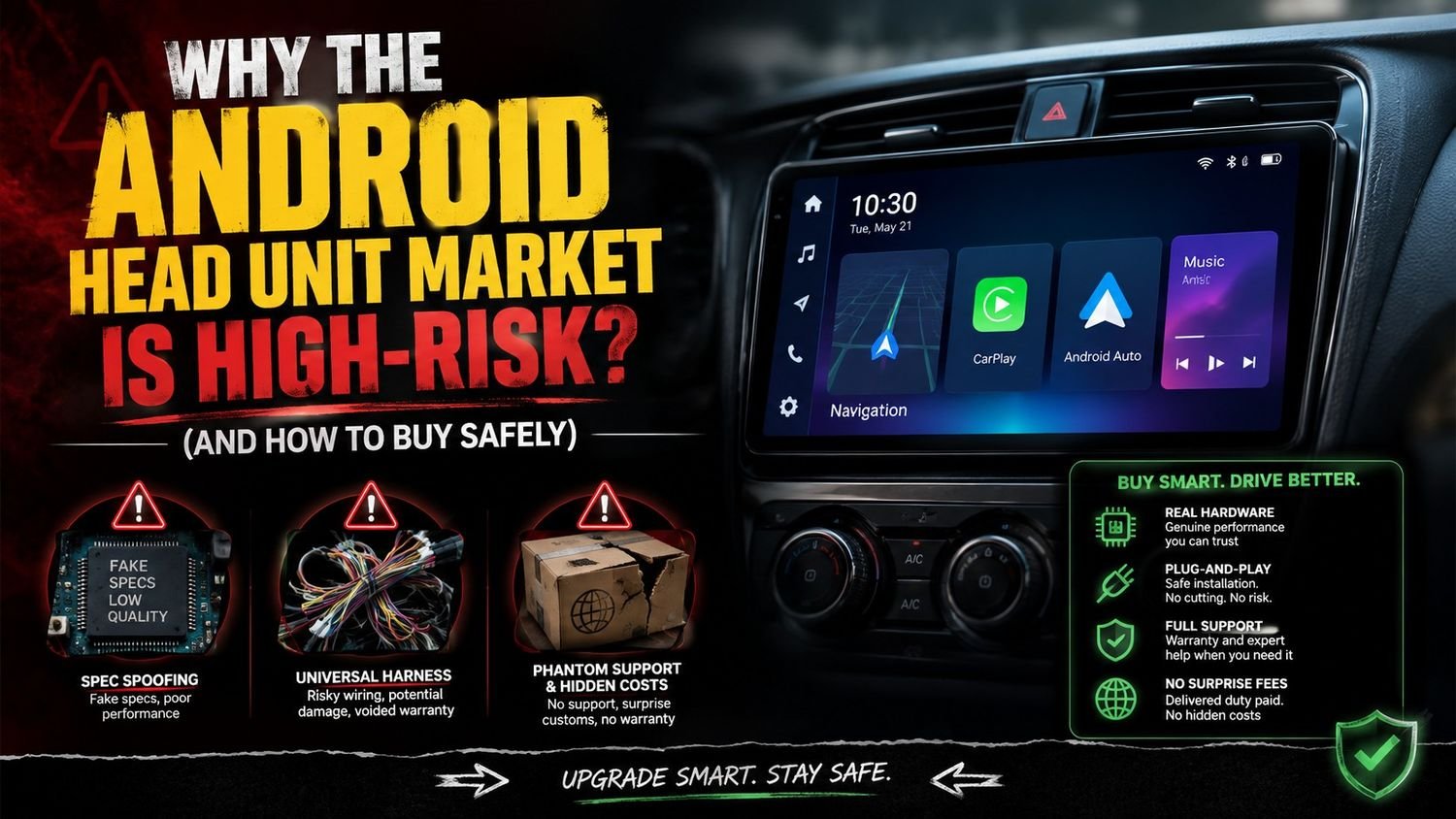
Upgrading your car’s dashboard with a modern Android head unit is one of the most exciting modifications you can make. Swapping a dated, button-heavy factory radio for a massive, high-definition touchscreen featuring Wireless Apple CarPlay and Android Auto instantly makes a ten-year-old vehicle feel like it just rolled off a 2026 showroom floor.
However, behind the glossy product photos and unbelievably low prices on major online marketplaces lies a “Wild West” industry. The aftermarket Android head unit market is currently flooded with deceptive marketing, hidden costs, and hardware that can actively damage your car.
If you are considering an upgrade, you need to know what you are walking into. Here is why the Android head unit market is considered high-risk, and exactly how you can protect yourself and buy safely.
1. The “Spec Spoofing” Scam
The most prevalent danger in the budget car audio market is “spec spoofing.” Because high-quality processors and physical RAM are expensive, many generic manufacturers resort to firmware manipulation to trick consumers.
You might purchase a unit advertised as having an “8-Core Processor, 8GB of RAM, and Android 13.” However, when you install it, the manufacturer has modified the operating system’s kernel to display those exact fake specs on the “About Device” screen. In reality, the unit might be running a sluggish 4-core processor, 2GB of physical RAM, and an outdated Android 9 operating system.
The result? Within a week, Google Maps begins to stutter, Spotify crashes, and the system overheats. Because the hardware cannot physically handle the software load, the unit becomes a frustrating safety hazard rather than an upgrade.
2. The Universal Harness Nightmare
A modern car is a highly complex computer network. Your steering wheel controls, factory backup camera, and premium amplifier (like Bose or JBL) all communicate using digital signals.
Many budget sellers cut costs by shipping “Universal” head units. They provide a bundle of bare wires and expect you to cut, strip, and splice into your car’s expensive factory wiring loom.
Splicing wires is a massive risk. A poorly insulated connection can vibrate loose, causing speakers to crackle or the screen to short out. Worse, if your vehicle is leased or under a factory warranty, cutting original wires is the fastest way to void your warranty. Dealerships will quickly blame your DIY wiring job for any future electrical anomalies.
3. Phantom Support and Surprise Taxes
The third major risk involves what happens after you click buy.
Many overseas sellers offer a standard 30-day return policy. But car electronics face extreme dashboard temperatures—often exceeding 150°F (65°C) in the summer. When a budget unit inevitably suffers a thermal failure in month four, the seller has often vanished, or they require you to ship the broken unit back to Asia at your own expense (which can cost over $100).
Furthermore, budget marketplaces rarely cover international customs duties. You may think you scored a $200 bargain, only to receive a text message from the shipping carrier demanding an additional $80 in import tariffs before they will deliver your package.
How to Buy Safely
Fortunately, you don’t have to avoid aftermarket upgrades entirely; you just have to know how to shop smartly. Here is the checklist for buying an Android head unit safely:
- Demand Real Hardware: Look for units that explicitly name their processor brand (e.g., Qualcomm Snapdragon). High-end processors feature active thermal management to prevent overheating.
- Insist on 100% Plug-and-Play: Never buy a unit that requires you to cut wires. Your upgrade should come with a custom-molded harness and a pre-programmed CANbus decoder specific to your car’s trim level.
- Check the Tariff Policy: Only buy from retailers who explicitly state that they ship “Delivered Duty Paid” (DDP) or cover all customs fees upfront.
If you want to bypass the guesswork entirely, companies like Car Tech Studio have built their reputation on eliminating these exact risks. Instead of shipping universal generic boxes, they require a manual photo audit of your dashboard before shipping to ensure perfect plug-and-play fitment. Furthermore, they guarantee genuine Snapdragon hardware, cover all international customs fees, and back their units with up to a 2-year warranty and lifetime human support.
A dashboard upgrade is an investment in your daily commute. By avoiding the cheap, spoofed units and investing in verified, premium hardware, you can ensure your daily drive is smooth, connected, and entirely stress-free.
FAQs: Frequently Asked Questions
The best way to verify your hardware is to download a third-party diagnostic app like CPU-Z or Device Info HW from the Google Play Store. These apps bypass the spoofed system settings and read the physical hardware, revealing the true API level (Android version) and actual RAM capacity.
Not if you buy the right system. A high-quality, vehicle-specific head unit will include a “CANbus Decoder.” This small digital translator allows your new screen to understand the digital signals from your factory steering wheel buttons, climate controls, and original backup camera.
If you purchase a premium unit with a true Plug-and-Play harness, installation is incredibly straightforward and highly popular among DIYers. You simply remove the plastic trim, unplug the factory radio, and click the new matching connectors into place—no wire cutting required.
Budget units often lack proper heat sinks and use cheap, non-automotive-grade processors. When the sun beats down on your dashboard, these processors overheat and “thermal throttle” (slow down to survive), causing apps to crash and audio to skip.